


Home / Blog / Industry News / What to Consider When Buying Custom Reed Diffusers: A Complete Buyer's Guide
What to Consider When Buying Custom Reed Diffusers: A Complete Buyer's Guide
Content
A hotel procurement manager once ordered 1,000 reed diffusers from two suppliers that looked equally professional on paper. One batch lasted three months with a steady scent; the other lost its top notes in two weeks and leaked during shipping. The difference was not luck. It was the result of a series of design and production choices that are easy to overlook when you focus only on price and appearance.
Before you brief a manufacturer, the key point is this: custom reed diffusers are not a single product but a system of components — a bottle, reeds, fragrance oil, wicking, cap, label, and outer packaging — each with its own tolerances. The buying process should therefore start with defining your customisation scope and end with a validated sample that reflects your production batch.
Begin by separating “nice to have” from “must have.” A clear scope prevents unnecessary sampling revisions and keeps your MOQ realistic. Most buyers customise at least one of the following: bottle design, reed type, fragrance oil, label, or carton.
Container choice is where customisation is most visible. Glass can be pressed or blown, with moulded logos, painted surfaces, or ceramic bodies that act as decorative pieces. Plastic offers durability but generally reads as less premium. Whatever you choose, the neck finish determines how many reeds can fit and how quickly the oil evaporates — a wider neck with six to ten reeds will throw scent faster than a narrow bottle with three.
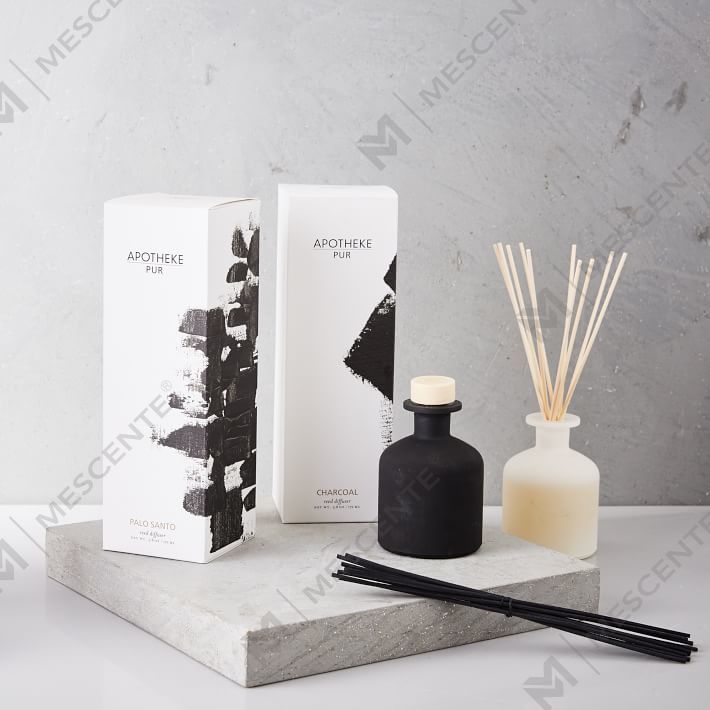
For a customised feel without a full mould investment, a custom ceramic bottle reed diffuser lets you combine a distinctive silhouette with low-volume finishing options. Ceramic also tolerates repeated handling, which matters in hotel rooms and retail displays.
Reeds are not a commodity. Natural rattan has visible pores that pull oil upward, while fibre reeds can be engineered for a smoother, more consistent release. The number of reeds controls the intensity: four reeds give a subtle background scent, while eight or more create a stronger presence. Ask suppliers for the recommended reed count and replacement cycle based on your bottle mouth and oil viscosity.
The fragrance oil is the part users actually judge. Most reed diffuser formulas use between 10% and 30% fragrance oil in a carrier base; lower concentrations extend economy but sacrifice throw. Beyond the percentage, consider the oil itself: some essential oils degrade in sunlight or react with certain plastics. A simple accelerated test — placing a sealed sample in a 40°C oven and in direct light for two weeks — will reveal colour changes and scent loss before you commit.
If you are targeting bedrooms, your selection criteria may differ from hospitality spaces. For guidance on matching scent performance to a specific room, sellers often rely on reed diffuser selection guidance for bedroom scent performance, which covers oil families and duration expectations.
A beautiful bottle will not save a formula that evaporates unevenly. Set measurable performance criteria early, and make sure the supplier can show you how they test.
| Checkpoint | What to evaluate | Why it matters |
|---|---|---|
| Scent throw | Intensity in a closed room after 24 hours and 7 days | Reveals whether the oil is over-diluted or reeds are undersized |
| Longevity | How many weeks the scent lasts until the bottle is empty | Affects product claims and refill cycles |
| Colour stability | Oil and bottle label under direct light | Prevents a faded or yellowed premium look |
| Leakage | Cap seal, bottle position during transport, and temperature cycling | Drives shipping damage and customer returns |
Ask for an IFRA certificate for every fragrance compound and a safety data sheet for the finished formula. For hotel projects, you may also need a formal statement on phthalate content and alcohol levels. These documents protect both your brand and your end users.
Hospitality buyers in particular should confirm that the supplier has experience with high-fragrance reed diffusers for hotel use, because corridor and lobby environments call for higher oil loading than a bedroom.
Custom reed diffusers are usually shipped as a set: bottle, oil, reeds, and sometimes a gift box. Each element adds to the overall bill of materials, so decide early how much packaging you want to control.
For retail, a sturdy printed carton with an inner insert prevents reed movement and bottle breakage. For hotel projects, plain bulk packaging with a private label on the bottle may be enough. Check whether the packaging is recyclable if your brand communicates sustainability.
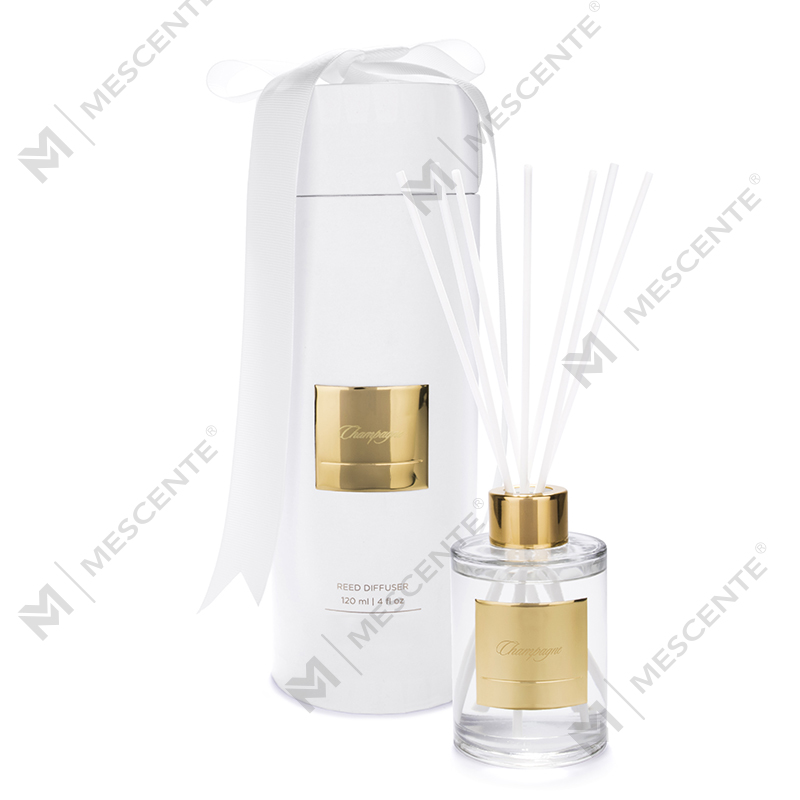
Label application also deserves caution. Hand-applied labels can bubble or peel under humidity, especially on textured ceramic. A silk-screened logo or foil stamp avoids that risk, but it raises the setup cost. For a balance of cost and flexibility, a private label frosted bottle reed diffuser with box gives you a clean white label surface and a ready-to-gift presentation.
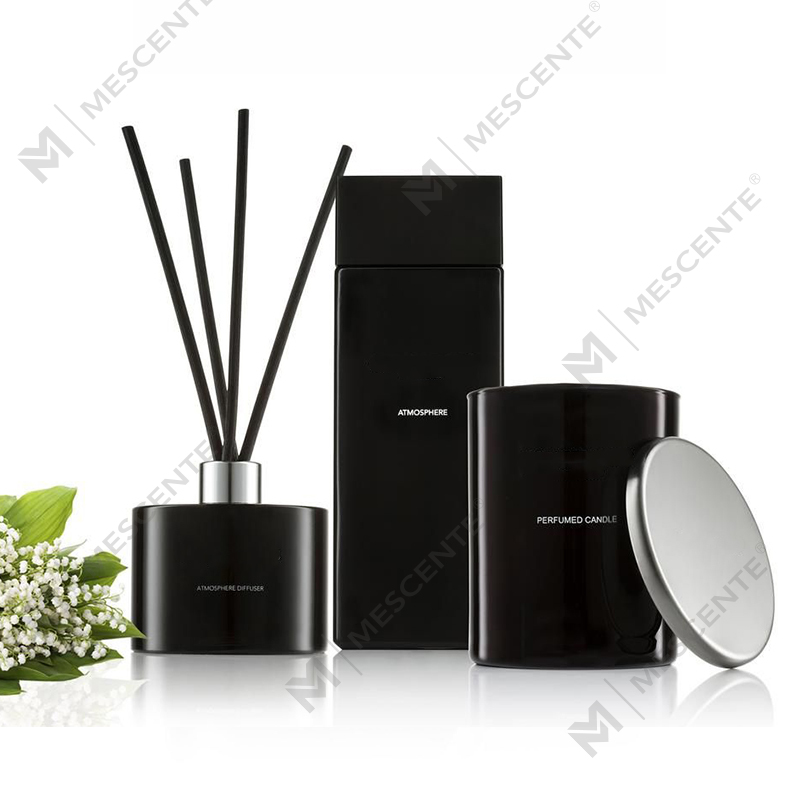 Custom Private Label White Frosted Bottle Aromatherapy Reed Diffuser Oils With BSuzhou M&scent Is China Custom Private Label White Frosted Bottle Aromatherapy Reed Diffuser Oils With Box A29148 ODM/OEM Suppliers, Comp...View Product →
If you are still comparing fragrance formats, it helps to see how reed diffusers fit beside sprays and candles. A quick overview of luxury reed diffuser scentscaping options can clarify which product makes sense for which segment of your range.
Customisation always has a floor. A custom mould, a unique fragrance blend, or a bespoke box requires setup work, so manufacturers set a minimum order quantity to absorb that cost. The trade-off is simple: higher MOQ usually lowers the unit price, while lower MOQ narrows your choice of containers and finishing options.
A reliable sampling process is your best safeguard. Do not accept a single “pretty” sample. Instead, order samples with the exact bottle, reeds, cap, and oil formula you plan to sell, and run them through the same tests you will use for production acceptance. Confirm batch-to-batch consistency by asking for a second sample from a different production day.
Lead time matters just as much. Most custom reed diffuser projects need 30 to 60 days from sample approval to shipment, depending on container availability and packaging complexity. Build in extra time for seasonal peaks. If you have a fixed launch date, tell the supplier during the first call so they can schedule production slots.
Not every supplier who says “custom” can execute a truly custom project. Look for evidence of breadth: a manufacturer with a wide range of container materials and series is more likely to handle your request without cutting corners on tooling or finishing.
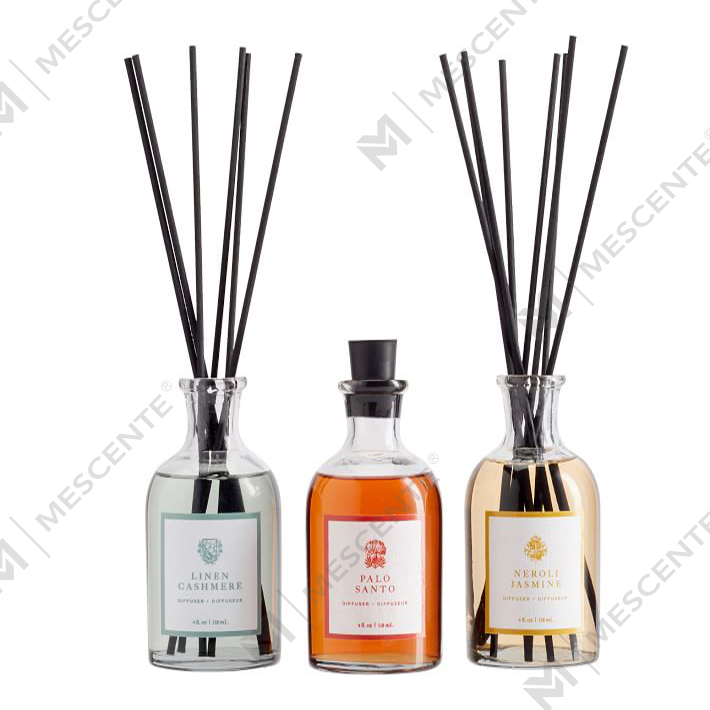
For example, a manufacturer that already produces customised 180ml glass bottle reed diffusers for hotels has likely solved common hospitality issues like leak-proof seals, high-volume refilling, and non-slip bases. That project exposure is a practical signal of production discipline.
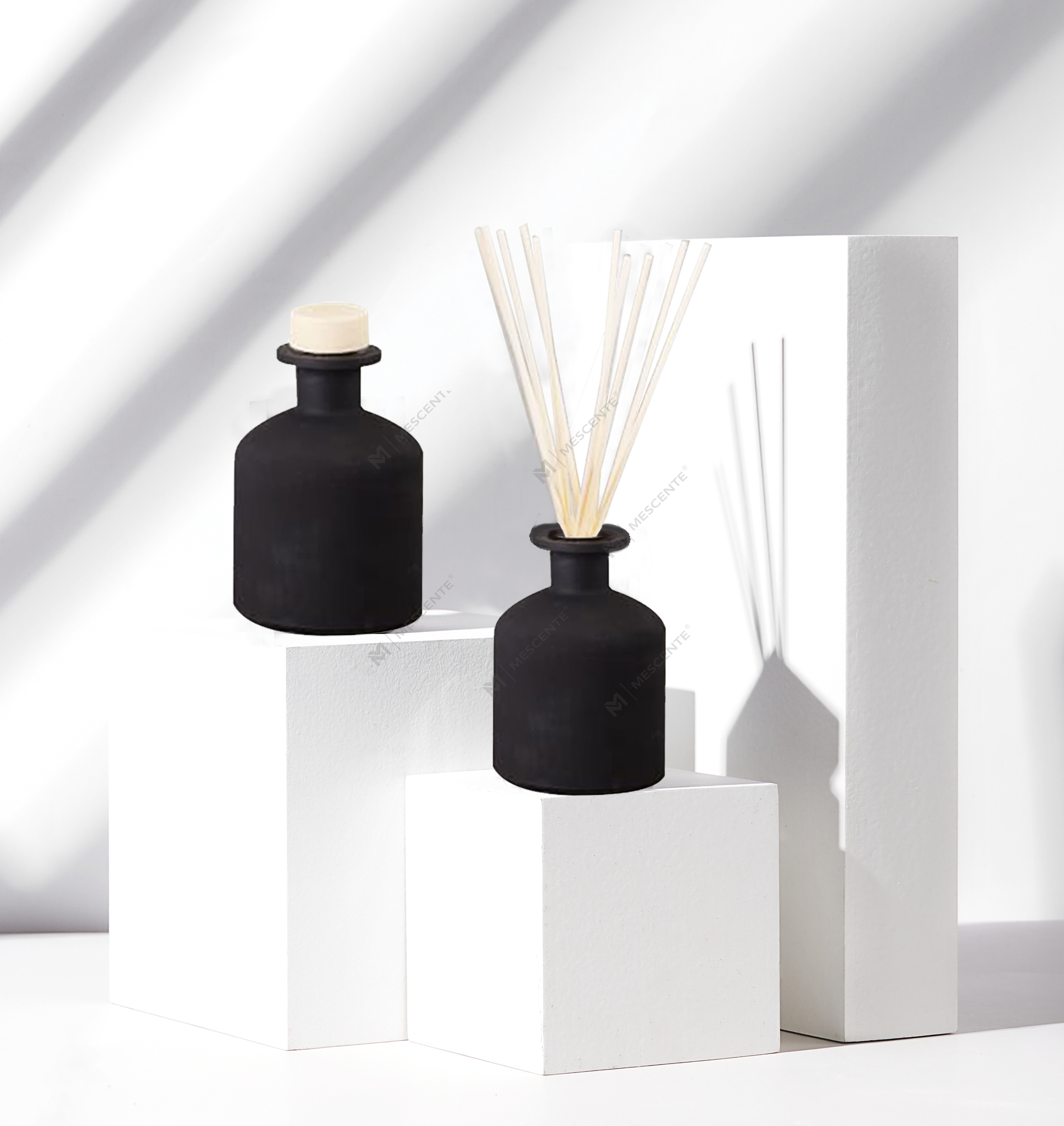 Custom Mescente Luxury 180ml Customised Glass Bottle Essential Oil Reed DiffuserSuzhou M&scent Is China Custom Mescente Luxury 180ml Customised Glass Bottle Essential Oil Reed Diffuser For Hotels ODM/OEM Suppliers, Co...View Product →
Inspect the supplier’s quality control routine. Do they check oil fill levels, cap torque, and reed packing counts? Can they provide a copy of their factory inspection report? How quickly do they respond to emails and design files? These soft factors often separate a smooth launch from a series of delays.
If you are buying for a hotel chain, also verify that the supplier can sustain consistent quality across multiple deliveries. A 180ml bottle may need to match a specified scent throw for months; if the supplier cannot document their own quality history, ask for client references in the hospitality sector.
Take a structured brief into your supplier conversations. This checklist covers the essentials:
Custom reed diffusers can be a strong addition to a fragrance brand or a hotel project, but success depends on how well you control the details. Start with the scope, validate the sample, and choose a manufacturer whose process is as structured as your specification. That is how you avoid the gap between a good sample and a reliable production run.

Address:
Building 10, No. 39, Muxu East Road, Mudu Town, Wuzhong District, Suzhou City, Jiangsu Province, China
Company
Products
Mobile
