



Home / Blog / Industry News / Private Label Reed Diffuser Production Process: Manufacturer's Step-by-Step Guide
Private Label Reed Diffuser Production Process: Manufacturer's Step-by-Step Guide
Content
Most reed diffusers look deceptively simple: a glass bottle, a fragrance oil blend, a bundle of reeds, and a cap. Behind a dependable private label reed diffuser, however, sits a production process with more moving parts than most buyers expect. The conclusion up front: brands that avoid leaking shipments, inconsistent scent throw, and slow-selling stock are the ones that understand how the factory controls each stage, and they work with a manufacturing partner that documents its process step by step.
This guide explains the private label reed diffuser production process from fragrance compounding to packed cartons, highlights the checkpoints that determine product quality, and gives you a practical checklist to use before approving a sample.
Reed diffuser manufacturing fits into five stages. Each one changes the final product's performance, shelf life, and the impression your customer gets when they open the box.
Everything starts with the oil. The manufacturer blends aroma chemicals, essential oils, and a carrier base into a diffuser oil with a specific viscosity and evaporation profile. The fragrance load, typically 15 to 30 percent for home fragrance diffusers, controls scent intensity, while the carrier must be thin enough to travel up the reeds without separating or evaporating unevenly. An experienced factory also checks the specific gravity of each batch so the formulation stays consistent from run to run.
Bottles arrive from glass or ceramic suppliers and go through washing, drying, and visual inspection for cracks, chips, or contamination. The neck finish must match the closure, whether crimped pump, screw cap, or rubber stopper, so the seal keeps the oil inside during shipping while remaining easy for the end user to open. For premium private label lines, the bottle is often the main differentiator, so factories keep a wide stock of standard shapes and also support custom molds.
Filling lines dose the oil by volume using piston or gravity fillers calibrated to a target fill height. Common volumes are 100 ml, 180 ml, and 250 ml, but private label orders can specify anything within the bottle's capacity. In-process weight checks at regular intervals keep the fill within tolerance, preventing both overfill waste and underfill complaints that damage your brand's reputation.
Reeds are cut to length, typically matched to the bottle height plus a few centimeters of exposed length. Many production lines pack reeds separately in the outer box rather than inserting them at the factory, which avoids oil splashing onto the label and keeps the box interior clean. The closure is then torqued or crimped to a set range, and a tamper-evident band or shrink seal may be applied.
Private label branding, including labels, neck tags, shrink sleeves, and outer gift boxes, is applied manually or with a semi-automatic labeling machine. Batch codes and production dates are printed at this stage so you can trace any quality complaint back to a specific run. Finally, inserts, reed sets, and care cards are added before the bottles are packed into master cartons with protective dividers.
Most quality problems in private label reed diffusers do not appear at the sample stage. They show up after the product has been in a warehouse for two months, or when a customer turns the bottle upside down and finds oil in the cap. The table below summarizes the in-process checks a reliable manufacturer runs during production.
| Production stage | Typical check | Acceptance criteria |
|---|---|---|
| Fragrance compounding | Specific gravity, viscosity, IFRA documentation | Matches approved reference batch |
| Bottle preparation | Visual inspection, neck finish check | No cracks, chips, or contamination |
| Filling | In-process fill weight every 30-60 minutes | Within 2% of target fill volume |
| Sealing | Torque test or crimp inspection | No leakage in inverted drop test |
| Labeling and packing | Label position, batch code readability | 100% readable and aligned |
If a manufacturer cannot tell you how they check fill weights, seal integrity, or batch consistency, treat that as a red flag. The cost of a rejected container in transit far exceeds the cost of an extra minute of inspection at the factory.
Two related factors determine how a reed diffuser performs in a real room: the fragrance load in the oil and the wicking efficiency of the reeds.
The fragrance load sets the ceiling for scent throw. In large spaces like hotel lobbies, standard formulations smell weak from across the room. Hotel-grade diffusers use higher fragrance loads and reeds engineered for faster wicking; our guide to high-fragrance reed diffusers for hotel use explains how scent throw and longevity are balanced in practice.
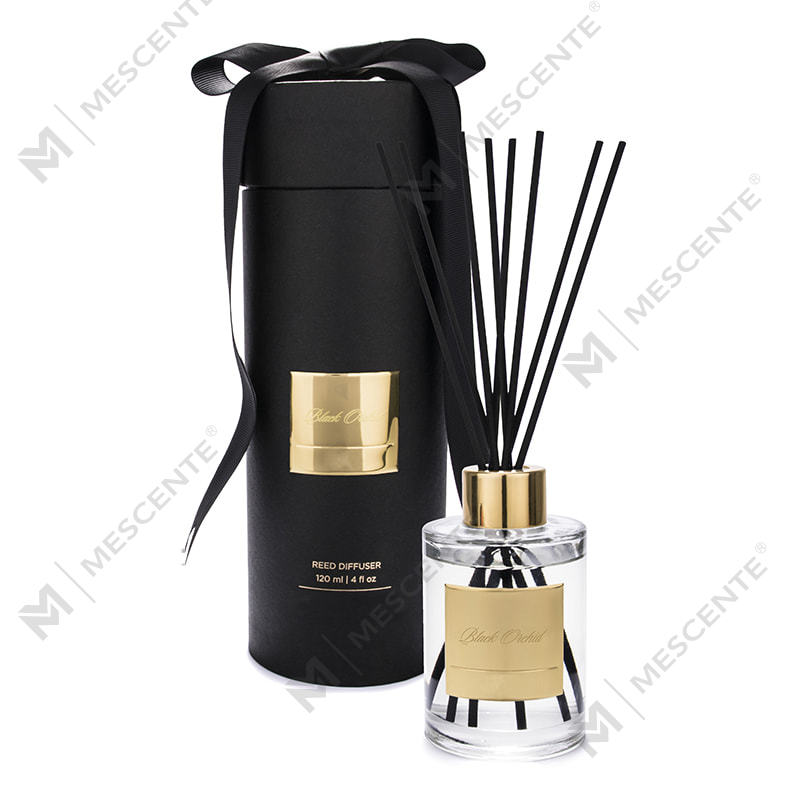
Wicking efficiency depends on reed material, diameter, and the number of reeds, as well as the oil's viscosity. Natural rattan reeds are the classic choice, but fiber reeds wick faster and deliver a stronger initial throw, which is why they appear in many premium private label lines. A luxury private label fiber-stick reed diffuser is a good reference example: the fibers draw oil upward quickly, creating a noticeable scent within the first hour, while the outer surface stays dry enough to handle. If you are comparing reed options, check how quickly the oil travels 10 cm up the reed and how often the customer needs to flip the reeds to refresh the scent.
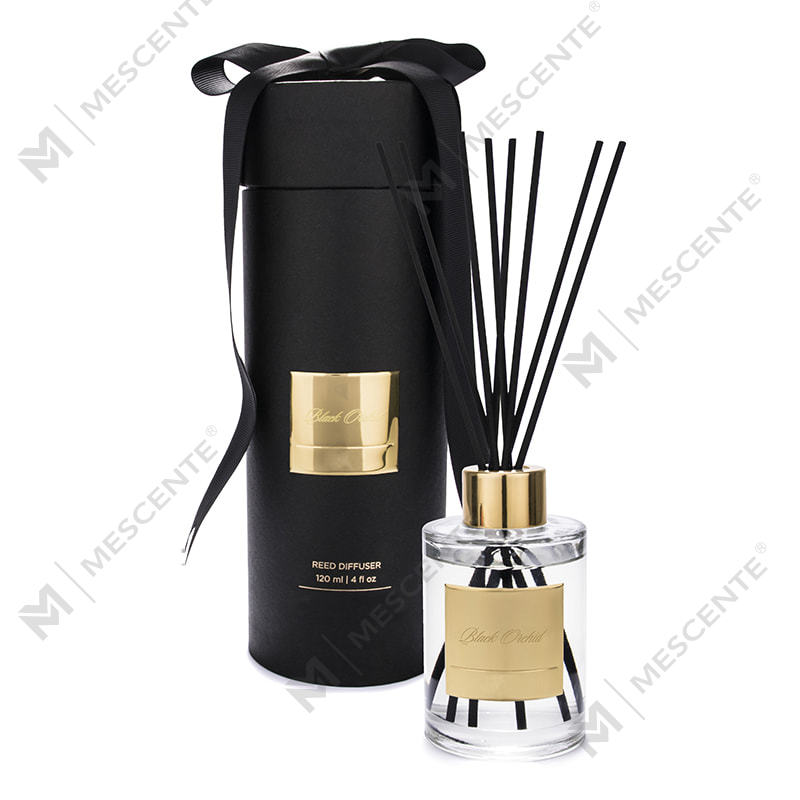 Custom M&Scent Luxury Private Label Home Fragrance Fiber Stick Reed Diffuser A29Suzhou M&scent Is China Custom M&Scent Luxury Private Label Home Fragrance Fiber Stick Reed Diffuser A29261-1 ODM/OEM Suppliers, Company,...View Product →
Carriers matter just as much as reeds. A poorly matched solvent will evaporate before the fragrance, leaving the bottle smelling of alcohol after a few weeks. Factories that understand wicking will recommend a carrier based on your target oil viscosity. For a deeper look, the article on natural essential oil reed diffuser wicking efficiency covers the technical relationship between oil composition and reed performance.
A private label program is rarely a single SKU. Most brands launch a diffuser in two or three sizes and a matching room spray or candle. The customization options below are common in reed diffuser production.
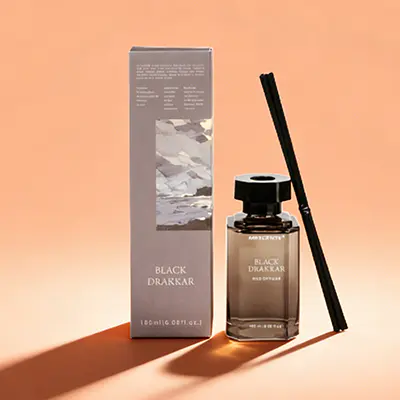
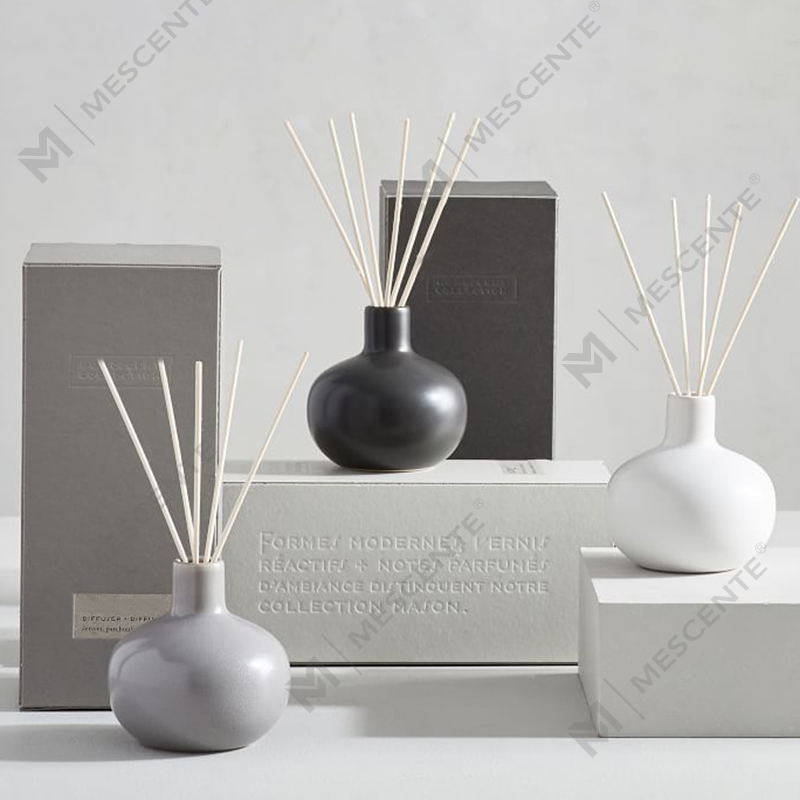
Your choice of bottle communicates quality before anyone smells the oil. Clear glass shows the oil color; frosted glass hides sediment and suits minimalist branding; ceramic adds weight and luxury. Standard bottles are the fastest and cheapest route, while custom molds involve tooling costs and longer lead times. Caps range from plain black phenolic to gold-finished aluminum, and reeds can be natural rattan, fiber, or colored wood. If you are planning a first order, a private label white frosted bottle reed diffuser set with box is a practical starting point because frosted white glass works across many fragrance profiles.
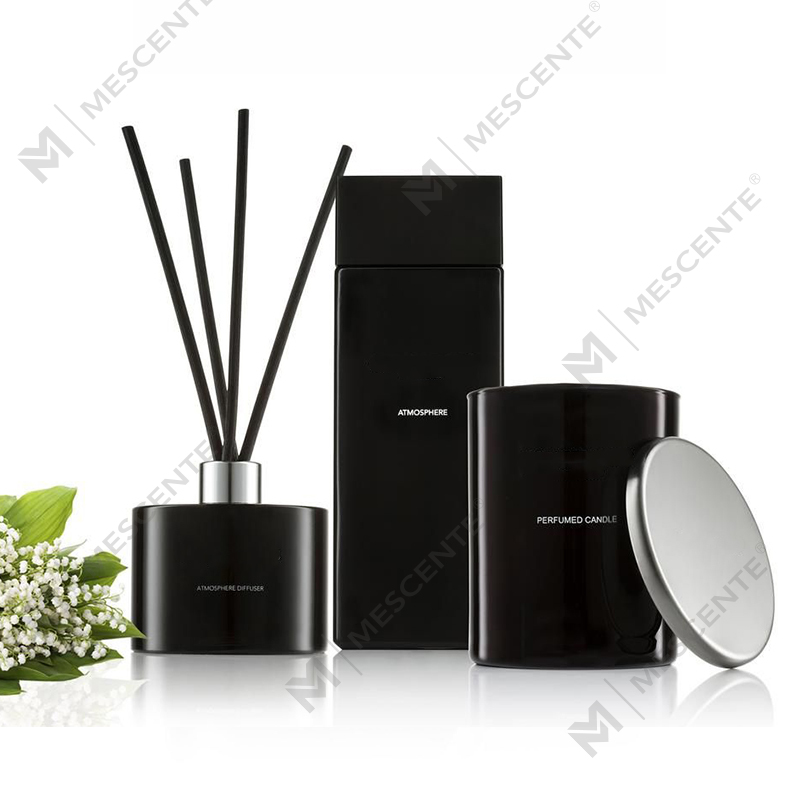 Custom Private Label White Frosted Bottle Aromatherapy Reed Diffuser Oils With BSuzhou M&scent Is China Custom Private Label White Frosted Bottle Aromatherapy Reed Diffuser Oils With Box A29148 ODM/OEM Suppliers, Comp...View Product →
Fragrance can be selected from the factory's library, matched to a reference scent you supply, or developed from scratch with a perfumer. Oil color is usually adjusted with compliant dyes to match the brand identity, though some buyers prefer clear oil for a natural look. Always request IFRA compliance documentation for each fragrance, since regulatory requirements affect your ability to sell in the EU, US, and other markets.
Label finish, whether matte, gloss, embossed, or foil-stamped, sets the perceived value. The outer box can be a simple carton, a rigid gift box, or a sleeve with a magnetic closure. For gift sets, factories can combine the diffuser with a candle or room spray in one presentation box. These details are decided before production because they affect tooling and assembly time.
Reed diffusers travel through hot warehouses, cold delivery trucks, and humid bathrooms. The oil must remain stable across these conditions: no cloudiness at low temperature, no color drift in direct light, and no excessive evaporation through the reed gap during storage.
Temperature swings also affect sealing. A bottle sealed at 22°C changes internal pressure when the product is shipped through a 45°C container. Manufacturers that solve the performance stability problem of reed diffusers under different environmental conditions use fill-level adjustments, seal specifications, and packaging that protects against thermal expansion.
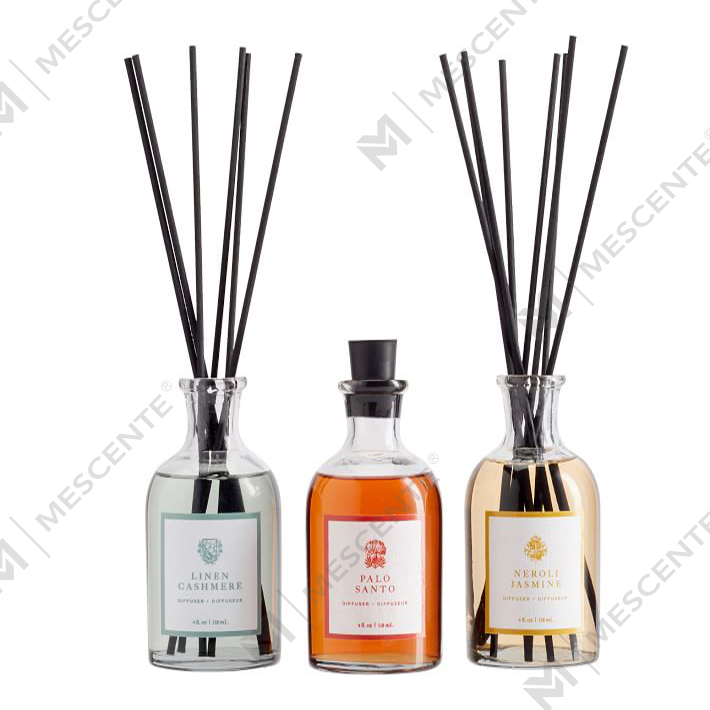
For hotel and contract programs, stability matters more because the product must perform identically across hundreds of rooms for weeks at a time. Hotel buyers commonly choose 180 ml bottles as a balance between refill frequency and cost; a customised 180 ml glass bottle reed diffuser for hotels demonstrates how the format is executed with commercial-grade components and bulk carton packing.
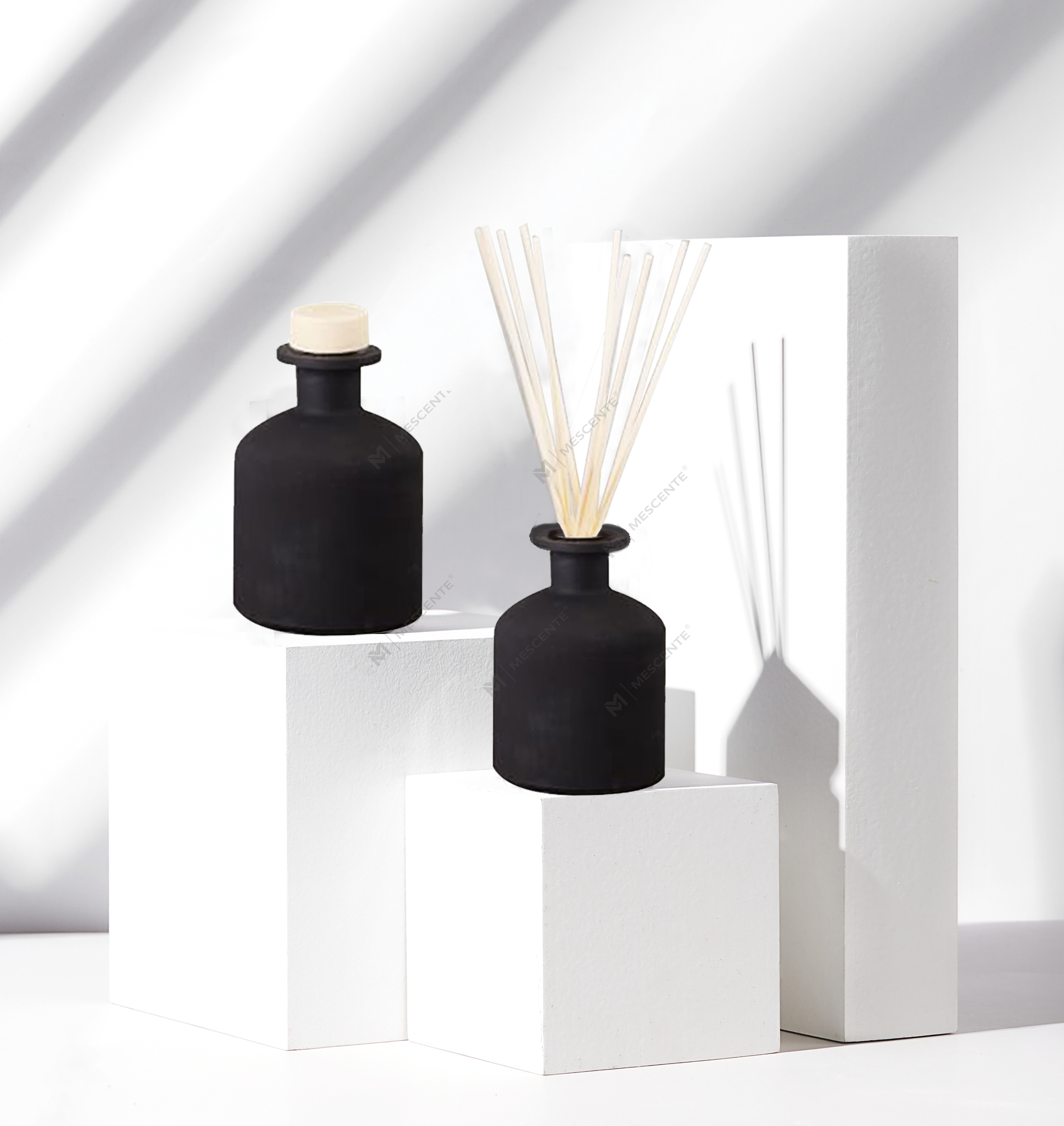 Custom Mescente Luxury 180ml Customised Glass Bottle Essential Oil Reed DiffuserSuzhou M&scent Is China Custom Mescente Luxury 180ml Customised Glass Bottle Essential Oil Reed Diffuser For Hotels ODM/OEM Suppliers, Co...View Product →
Use this list when evaluating a reed diffuser sample or a factory's production capability.
Choosing a manufacturer with a transparent process is the difference between a product that feels premium and one that arrives damaged or fading fast. When your supplier can walk you through each production step with confidence, the private label reed diffuser production process stops being a mystery and becomes a reliable foundation for your brand.

Address:
Building 10, No. 39, Muxu East Road, Mudu Town, Wuzhong District, Suzhou City, Jiangsu Province, China
Company
Products
Mobile
