


Home / Blog / Industry News / How to Test Reed Diffuser Fragrance Quality: Practical Guide for Buyers
How to Test Reed Diffuser Fragrance Quality: Practical Guide for Buyers
Content
Imagine receiving a reed diffuser sample that looks perfect on the shelf. The label is clean, the glass feels solid, and the oil smells strong when you open the bottle. Three days later, the room is barely scented, the reeds are dry at the top, and the fragrance has turned flat. That gap between first impression and long-term performance is exactly why fragrance quality testing matters, and why careful buyers test before they invest.
Reed diffuser fragrance quality is not how strong the oil smells in the bottle; it is how consistently the product releases scent over weeks, in an ordinary room, and across every unit of an order. You do not need a laboratory to evaluate a sample. A structured, repeatable test protocol exposes most quality problems before they reach your customers.
Fragrance quality starts inside the bottle. The ratio between fragrance oil and carrier base controls both scent throw and lifespan. Commercial reed diffusers typically contain 10-30% fragrance oil; premium and hotel-grade formulas usually sit at 20-30%. Below 10%, most formulas can barely scent an average bedroom, regardless of reed quality.
Ask the supplier for the fragrance percentage by weight. Weigh the bottle when it arrives, record the net fill, and check a second bottle from the same delivery. Underfill of even 5% shortens diffuser life and makes the fragrance feel gradually weaker. If a supplier will not disclose fragrance load, treat that as a quality warning by itself.
The carrier oil determines how the fragrance travels up the reeds. Dipropylene glycol (DPG), isopropyl myristate (IPM), and fractionated coconut oil (FCO) are common bases. A good carrier evaporates steadily, carries the fragrance oil evenly, and leaves no sticky residue on the reeds. A poor carrier suppresses top notes, clogs the reeds, or evaporates so quickly that the diffuser empties in three weeks.
| Checkpoint | What to evaluate | Acceptable result | Warning sign |
|---|---|---|---|
| Fragrance load | Percentage of fragrance oil by weight | 20-30% for premium or hotel-grade formulas | Below 10%, or oil separates from carrier |
| Carrier clarity | Liquid clarity at room temperature | Uniform, transparent liquid | Haze, sediment, or separation after 48 hours |
| Fill level | Net weight per bottle vs. stated volume | Within 2% of stated fill | Consistent underfill across multiple samples |
| Bottle seal | Leak check with bottle on its side for 24 hours | Completely dry seal | Oil creep around the cap or sticky base |
Paper scent strips only tell you what the oil smells like. They do not tell you how well the reeds wick the fragrance or how the scent spreads through a space. Run the test in a real room of roughly 12-20 square metres, away from direct sunlight and direct air conditioning drafts.
Score strength from 1 to 5, note the character of the fragrance, and record any off-note that appears after a few days. A diffuser that cannot scent a closed bedroom within 24 hours will not improve with age.
Customers judge a reed diffuser by how many weeks it keeps performing. Weigh the bottle at the start, then every three to four days, and calculate how many grams are lost per week. A typical 100-180ml diffuser should deliver six to ten weeks; a well-built formula with a 20-30% fragrance load and compatible reeds can reach twelve weeks or more.
Pay attention to how oil consumption changes. If evaporation slows sharply in the third or fourth week while the bottle is still half full, the reeds have clogged. That is a reed system failure, not an oil problem. Hotel and long-stay environments need the most stable version of this equation.
High temperature speeds up evaporation, high humidity suppresses scent throw, and strong airflow pulls the fragrance away before you can perceive it. If your first test runs in summer, repeat it in cooler conditions or compare the unit against a known reference. Our note on how to solve reed diffuser performance stability problems under different environmental conditions explains how these variables interact.
For spaces where continuous output is non-negotiable, the 180ml customised glass bottle essential oil reed diffuser for hotels is designed around sustained, even release rather than a dramatic first impression.
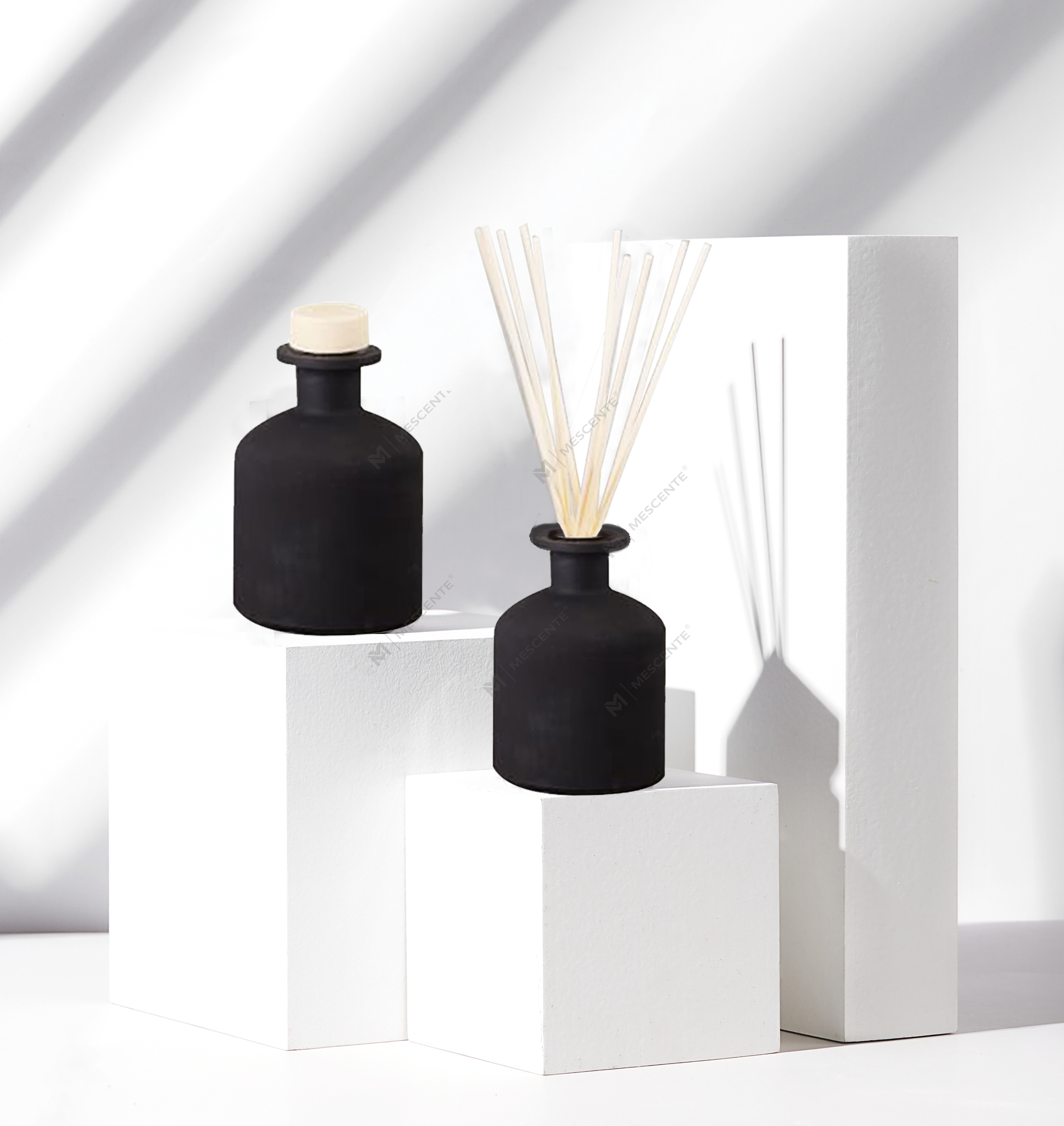 Custom Mescente Luxury 180ml Customised Glass Bottle Essential Oil Reed DiffuserSuzhou M&scent Is China Custom Mescente Luxury 180ml Customised Glass Bottle Essential Oil Reed Diffuser For Hotels ODM/OEM Suppliers, Co...View Product →
The best juice in the world is useless if the reeds cannot deliver it. Fibre reeds wick faster and behave more consistently than natural rattan, which is why most private label and premium programs use them. Inspect the top of each reed daily after the first flip.
After 24 hours, the entire reed should be saturated. If the top 20% stays dry, the reed is too dense or the carrier is too heavy. After ten to fourteen days, check for white crust, crystalline buildup, or a greasy film on the reed surface; these are signs of carrier incompatibility or low-grade fragrance oil.
A narrow-neck diffuser needs eight to ten reeds. A wide opening needs twelve to fifteen. Too few sticks produce weak throw no matter how good the oil is. Flip the reeds every three to four days during the test period and note how quickly scent intensity returns; slow recovery points to clogged capillaries. The relationship between oil type and reed material is covered in more detail in our article on natural essential oil reed diffuser wicking efficiency.
When building a product line, start with a predictable pairing of quality juice and compatible sticks; a luxury private label home fragrance fiber stick reed diffuser gives you a stable baseline before you scale to different bottle formats.
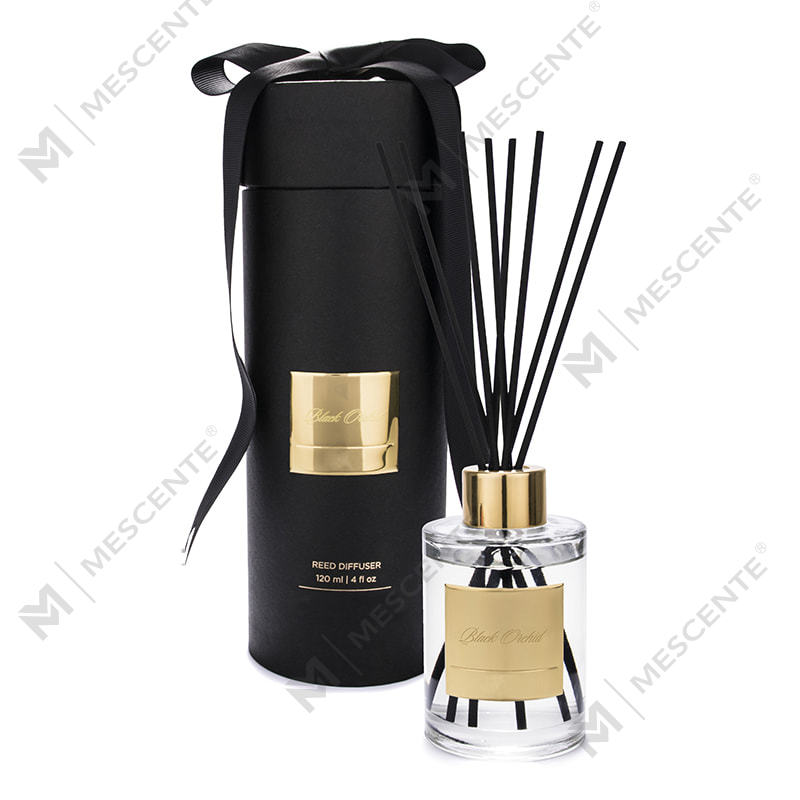 Custom M&Scent Luxury Private Label Home Fragrance Fiber Stick Reed Diffuser A29Suzhou M&scent Is China Custom M&Scent Luxury Private Label Home Fragrance Fiber Stick Reed Diffuser A29261-1 ODM/OEM Suppliers, Company,...View Product →
Set aside one unopened bottle and one opened bottle, store them away from direct light, and inspect them after thirty days. These checks catch problems that no sniff test reveals.
One perfect sample is easy to produce. Real quality appears when you compare three bottles from the same batch, and ideally a second set from a different production run. Use the same measurements for each: fill weight, oil clarity, scent strength at 24 hours, reed saturation, and weight loss after two weeks. The spread between the best and worst bottle should be small.
For a private label program, batch consistency is non-negotiable because your brand name is on the label. When you evaluate a supplier, ask how they control fragrance load and fill accuracy across production lots, and always request samples from more than one run. A private label white frosted bottle aromatherapy reed diffuser with box is a good example of a format that needs to perform identically across every retail unit.
 Custom Private Label White Frosted Bottle Aromatherapy Reed Diffuser Oils With BSuzhou M&scent Is China Custom Private Label White Frosted Bottle Aromatherapy Reed Diffuser Oils With Box A29148 ODM/OEM Suppliers, Comp...View Product →
No specialised equipment is required. Use the same sequence every time you receive a sample or a new batch:
The conclusion is straightforward: a reed diffuser only earns its claim of quality when scent throw, longevity, and consistency survive a structured test. Whether you are sourcing for a boutique brand, a hotel project, or a retail line, the same checks apply. When a supplier cannot answer basic questions about fragrance load, carrier composition, and reed type, that silence is a quality warning in itself.
For more on how these checks work at commercial scale, see our analysis of high fragrance reed diffuser scent throw and longevity for hotel use.
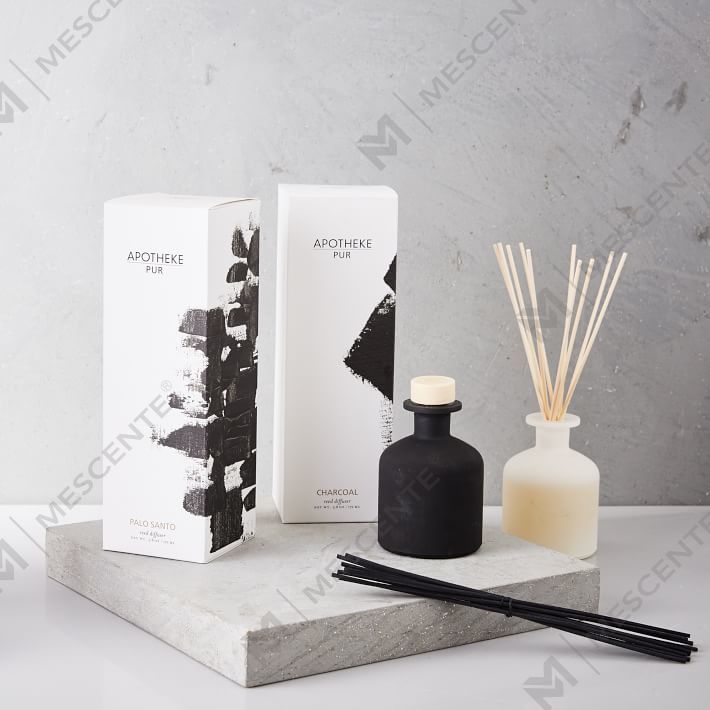
.jpg "150ml Home Fragrance Reed Diffuser Gift Set With Scented Candle A99189")
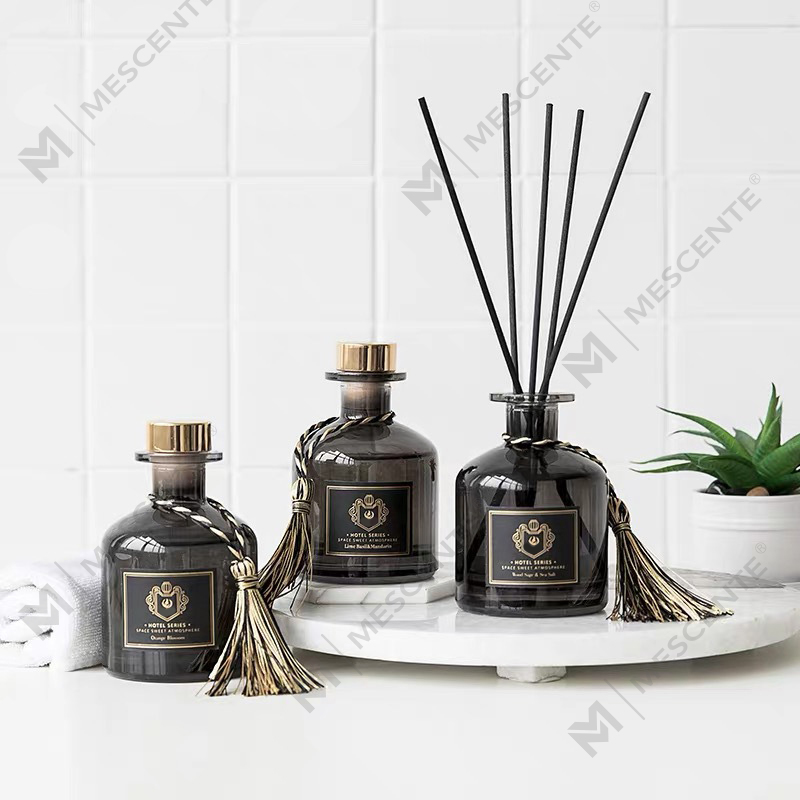
-1.jpg "140g Home Scented Candle Fragrance Reed Diffuser Gift Set A99199")

Address:
Building 10, No. 39, Muxu East Road, Mudu Town, Wuzhong District, Suzhou City, Jiangsu Province, China
Company
Products
Mobile
