



Home / Blog / Industry News / How to Choose a Reliable Reed Diffuser Manufacturer: An Expert Buyer's Guide
How to Choose a Reliable Reed Diffuser Manufacturer: An Expert Buyer's Guide
Content
Choosing a reed diffuser manufacturer is usually the most consequential decision in a home fragrance launch. You may already have a scent direction, a bottle sketch, and a target retail price, but a single bad supplier choice can erase all of that. A factory ships beautiful samples, you approve the production order, and then the actual batch arrives with crooked labels, uneven fill levels, and a fragrance that barely carries across the room. By that point, the project timeline and your buyer's confidence are already damaged.
A reliable reed diffuser manufacturer produces consistent, durable, on-spec products at the agreed cost and communicates honestly from the first inquiry to the final shipment. That definition sounds simple, but it depends on five separate capabilities that you can verify before signing a contract.
Reliability is not one attribute; it is a bundle of distinct capabilities that trade against each other. Evaluating them separately is the only way to avoid falling for a supplier with a beautiful catalogue but weak processes.
Score candidates against each dimension independently. A factory that produces good samples but communicates poorly will still create costly surprises at the production stage.
Many companies that market themselves as reed diffuser manufacturers are actually trading firms or sourcing agents. They aggregate products from multiple factories and resell them with a markup. Trading companies are not automatically a bad choice, but they add distance between you and the people filling your bottles, which makes quality audits and corrective actions harder.
A genuine manufacturer can show you:
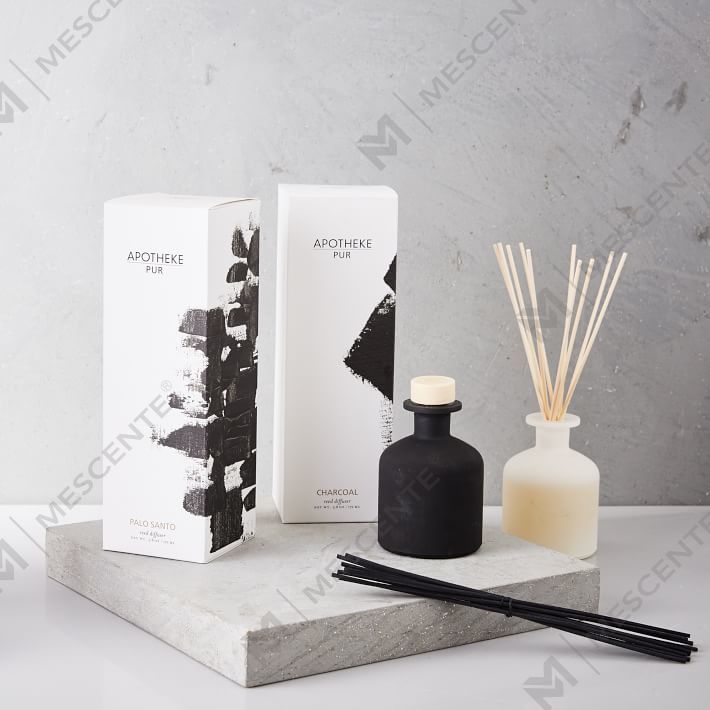
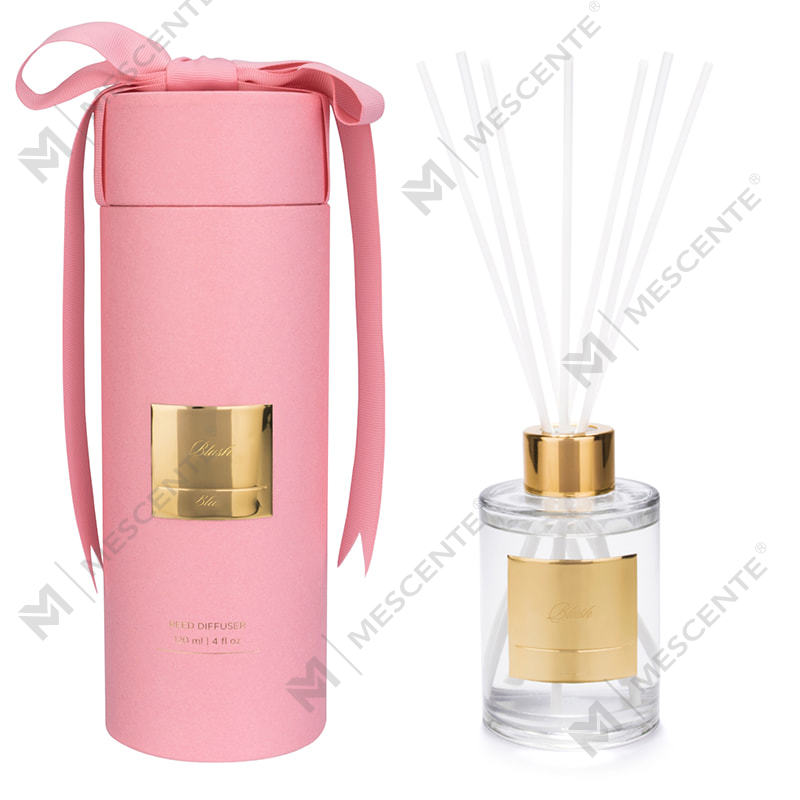
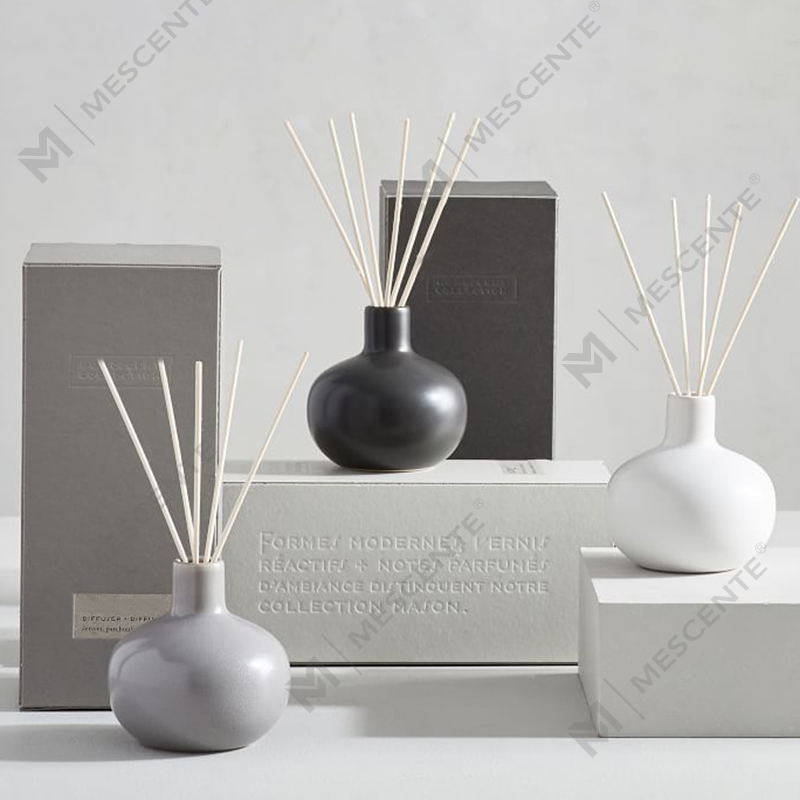
Factories with strong manufacturing depth tend to maintain broad product catalogues and refresh them consistently. A well-organised reed diffuser range, arranged by bottle shape, material, colour, and theme, is usually evidence of a company that runs production as its core business rather than as a side activity.
A reed diffuser looks like a simple product, but every component influences performance. Ask the manufacturer how it controls quality at each level.
Glass bottles need inspection for chips, cracks, and uneven walls before filling. A hairline crack can turn into a leaking bottle in transit, and a weak seal lets fragrance evaporate before the product reaches the shelf. Confirm that the manufacturer tests closure torque and checks bottles for dimensional consistency.
Reeds control wicking. Natural rattan reeds draw the oil upward through capillary action, and the number, length, and porosity of the reeds must match the bottle neck and the viscosity of the fragrance oil. Too few reeds produce a weak throw; too many can oversaturate and cause leakage. A competent manufacturer will recommend the correct configuration instead of asking you to guess.
The fragrance formula and carrier base determine both scent performance and product safety. Ask for the fragrance oil percentage, the carrier solvent, and whether the blend avoids ingredients that could irritate skin or leave residue. The oil should be tested for oxidation and UV stability so that your product does not change colour or smell during shelf life.
Every bottle must receive the same fill weight, the same cap tightening, and the same label position. These might sound like small details, but they determine whether your customers notice inconsistency. The manufacturer should demonstrate in-process checkpoints, not just a final visual inspection.
Effective quality control spans three stages: incoming materials, in-process checks, and pre-shipment inspection. Ask how many checkpoints the factory uses and what inspection reports accompany your order. A manufacturer that can explain how it solves performance stability under different environmental conditions is demonstrating real process understanding.
Scent throw is the amount of fragrance released into the room; longevity is how many weeks the product continues to perform. These two metrics work against each other. A higher fragrance load delivers a stronger throw but shortens product life. A reliable manufacturer will help you find the right balance for your brand positioning, bottle size, and target market.
Request concrete data:
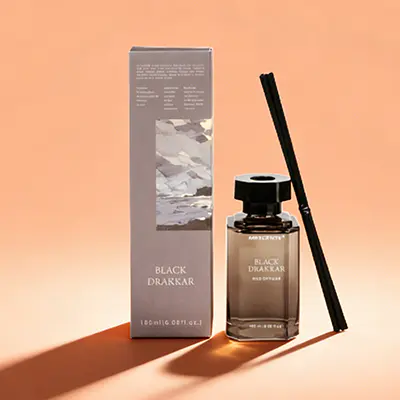
Vague answers like "very strong" or "it lasts a long time" are not data. The performance bar is even higher for commercial clients, who need predictable output and long maintenance intervals. Manufacturers serving the hospitality segment can point to hotel-oriented references, such as a 180ml customised glass bottle reed diffuser engineered for hotel use, where consistent performance is a contractual requirement. Ask how the factory tests high-fragrance reed diffusers for scent throw and longevity in hospitality settings, and request the numbers behind those tests.
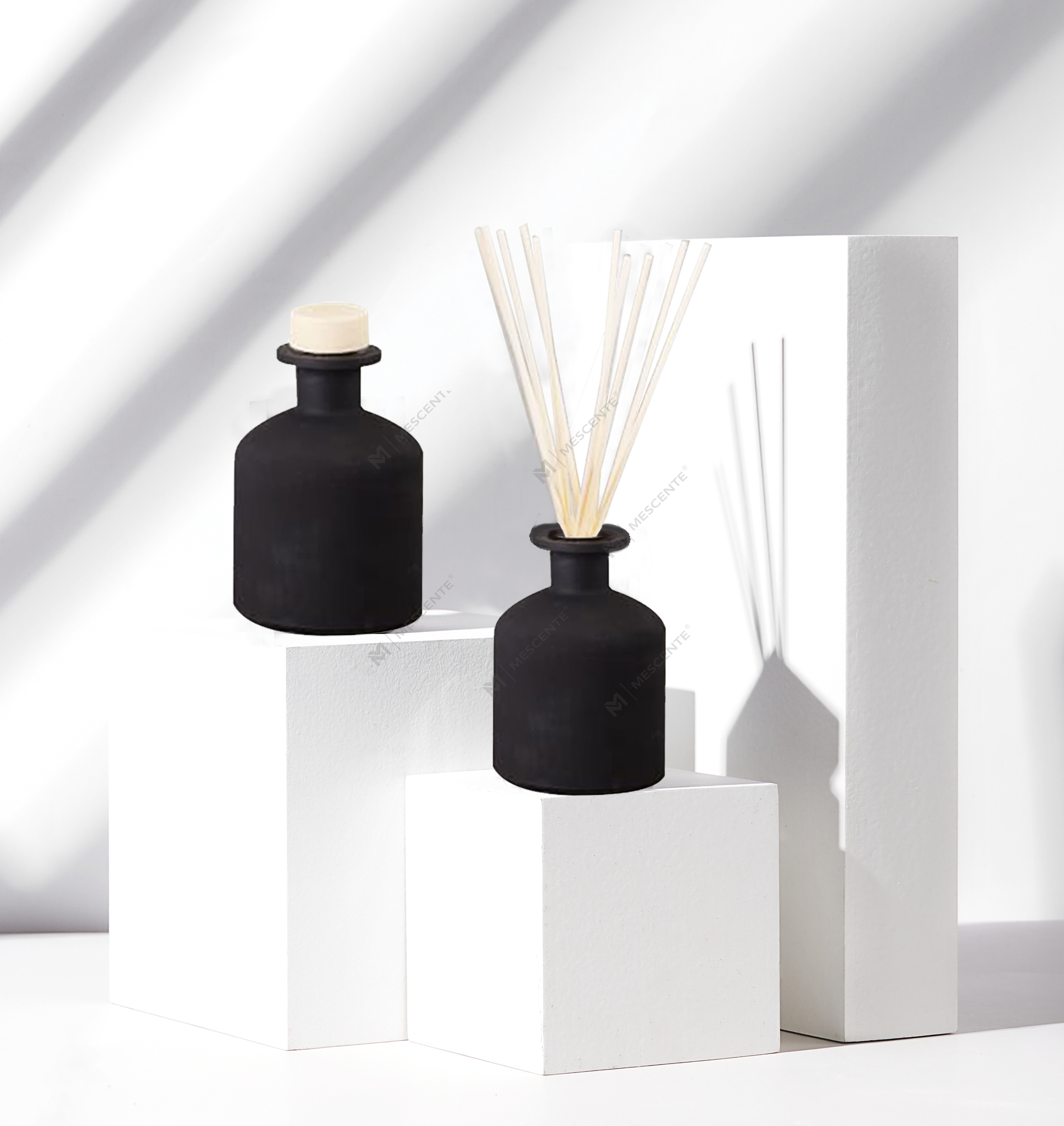 Custom Mescente Luxury 180ml Customised Glass Bottle Essential Oil Reed DiffuserSuzhou M&scent Is China Custom Mescente Luxury 180ml Customised Glass Bottle Essential Oil Reed Diffuser For Hotels ODM/OEM Suppliers, Co...View Product →
Few brands launch a reed diffuser by picking a stock item off a shelf. Most need their own bottle, label, fragrance, and packaging. The depth of the manufacturer's customization capability is one of the clearest reliability signals.
Customization comes in several layers:
A trustworthy manufacturer separates what is feasible at your order volume from what is not, and quotes mould costs separately from unit pricing. A luxury private-label fibre-stick reed diffuser is a common starting point for brands that want a premium finish without paying for a new mould. For deeper differentiation, container development becomes the central question. A custom ceramic bottle reed diffuser demonstrates how far a manufacturer's supply chain can extend when moulds, glazes, and filling systems are managed in-house.
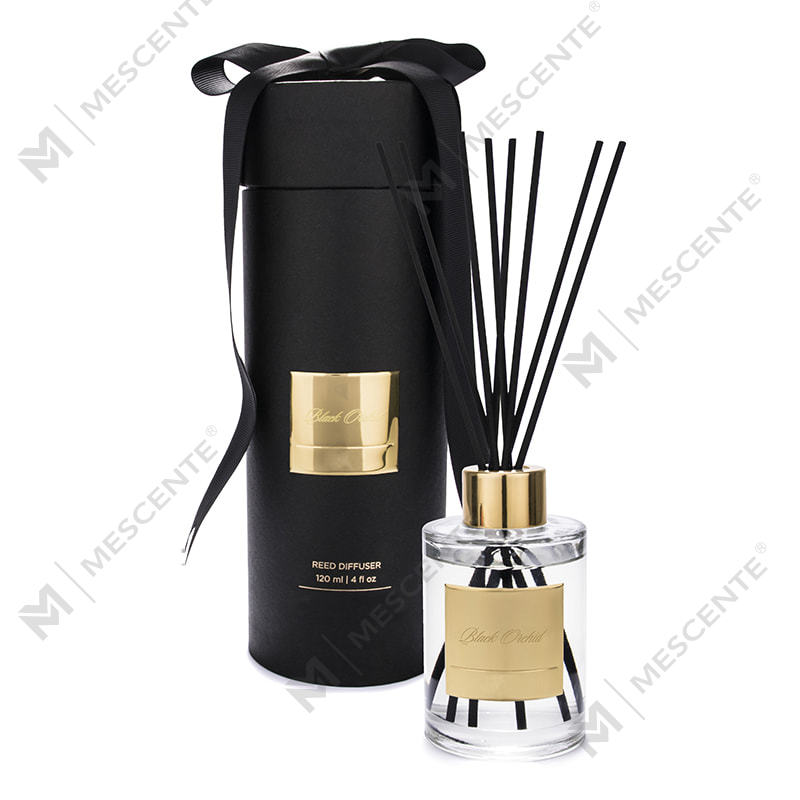 Custom M&Scent Luxury Private Label Home Fragrance Fiber Stick Reed Diffuser A29Suzhou M&scent Is China Custom M&Scent Luxury Private Label Home Fragrance Fiber Stick Reed Diffuser A29261-1 ODM/OEM Suppliers, Company,...View Product →
When your production runs are measured in thousands of pieces and your supplier sits in a different time zone, communication quality directly affects product quality. A factory that answers slowly during the inquiry phase will not become more responsive after you send the deposit.
Notice how quickly the supplier answers technical questions and whether the answers are specific. Does the sales engineer propose alternatives when your requested bottle or fragrance is not feasible? Is the quotation itemised for materials, filling, packaging, and tooling? Does the contract define defect, rework, and compensation terms?
Transparency also shows in a company's public behaviour. A supplier that publishes detailed information about quality topics, packaging standards, and compliance requirements is usually confident in its operations and willing to be examined.
Certain behaviours should end the conversation immediately:
Any single red flag on this list is enough to pause. Two or more should rule the candidate out entirely.
Because reliability is multidimensional, a scorecard helps you compare candidates objectively. Use the table below as a starting point and add weighting based on what matters most for your brand.
| Evaluation area | Key questions to ask | Evidence of a strong candidate |
|---|---|---|
| Manufacturing depth | Do you own the factory? Can we visit? | Detailed process description, in-house filling, clear facility location |
| Quality control | How many inspection points do you operate? | Multiple checkpoints from incoming materials to pre-shipment |
| Fragrance performance | What are your scent throw and longevity test results? | Specific oil percentage, documented test method, repeatable results |
| Customization | What is the MOQ for private label and custom bottles? | Clear MOQ levels, separate mould cost, realistic sampling timeline |
| Communication | What is your typical response time? | Same-day response, written confirmation, proactive delay updates |
The final step is to create your own weighted scoring from these five dimensions. A candidate that scores well across all of them is far more likely to deliver a successful production run than one that wins on price alone.
Choosing a reed diffuser manufacturer is not about finding the lowest unit price or the most impressive sample box. It is about verifying that the factory can reproduce your product at scale, hit the required quality standard, deliver on schedule, and communicate honestly when something goes wrong.
Start with a supplier's reed diffuser product line, request samples from current production, and push for the technical details behind its fragrance performance. The answers you receive will tell you whether you are dealing with a genuine manufacturer or just a persuasive sales office.

Address:
Building 10, No. 39, Muxu East Road, Mudu Town, Wuzhong District, Suzhou City, Jiangsu Province, China
Company
Products
Mobile
