



Home / Blog / Industry News / Reed Diffuser Production Quality Standards: A Practical Guide for Buyers
Reed Diffuser Production Quality Standards: A Practical Guide for Buyers
Content
A reed diffuser can look identical to a competitor's product on the shelf and still fail in ways that become visible only after the consumer opens the box. The scent fades after ten days. The reeds develop a white crust. The liquid evaporates unevenly from one room to the next. The label starts to peel because alcohol in the formula attacks the adhesive. For a brand sourcing private-label reed diffusers, none of these failures can be predicted by admiring a sample bottle. Production quality standards are the practical tool that separates a diffuser that performs reliably from one that damages a brand with every return and negative review. The standards that matter most fall into five groups: regulatory compliance, scent performance, material quality, packaging, and batch consistency.
IFRA compliance is the first gate. The International Fragrance Association restricts the maximum allowed dosage of fragrance ingredients in specific product categories, and a reed diffuser counts as a high-exposure product because it evaporates continuously in a living space. A fragrance oil that is acceptable at 8% in a candle may have a far lower IFRA ceiling in a reed diffuser. A responsible manufacturer obtains an IFRA certificate for the finished formula and calculates the safe maximum before any scale-up. Buyers should request that document, together with the Safety Data Sheet and an allergen declaration, before approving a sample.
The diffuser base, or solvent system, is equally important. Common bases include isopropyl myristate, dipropylene glycol, and synthetic isoparaffinic hydrocarbons. The base must be colorless, odorless, chemically compatible with the selected fragrance, and low in volatile organic compounds. A cheap base can carry a residual petrochemical smell, discolor within weeks, or interfere with wicking. Certain solvents also increase the risk of phase separation when the fragrance oil contains heavy resins or citrus fractions.
At a minimum, a supplier should be able to provide these documents:
Fragrance load is the most influential performance variable in reed diffuser production. Most commercial formulas sit between 10% and 30% fragrance oil by weight. Below 10%, the scent is often too faint for a normal-sized room. Above 30%, the fragrance can saturate the sticks, crystallize near the surface, or make the top notes fade prematurely. The correct percentage depends on the molecular weight of the fragrance, the solvent system, and the room size the product is designed for. A quality manufacturer determines this number by testing, not by guessing.
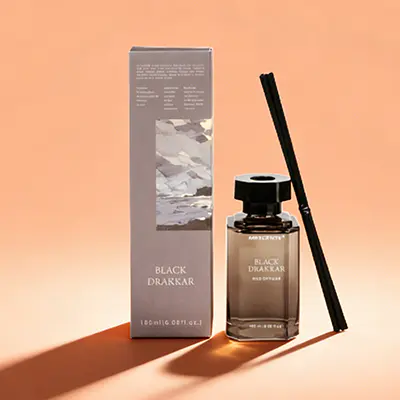
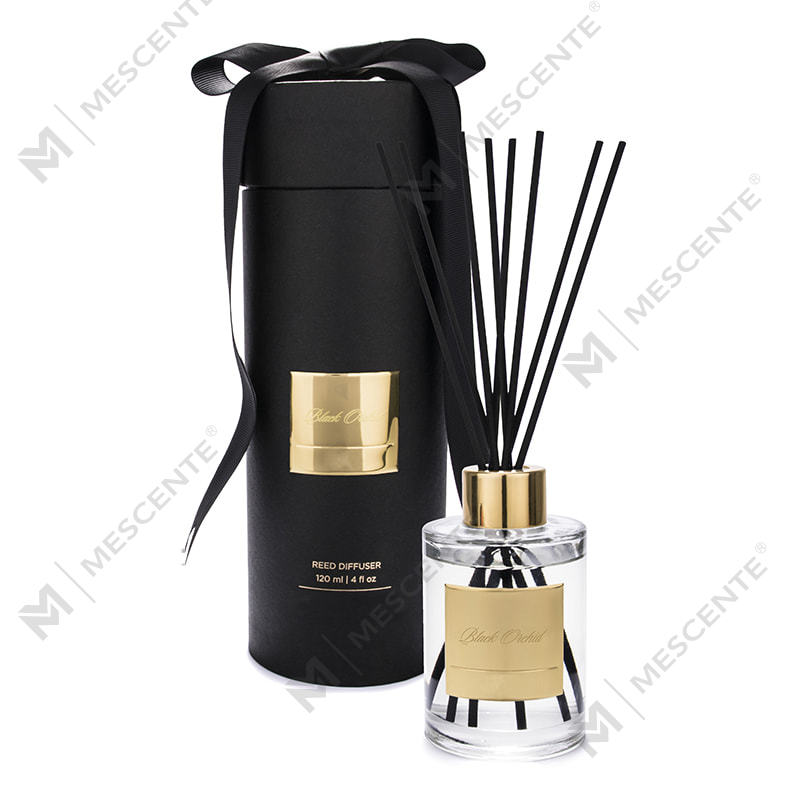
Natural rattan reeds are still common, but their pore structure varies from one harvest to another, which makes the wicking rate unpredictable. Fiber sticks made from polymer or cellulosic microfibers offer more consistent capillary performance. When fiber sticks are paired with a formula designed for their structure, the result is a stable scent release. Producing a custom fiber-stick reed diffuser with private label is a practical example of how stick diameter, porosity, and fragrance load have to be matched from the start.
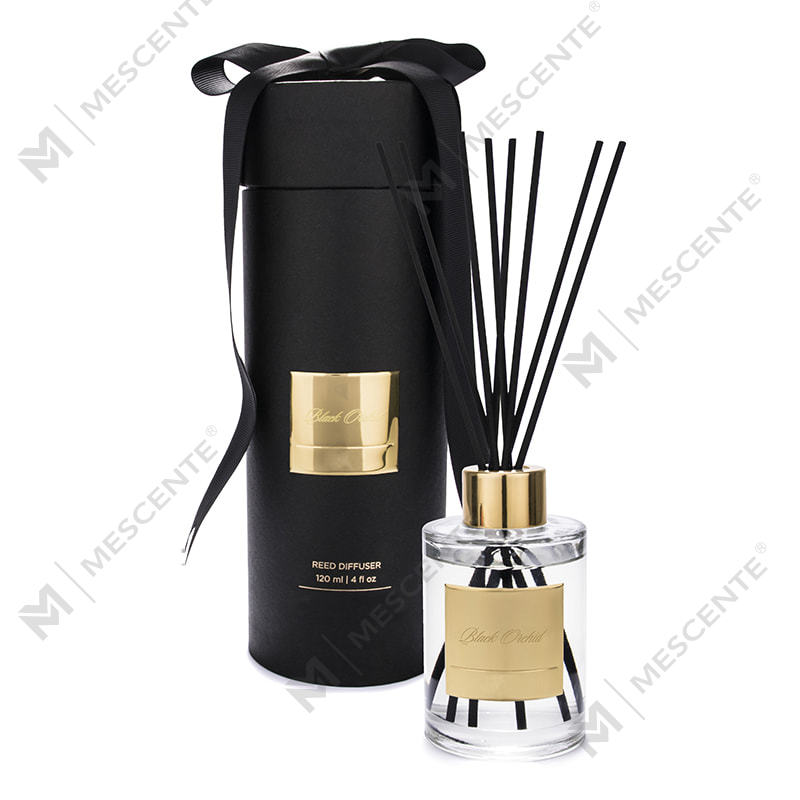 Custom M&Scent Luxury Private Label Home Fragrance Fiber Stick Reed Diffuser A29Suzhou M&scent Is China Custom M&Scent Luxury Private Label Home Fragrance Fiber Stick Reed Diffuser A29261-1 ODM/OEM Suppliers, Company,...View Product →
A simple wicking test can be done on any formula: insert the reeds into the finished liquid and measure the liquid rise over the first 24 hours. The result should be steady. If the liquid races up the stick and forms a wet spot on the table, the stick is too porous for that formula. If it only dampens the bottom third of the stick, the product will never fill a room with scent.
Realistic expectations matter. A 100 ml reed diffuser with four standard reeds typically delivers 45 to 60 days of fragrance in a bedroom at room temperature, while a 180 ml bottle can last roughly 90 to 120 days under similar conditions. These figures vary with ambient temperature, humidity, and air movement, but a manufacturer that keeps evaporation data can show its own measured curves instead of promising a vague three to six months. For hotel projects, where a consistent scent is expected across hundreds of rooms, this data is essential. A clear example is the 180ml customized glass bottle reed diffuser for hotels; it balances product size, fragrance load, and stick count for continuous use.
 Custom Mescente Luxury 180ml Customised Glass Bottle Essential Oil Reed DiffuserSuzhou M&scent Is China Custom Mescente Luxury 180ml Customised Glass Bottle Essential Oil Reed Diffuser For Hotels ODM/OEM Suppliers, Co...View Product →
The glass bottle and its closure account for most of the damage claims in cross-border reed diffuser trade. The seal between the bottle neck and the metal or plastic collar must prevent leakage during shipping and control the evaporation area. A very wide opening evaporates quickly but may need more reeds and shortens the product's life; a very narrow opening is easier to seal but limits how many sticks fit. A reliable factory runs an inverted-bottle test for at least 24 hours and a drop test at a defined height before approving a new bottle and cap combination.
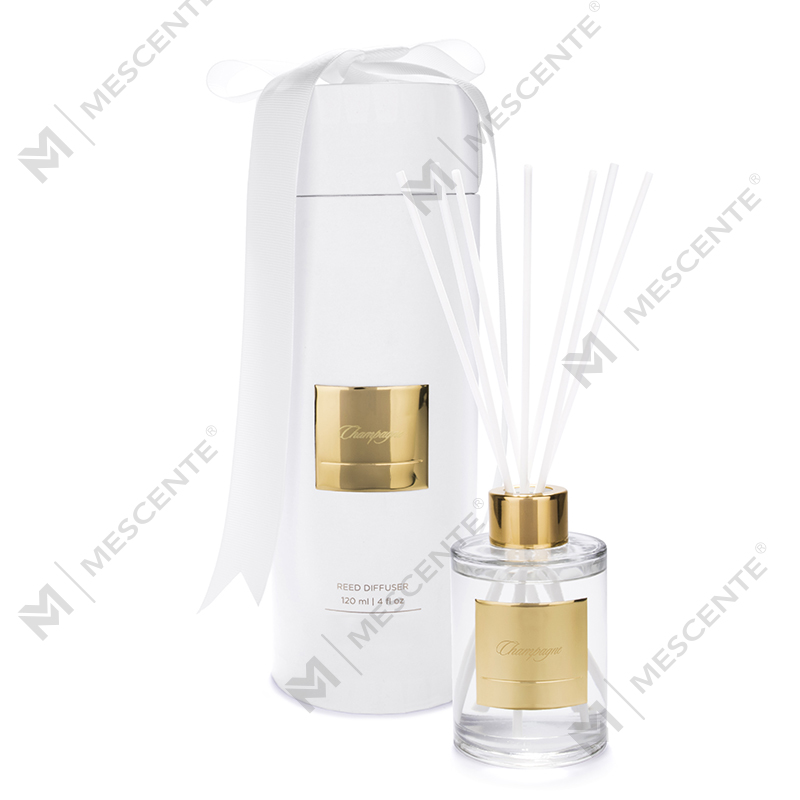
Labels are another common quality gap. A label that looks good in a product photo may absorb fragrance oil or alcohol from the liquid, blurring the ink and shrinking the adhesive. If the formula contains alcohol, the label needs a wash-resistant coating or lamination. Full-color printing on glass, ceramic, and tinted surfaces should be tested with an abrasion rub test. Packaging that combines multiple items, such as white frosted bottle private-label reed diffuser with gift box, also needs standardization so that labels, inserts, and outer boxes arrive looking identical from one batch to the next.
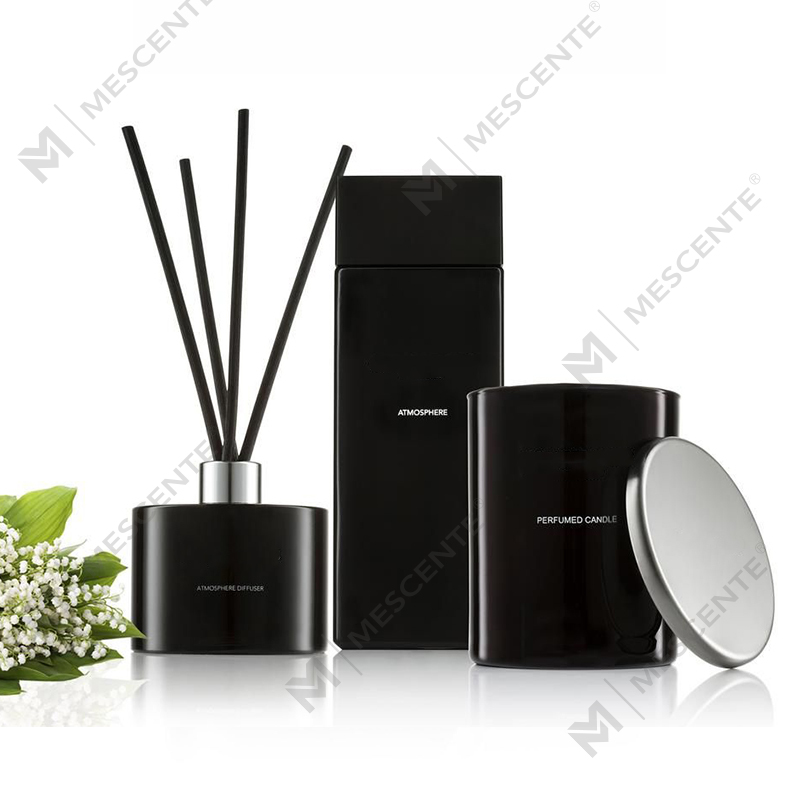 Custom Private Label White Frosted Bottle Aromatherapy Reed Diffuser Oils With BSuzhou M&scent Is China Custom Private Label White Frosted Bottle Aromatherapy Reed Diffuser Oils With Box A29148 ODM/OEM Suppliers, Comp...View Product →
Transport packaging is easy to underestimate. Bottles that survive the assembly line can crack when a carton is stacked at the bottom of a container in a humid summer shipment. Corrugated box compression strength, foam or pulp inserts, absorbent liners, and pallet layout all belong in the quality plan. A factory that has handled wholesale orders and export shipments can usually show past loading plans and explain how it protects fragile glass in transit.
Batch consistency is the complaint that haunts private-label programs more than any other. Sample approval is straightforward; repeating that sample through normal production is far harder. Drift usually comes from identifiable sources: fragrance oil deliveries that vary, fill weights that slip, reeds from a different bundle, or ink that changes because the print shop switched suppliers.
A solid production file should therefore include these elements:
| Control point | Method | Typical acceptance |
|---|---|---|
| Fill weight | Digital scale check | ±2% of specified fill |
| Fragrance load | Refractometer or GC analysis | ±1% of formulation |
| Seal integrity | Inverted bottle test for 24h | No leakage |
| Label adhesion | Adhesive tape pull test | No peel, no ink transfer |
| Reed wetting | 24h capillary rise test | Steady rise, no saturation |
When you evaluate a factory, look past the sample kit. Ask how it defines quality in writing. Does it track batch numbers? Does it store retention samples? Does it re-test the formula after a fragrance supplier changes? If a manufacturer cannot explain its IFRA maximum load calculation or cannot show its in-process check sheets, the risk is real no matter how polished the sales presentation feels.
Two capabilities become especially important after you place a repeat order. The first is flexibility: can the factory adjust fragrance strength, change reeds or caps, and compress lead time without silently changing the approved specification? The second is demonstrated volume experience: factories that supply hotels and wholesale importers tend to have more mature sealing, packing, and documentation routines.
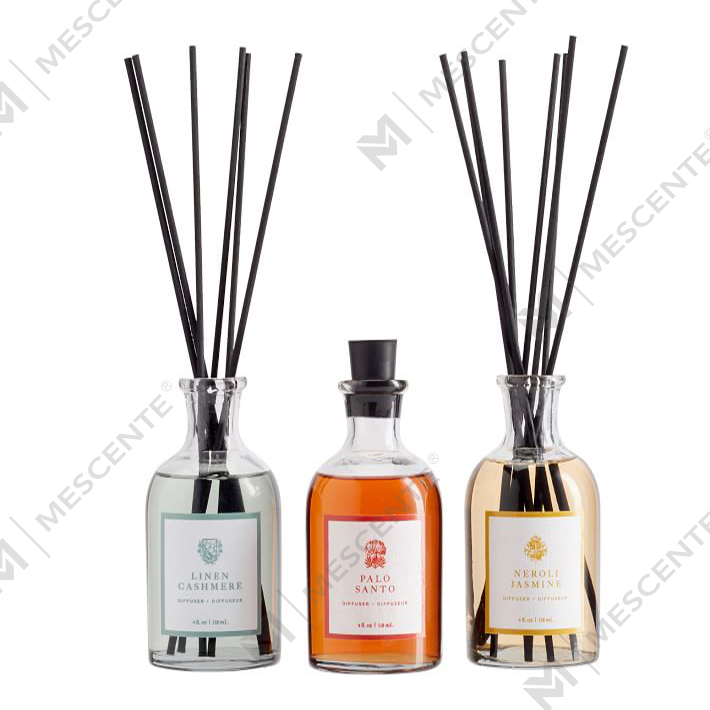
One practical way to judge a partner is to examine its existing catalog. A structured reed diffuser range shows whether a manufacturer applies consistent quality logic across different bottle shapes, sizes, and closures. Combined reed diffuser and candle gift sets further test a factory's care, because two product types must survive one shipment in one presentable box. For a closer look at how scent throw and longevity are treated in hotel-scale orders, see the notes on high-fragrance reed diffuser performance for hotel use.
M-Scent's production program is built around this kind of discipline: IFRA-compliant formulas, in-house filling and assembly, custom glass and ceramic containers, fiber and rattan stick options, and private-label packaging for wholesale and hotel projects. The supplier exists to give importers and fragrance brands a single source that handles standard and custom reed diffuser programs without letting quality slip between order one and order ten.
Quality standards in reed diffuser production are not a checklist to be signed once. They represent a working method that reproduces the same result through every batch. When a supplier demonstrates that level of control, the buying decision becomes noticeably simpler.
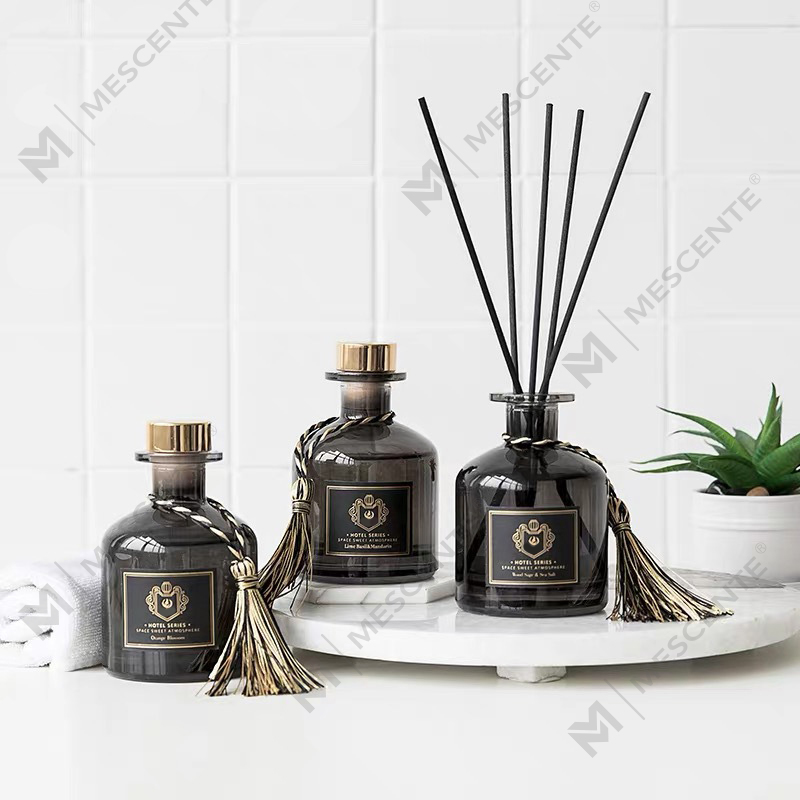
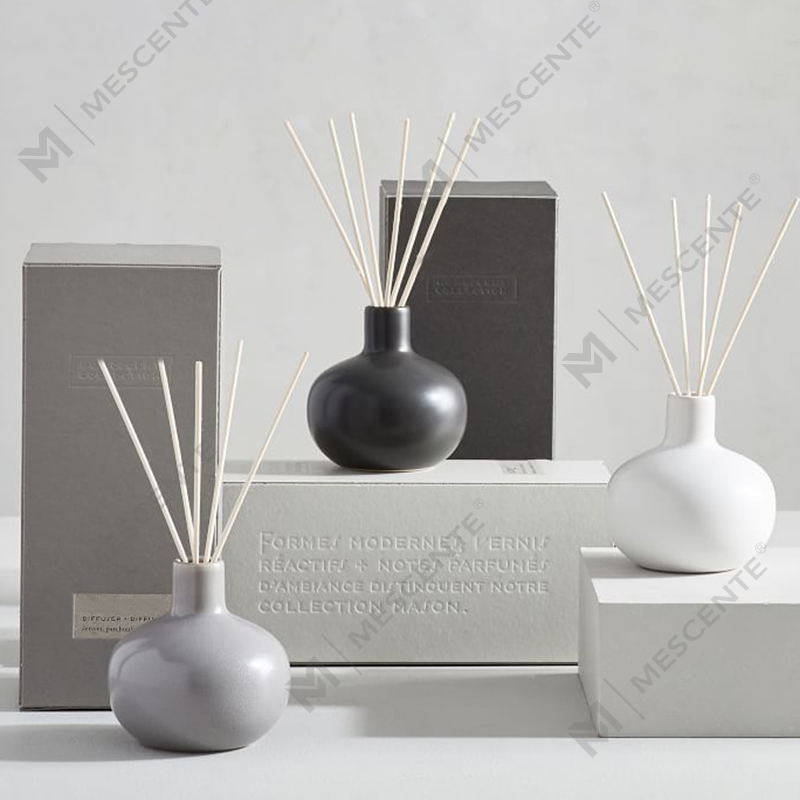
-1.jpg "140g Home Scented Candle Fragrance Reed Diffuser Gift Set A99199")

Address:
Building 10, No. 39, Muxu East Road, Mudu Town, Wuzhong District, Suzhou City, Jiangsu Province, China
Company
Products
Mobile
