




Home / Blog / Industry News / Luxury Home Fragrance Diffusers: Key Specifications for Wholesale Buyers
Luxury Home Fragrance Diffusers: Key Specifications for Wholesale Buyers
Content
A hotel buyer in Melbourne and a home fragrance brand in New York sent nearly identical briefs last season: a 180ml private label reed diffuser in amber glass, six reeds, custom cap. One factory quoted 20 percent fragrance oil with fiber reeds. The other quoted 12 percent oil with rattan reeds. Both products will sit on a shelf looking the same. They will behave completely differently over the next eight weeks.
That gap is the entire argument for writing luxury diffuser specifications in numbers rather than adjectives. Fragrance load, reed capillary performance, vessel wall tolerance, closure integrity, and evaporation lifespan are all measurable. This guide walks wholesale buyers through the specifications that separate a luxury-grade diffuser from a promotional one, in the order you will encounter them in an RFQ.
In wholesale terms, a luxury home fragrance diffuser is defined by three measurable parameters: a fragrance oil concentration of 20 to 30 percent, reeds engineered for steady capillary output, and a vessel whose material thickness and closure tolerances survive shipping and months of countertop display.
A passive fragrance delivery system combining a high-load fragrance oil formulation (typically 20-30 percent perfume oil in a carrier solvent), a calibrated reed bundle, and a vessel designed to keep that formulation stable for two to eight months.
The luxury label is applied at retail, but it has to be engineered at the factory. Promotional-grade diffusers usually sit at 8 to 15 percent oil concentration and use whatever reed length fits the carton. The first week smells strong; top notes then fade fast, and the remaining liquid evaporates without carrying scent. A correctly formulated luxury diffuser holds a steady scent curve because the carrier evaporates at a slower, consistent rate.
Every RFQ for luxury diffusers should state five specifications: fill volume, fragrance oil percentage by weight, reed material and count, closure type, and a minimum evaporation lifespan measured in weeks.
| Specification | Luxury range | What it controls |
| Fill volume | 100ml - 250ml | Shelf presence, refill cycle length |
| Fragrance oil load | 20% - 30% by weight | Scent intensity, evaporation lifespan |
| Reed count | 5 - 10 reeds | Evaporation rate, room coverage |
| Closure type | Stopper, cap, or crimped seal | Leak risk, refill access, perceived value |
| Reed material | Fiber or graded rattan | Wicking consistency, clog resistance |
Two details in this table deserve emphasis. First, oil load is measured by weight, not volume: a 180ml bottle filled with 22 percent fragrance oil contains roughly 40 grams of perfume concentrate, and the carrier (usually DPG or IPM) affects the scent curve as much as the oil itself. Second, neck inner diameter is the engineering parameter buyers overlook most. A six-reed bundle needs an 18 to 22mm opening to keep air circulating; a narrower neck floods the bundle and stalls wicking.
Fastest way to separate two luxury candidates: run a 48-hour wicking test. Measure liquid drawn per 24 hours and check scent throw at 1.5 meters every 12 hours. The unit that sustains its output through a full week of testing is the one worth quoting against.
Evaporation lifespan scales predictably with fill volume when reed count and bottle opening are matched: a 50ml diffuser with four reeds lasts two to three months, while a 250ml diffuser with eight to ten reeds can run past ten months.
These figures assume a 20 to 25 percent oil load with fiber reeds in a standard room. Rattan reeds wick faster, which strengthens the first three weeks but shortens total lifespan. That trade-off explains why premium brands ship six reeds instead of twelve: a crowded neck creates back-pressure, and adding reeds to a fixed opening reduces rather than increases scent throw.
Vessel material determines the perceived value and the factory cost structure; glass offers clarity and tight tolerances, ceramic adds texture and weight, and decorative finishes such as leather wrapping, metallic coatings, or cement surfaces move a product into the gift and hospitality tiers.
Glass
Clear, frosted, or amber bottles hold dimensions to tight tolerances and accept silk-screen labels, foil stamping, and shrink bands. Lowest tooling cost and fastest lead time of the four groups.
Standard for hotel linesCeramic
Heavier to ship and fired in batches, ceramic adds weight and a tactile finish that reads as premium. Custom glazes and colored bodies create strong brand separation.
Higher minimums per glazeCement or stone
Industrial texture at a moderate cost, popular in architectural and spa channels. Porous walls must be sealed so the oil does not wick into the surface.
Sealing is the failure pointWrapped or coated
Leather, metallic, or soft-touch wraps push perceived gift value highest. Bond strength around curved shoulders and edge curl after six months are the defects to inspect.
Gift and boutique positioningBuyers who have run separate quotes for promotional and luxury lines typically find that the vessel and closure account for 60 percent or more of the finished cost. That is why procedural decisions - stock bottle versus custom mold, silk-screen versus paper label, standard cap versus pilfer-proof closure - belong in the RFQ stage, not at the sample stage.
Custom-glaze ceramic programs from Suzhou M-Scent Arts and Crafts Co., Ltd. (M-Scent) cover 100 to 300ml bottles with fired-in colorways and private label application in the same factory. Comparing vessel families side by side in the series directory speeds up the first cut.
Premium diffuser formulations carry 20 to 30 percent fragrance oil in a DPG or IPM carrier; formulations above 30 percent risk crystallization, and anything below 15 percent fails a ten-week evaporation test.
DPG (dipropylene glycol) is the industry-standard carrier because it suspends oil without flattening the scent pyramid. IPM evaporates faster and suits light citrus profiles but accelerates reed saturation. Phthalate-free claims are now a baseline for EU hotel and boutique retail buyers, and any supplier exporting to those markets should provide IFRA-compliant safety data sheets per fragrance. Verify that the certificate covers the production batch, not just the fragrance family.
Compliance checklist for EU and US retail
For hotels, where a reed diffuser may be the only scent source in a 30-square-meter room, consistency over four weeks is the deciding test. Supplier data on high-fragrance reed diffuser performance in hotel settings documents how oil percentage shifts that outcome, and it is worth reading before you commit to a concentration.
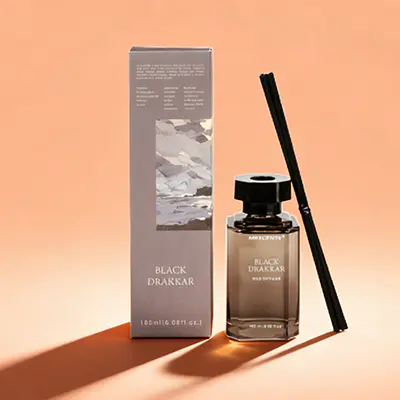
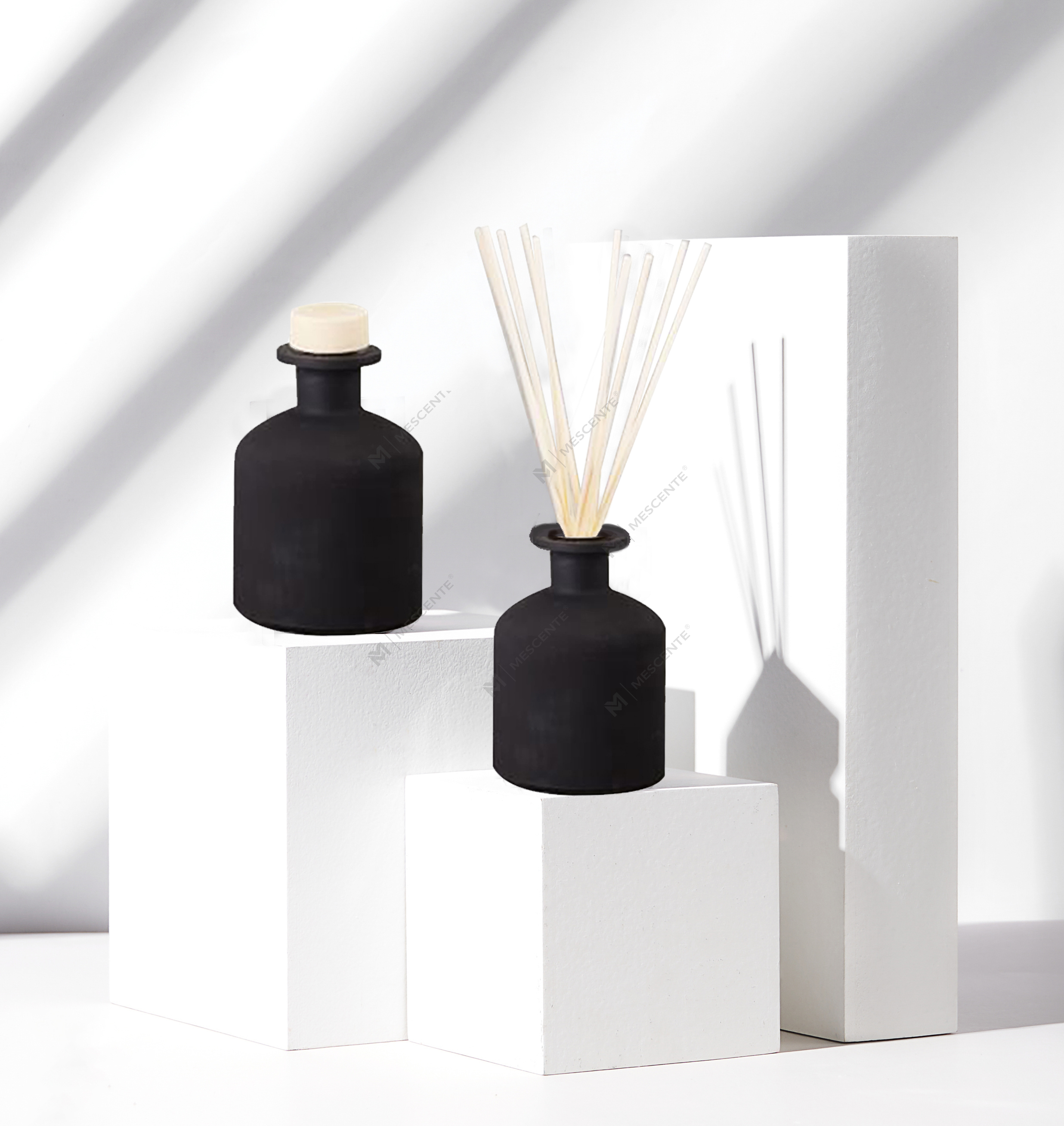 Mescente 180ml Customised Glass Reed Diffuser for Hotel UseThis 180ml glass reed diffuser is presented in a hotel-ready configuration with a custom-branded box and tamper-evident seal, matching hospitality procurement needs for pilfer-proof packaging and durable distribution.View Product →
Hotel-specific formats add two more requirements: a pilfer-proof closure so guests cannot access the oil, and reinforced packaging that survives high-volume distribution. A 180ml glass diffuser with a custom-branded box and tamper-evident seal is a standard configuration for hospitality procurement.
A private label luxury diffuser program should move through five verification stages: RFQ, lab sample, 48-hour wicking test, pilot run inspection, and shelf-life check.
Expect a starting MOQ in the 500 to 1,000 units per SKU range for a custom bottle with a custom label and closure. A stock bottle with a private label can often start lower, while a fully custom mold rarely makes sense below 3,000 units per colorway.
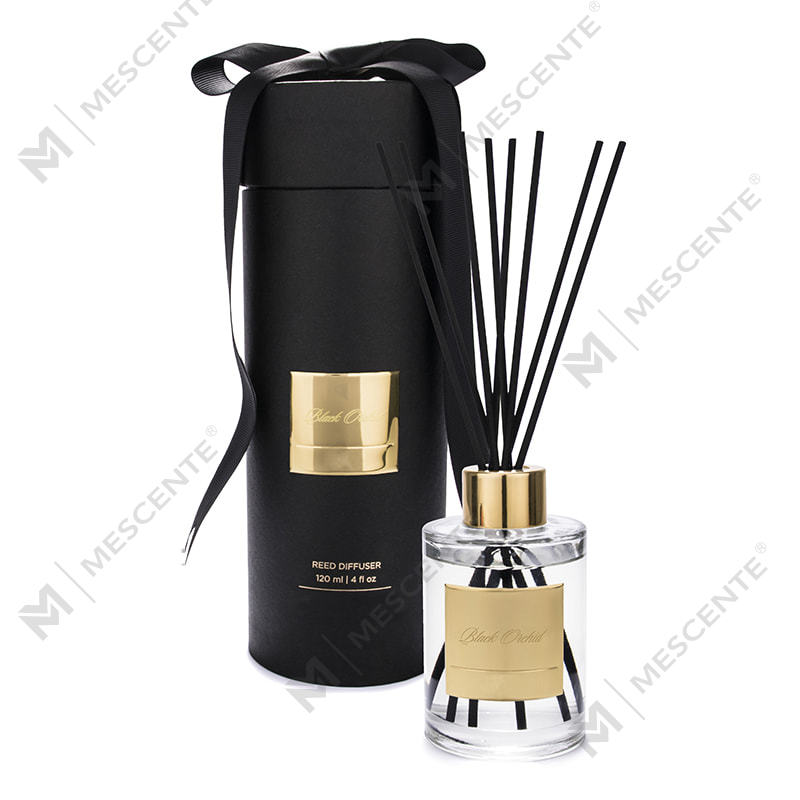 M&Scent Private Label Fiber Stick Reed Diffuser A29261-1This private label diffuser uses fiber sticks for steadier scent release, and its production stream combines custom caps, labels, and gift-box assembly, supporting lower MOQs for branded home fragrance programs.View Product →
Fiber-stick diffusion is the fastest-growing reed format in private label programs because it delivers a steadier scent block than rattan. M-Scent's private label line combines fiber reeds with custom caps, labels, and gift-box assembly in one production flow, which shortens lead time and keeps quality control under a single roof.
Reed diffuser oils in a DPG or IPM carrier are classified as non-dangerous goods for sea freight in most markets, but alcohol-based formulas above 24 percent ethanol trigger air-freight restrictions and higher insurance costs.
The practical consequence for wholesale buyers is to declare formulas accurately and keep alcohol-heavy room sprays in a separate, correctly labeled container. Finished reed diffusers rarely trigger hazardous goods classifications, so the real cost drivers are glass breakage and pallet weight.
Four-layer packaging rule for 180ml glass diffusers: the unit, the unit box, a corrugated divider, and the master carton.
A supplier that manufactures the packing line alongside the product, as Suzhou M-Scent Arts and Crafts Co., Ltd. does across its candle and diffuser ranges, ships fewer damaged units per container and shortens the packaging approval cycle.
Between 20 and 30 percent by weight. Below 15 percent the diffuser smells strong for a few days and then fades. Above 30 percent you risk crystallization and uneven wicking. Ask for the percentage per production batch, because some suppliers quote figures that include the carrier solvent.
Six fiber reeds in an 18 to 22mm neck opening is the standard premium configuration. Fewer reeds extend lifespan but reduce scent throw. Adding more than eight reeds to that opening creates back-pressure and can slow wicking.
For a custom bottle with a custom label and closure, 500 to 1,000 units per SKU is the common starting point. A stock bottle with a custom label can start around 300 to 500 units. A fully custom mold is rarely justified below 3,000 units per colorway.
Rattan wicks faster, producing a stronger first two weeks but faster oil depletion and more frequent reed replacement. Fiber reeds deliver steadier output over a longer period, which is why luxury home and hotel programs typically choose fiber.


Address:
Building 10, No. 39, Muxu East Road, Mudu Town, Wuzhong District, Suzhou City, Jiangsu Province, China
Company
Products
Mobile
