






Home / Blog / Industry News / Home Fragrance Manufacturing: Key Factors Affecting Product Consistency
Home Fragrance Manufacturing: Key Factors Affecting Product Consistency
Content
A hotel group once rejected a full container of 180ml reed diffusers because lot three of five carried a scent that drifted from green tea toward an unexpectedly musky base. No single parameter had moved by more than a few percentage points, yet the composite effect on the finished fragrance was unmistakable. Consistency in home fragrance manufacturing is not one metric; it is a system of interdependent controls that begins long before the first pour.
Product consistency in home fragrance manufacturing means every production lot of a finished item, whether a scented candle, reed diffuser, room spray, or scented stone, matches an approved reference sample within a defined tolerance across scent character, performance, and visual appearance. A reliable batch consistency program fixes the source of variation, not just the symptom.
The fragrance oil is the single largest contributor to lot-to-lot inconsistency in home fragrance manufacturing. Manufacturers that stabilize oil sourcing before they stabilize filling equipment will still ship inconsistent product.
Fragrance oils are blends of aroma chemicals, natural extracts, fixatives, and solvents. Raw material suppliers can change odor value between lots without changing the price or the certificate. Even a minor shift in patchouli origin or a minuscule change in a top-note chemical can move the finished scent enough to be detectable at a 2 percent fragrance load.
Practical tolerance: a well-run factory holds fragrance oil dosing to plus or minus 2 percent of target weight. At a 10 percent fragrance load in soy wax, that equals a 0.2 percent absolute swing in oil content per container.
The second largest source of variability is the carrier system, the wax in a candle or the base solvent in a reed diffuser oil. Paraffin and soy wax both challenge consistency, but in different ways.
Paraffin offers a predictable melt point and glass transition, but it is frequently blended with additives such as stearic acid or microcrystalline wax. Soy wax is natural, prone to melt-point drift, and can produce frosting or sinkholes. The safest route is a written wax spec that locks supplier, melt-point range, pour temperature, and additive ratio.
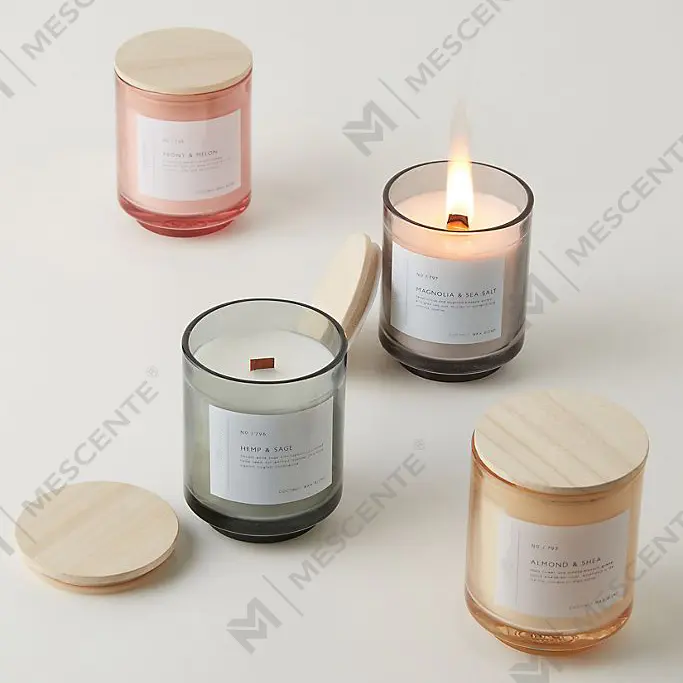
 Private Label Scented Soy Wax Candle with Custom Logo OptionsThis customizable soy wax candle is suitable for private label programs, with attention to melt point and pour temperature to ensure consistent performance.View Product →
| Product type | Fragrance load | Primary carrier |
| Scented candle | 6-12% | Paraffin or soy wax blend |
| Reed diffuser oil | 8-15% | DPG, IPM, or ethanol base |
| Room spray | 8-15% | Alcohol and water mixture |
| Scented stone | 15-30% | Porous mineral carrier |
Lock these values: wax melt point, pour temperature, fragrance load percentage, and fill weight per container. A change in any one of them requires a new performance approval.
Container dimensional tolerance and fill line accuracy are the most visible factors in product consistency because customers measure them directly with a scale or a quick glance at headspace.
For a 180ml reed diffuser bottle, a plus or minus 0.5mm neck diameter variance can change the rubber stopper compression and wicking surface. For a 300ml candle jar, a ceramic mold that wears by 1mm can move the headspace and make a candle look underfilled.
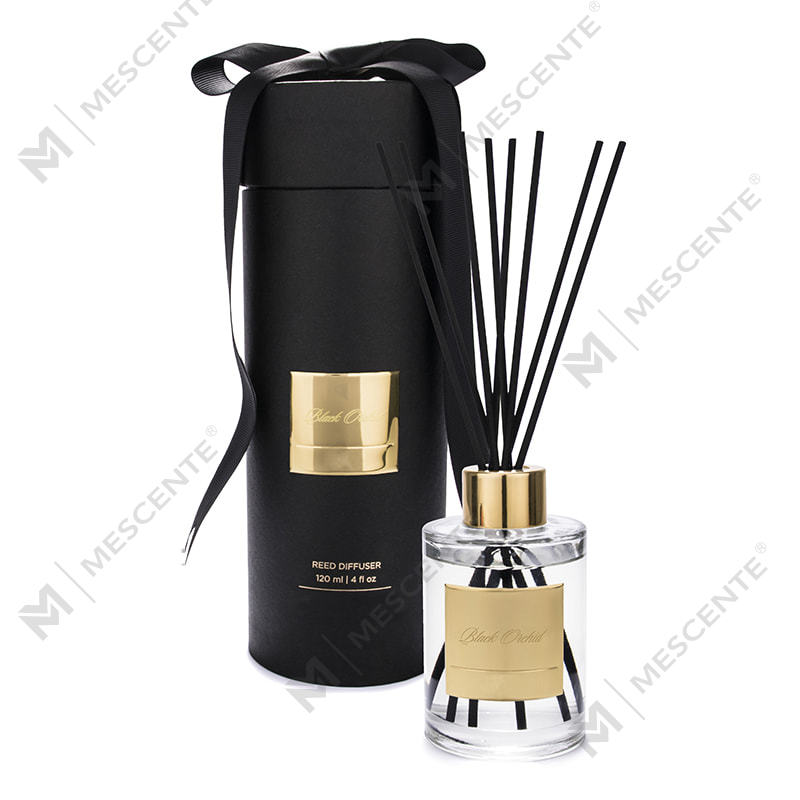 Luxury Fiber Stick Reed Diffuser for Private Label Home FragranceThis fiber stick reed diffuser is designed for private label home fragrance use, with container specifications like neck diameter and wall thickness important for quality.View Product →
Ask the manufacturer for their container specification sheet. If it does not list neck diameter, wall thickness, and fill capacity with tolerances, treat it as incomplete.
Wick construction in candles and reed porosity in diffusers are functional components that change the duration and throw of a fragrance. A manufacturing flaw here causes burn tunnels, weak scent throw, or poor wicking.
Choose wick size by jar diameter and wax melt point. A cotton wick with a core, a zinc-core wick, or a wooden wick all burn differently. Request a burn test on at least 20 candles per batch: eight hours burn, pool diameter, wick wobble, and smoke point.
Reed count, diameter, and porosity determine channel capacity. If the supplier substitutes a different reed grade, wicking efficiency changes even when the oil formula stays the same.
Fragrance fade after 10 days
Weak scent throw in a hotel room
Low fragrance load or poor solvent system
Wrong reed porosity or reed count
Temperature, humidity, airflow, and storage time each shift the scent profile of a finished home fragrance product, so these variables must be controlled through the entire supply chain.
A reed diffuser stored at 35 degrees Celsius will lose a high-volatility top note faster than one stored at 18 degrees. A candle kept in direct sunlight can oxidize paraffin and bloom the surface. Manufacturers that control these variables during transit and warehousing deliver more uniform smelling products to the end customer. Read more about the performance stability of reed diffusers under different environmental conditions.
Rule of thumb: keep warehouse temperature between 15 and 25 degrees Celsius and relative humidity below 60 percent for candles and reed diffusers.
A serious manufacturer runs a three-stage QC program: incoming raw material inspection, in-process checks during filling, and finished batch sampling before release.
At Suzhou M-Scent Arts and Crafts Co., Ltd., the production floor treats every batch as a separate identity. Incoming inspection verifies fragrance oil odor value, wax melt point, and container dimensions against the approved spec. In-process checks cover pour temperature, fill weight, wick centering, and seal integrity. The finished batch is sampled for scent character, burn performance, and visual finish against the master reference.
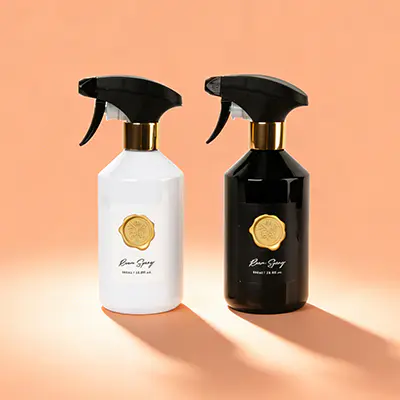
 Wholesale Essential Oil Room Spray for Home FragranceThis wholesale room spray uses essential oils for a natural scent, and its quality is verified through documented batch inspection and testing procedures.View Product →
When evaluating a home fragrance supplier, require documented evidence rather than a marketing claim about quality. Documentation is the only proof that the consistency system exists.
Fragrance oil concentration is the leading cause. A shift in odor value or a change in the oil supplier's raw material can produce a detectable difference even when the amount of fragrance dosed into the product stays the same. Locking the oil lot and holding it to a plus or minus 2 percent dosing tolerance is the first corrective step.
Most commercial reed diffusers use 8-15 percent fragrance load in a DPG or IPM solvent base. A higher load above 20 percent can cause phase separation without a proper solubilizer. A load below 5 percent may not provide sufficient scent throw in a large room.
A robust manufacturer retains the approved reference sample for at least 18 months, or for the full shelf life of the product plus one year. This allows the production team to compare a new batch against the original when a customer complaint is filed.
No. Container geometry changes the surface area for evaporation, headspace volume, and the wick-to-jar ratio for candles. Each container change requires a new performance validation, including scent character, burn rate, and wicking rate.



Address:
Building 10, No. 39, Muxu East Road, Mudu Town, Wuzhong District, Suzhou City, Jiangsu Province, China
Company
Products
Mobile
