


Home / Blog / Industry News / How to Choose Home Luxury Scent Products for Hotels, Retail and Premium Interior Spaces
How to Choose Home Luxury Scent Products for Hotels, Retail and Premium Interior Spaces
Content
Scent reaches people before they consciously register a space, shaping first impressions in hotel lobbies, retail entrances, and quiet living rooms alike. Home luxury scent products are designed to create exactly that impression deliberately, using concentrated fragrance oils, considered diffusion methods, and consistent scent throw to build an atmosphere rather than simply mask odor. Choosing the right system means weighing fragrance concentration, diffusion technology, and the character of the space itself, since a scent that works beautifully in a small residential room can feel overwhelming or underwhelming in a hotel lobby or retail floor. This guide walks through the main product types, where each performs best, the technical properties worth comparing, and the scent design principles that turn a single fragrance into a coherent brand experience.
A home luxury scent is a formulated fragrance product, typically built on a concentrated perfume oil base, designed to create a consistent, deliberate atmosphere across a defined space rather than a fleeting or incidental smell.
Fragrance delivery method shapes both the intensity and the character of a scent experience, and understanding the types of home luxury scent products available is the starting point for building the right system for a given space.
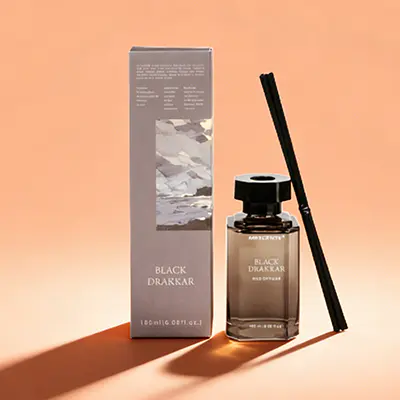
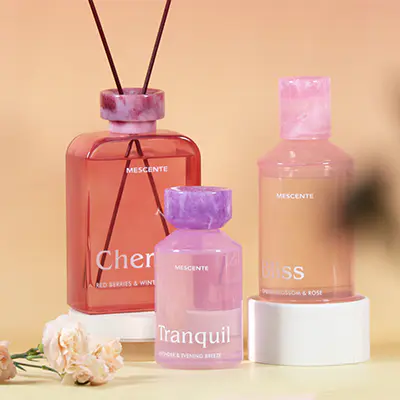
Uses porous reeds to draw fragrance oil upward and release it steadily into the air, offering a subtle, continuous scent well suited to smaller or quieter spaces such as entryways and bathrooms.
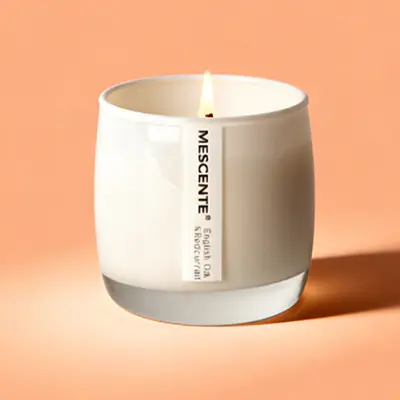
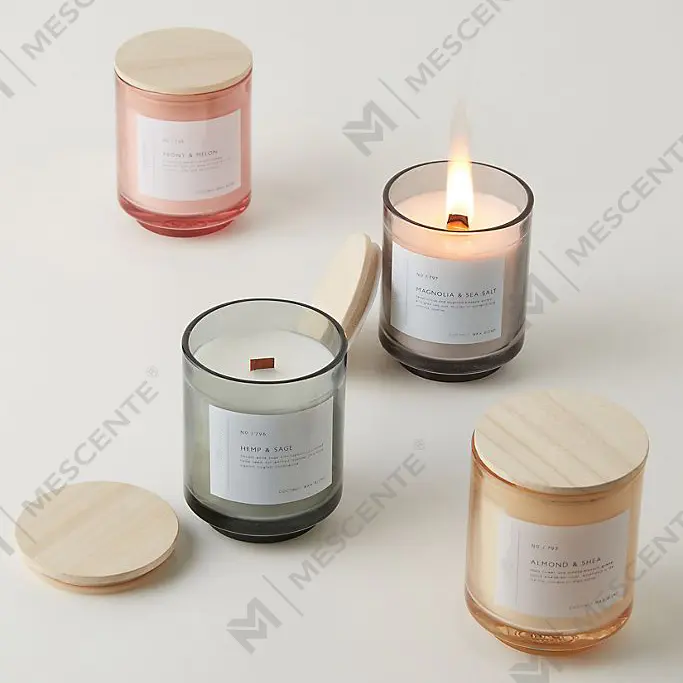
Combines fragrance with warm light and gentle heat-driven diffusion, creating a layered sensory experience that suits residential settings and intimate hospitality spaces.
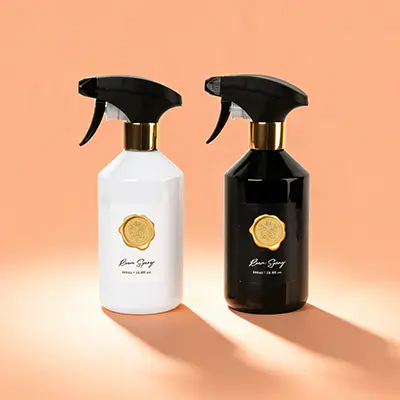
Delivers an immediate, adjustable burst of fragrance, useful for refreshing a space before guests arrive or reinforcing scent presence in transitional areas like hallways.
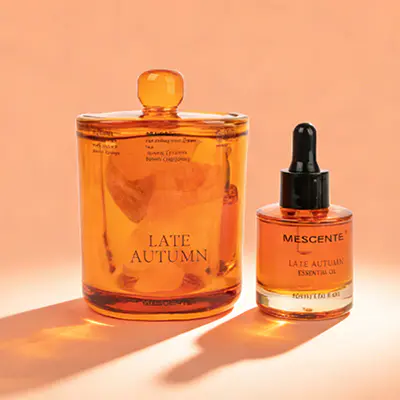
Built on natural aromatic extracts rather than purely synthetic compounds, often selected for spaces where a wellness or aromatherapy positioning matters as much as scent character.
Hotel room luxury scent systems typically favor continuous diffusion methods that maintain consistent fragrance intensity over long periods, while premium home fragrance products categories for residential use often mix formats, pairing a diffuser for baseline scent with a candle for occasional layered ambiance. When comparing reed diffuser vs scented candle for home use, the choice generally comes down to whether continuous subtlety or occasional intensity better fits the room.
The right home luxury scent product depends heavily on where and how it will be used, since commercial spaces and private residences place different demands on fragrance strength, consistency, and safety.
Home luxury scent for hotels typically prioritizes a signature fragrance that remains consistent across lobbies, hallways, and guest rooms, since a recognizable scent identity contributes to how guests remember and describe the property. Hotel scenting systems often rely on continuous diffusion technology to maintain even coverage across larger, high-traffic areas.
Luxury fragrance for retail stores is often used to reinforce a brand's positioning at the point of sale, with scent intensity calibrated to the size of the space and the amount of time customers typically spend inside. Retail environments generally require more deliberate scent zoning than residential spaces to avoid overwhelming smaller footprints.
A spa aromatherapy scent system usually favors essential oil-based fragrances aligned with a calming or restorative brand experience, since the sensory expectations in a spa environment differ meaningfully from those in a retail or hospitality setting.
Office ambient fragrance solutions tend to use lighter, less assertive scent profiles than hospitality or retail applications, since workplace environments need fragrance that supports focus and comfort without becoming a distraction over a full working day.
Luxury home scent for living spaces is typically the most personalized application, since residential fragrance choices reflect individual preference rather than a brand identity, giving homeowners more flexibility to change or layer scents seasonally.
Beyond scent preference, several measurable properties determine whether a home luxury scent product performs reliably over time and across different environments.
Long lasting home luxury scent performance depends on fragrance oil concentration and the diffusion method's release rate, with well-formulated products maintaining a consistent scent presence rather than fading sharply after initial application.
Safe essential oil diffuser quality and non-toxic formulation matter particularly in residential and wellness settings, where buyers should confirm ingredient transparency and appropriate use instructions for enclosed spaces.
VOC free home fragrance products reduce the release of volatile organic compounds into indoor air, a consideration that has become increasingly relevant for buyers focused on indoor air quality alongside scent experience.
High concentration fragrance oil system products generally deliver stronger, longer-lasting scent throw than diluted formulations, though concentration should be matched to room size to avoid an overpowering effect in smaller spaces.
Consistent scent diffusion technology is what ties these properties together in practice, since even a well-formulated fragrance oil will underperform if the diffusion method does not release it at a steady, predictable rate across the intended space.
Selecting a fragrance product is only part of building an effective scent experience. How that scent is deployed across a space matters just as much as the fragrance itself.
Aroma layering technique refers to combining complementary fragrance notes or formats, such as a base diffuser scent paired with an occasional candle, to create depth rather than relying on a single flat scent source.
Fragrance branding strategy treats scent as a deliberate extension of visual and verbal brand identity, selecting a signature fragrance profile that stays consistent across every touchpoint a customer or guest experiences. Ambient scent marketing for retail spaces applies this thinking at the point of sale, using scent intensity and placement to support the mood a brand wants a shopper to associate with the space. Interior scent design considers airflow, room size, and material absorption, since fragrance behaves differently in a space with heavy soft furnishings compared to one with hard, open surfaces. How to design a hotel fragrance experience typically starts with identifying key touchpoints, such as the entrance and elevator lobby, where scent has the strongest influence on a guest's first impression, before extending the fragrance identity into secondary spaces.
It refers to formulated fragrance products, such as diffusers, candles, and room sprays, built on concentrated perfume oil bases and designed to create a deliberate, consistent atmosphere in a defined space.
The best choice depends on the space and its purpose, since a calming profile suited to a spa or bedroom differs from an energizing profile suited to a retail entrance or office reception area.
Reputable home fragrance products are formulated for safe use in their intended setting, though buyers should check for non-toxic and VOC-conscious formulations, particularly for enclosed residential spaces.
Duration depends on fragrance concentration, diffusion method, and room ventilation, with continuous diffusion systems generally maintaining scent presence longer than a single spray application.
A diffuser releases fragrance continuously and passively, while a candle combines scent with heat-driven diffusion and light, producing a stronger but generally shorter-duration scent experience during burn time.
Many retail brands use scent deliberately as part of the in-store experience to reinforce brand identity and create a more memorable environment, alongside visual merchandising and store design.
Choosing the right home luxury scent product comes down to matching fragrance concentration, diffusion method, and scent character to the specific space and its purpose, whether that is a hotel lobby, retail floor, spa treatment room, or private residence. Longevity, safety formulation, and consistent diffusion all deserve as much attention as fragrance notes themselves, since even a beautifully composed scent underperforms if it fades quickly or overwhelms a smaller room. Considering these factors together is the most reliable way to select a home luxury scent system that builds a coherent, lasting atmosphere.

Address:
Building 10, No. 39, Muxu East Road, Mudu Town, Wuzhong District, Suzhou City, Jiangsu Province, China
Company
Products
Mobile
