

Designer Fragrance Candles: Quality, Burn Time & Décor
Content
- 1 What Makes Designer Fragrance Candles Different From Regular Scented Candles
- 2 How Long Do Designer Fragrance Candles Typically Burn
- 3 Are Designer Fragrance Candles Made With Natural Wax and Essential Oils
- 4 What Factors Affect Fragrance Throw in Designer Scented Candles
- 5 Can Designer Fragrance Candles Be Used for Home Décor and Luxury Interiors
- 6 What Are the Benefits of Soy Wax in Designer Fragrance Candles
Designer fragrance candles occupy a category defined by intention — every material decision, from wax blend to wick gauge to vessel weight, is made in service of a scent experience that mass-market candles are not engineered to deliver. Where a standard scented candle prioritises low cost and strong cold-throw impression at the point of sale, a designer candle is formulated for hot-throw consistency, clean burn behaviour, and an aromatic narrative that evolves across the full burn life. This guide covers the distinctions that matter, what to look for, and why the category continues to grow as the defining luxury home object of the decade.
What Makes Designer Fragrance Candles Different From Regular Scented Candles
The difference between a designer fragrance candle and a regular scented candle is not price — it is specification. Every component in a designer candle is selected for performance under burn conditions, not for margin optimisation. The cumulative effect of these specifications produces a burn experience that cannot be replicated by substituting cheaper inputs at equivalent price points.
Fragrance Concentration
Designer
8 to 12% fragrance load by wax weight. Higher concentrations require careful formulation — excess fragrance oil that the wax cannot bind pools on the surface, creating fire risk and uneven burn. Designer houses commission bespoke fragrance compounds that bind efficiently at premium concentrations.
Standard
3 to 6% fragrance load. Sufficient for detectable scent at cold throw — the impression in store — but insufficient for room-filling hot throw during burn in spaces above 20 square metres.
Wick Engineering
Designer
Wicks are selected and tested for each specific wax–fragrance–vessel combination. Cotton-paper braided or wood wicks are sized to produce a melt pool that reaches the vessel edge within 2 to 3 hours — preventing tunnelling and ensuring full fragrance release across the entire burn surface.
Standard
Generic wick sizing applied across multiple product lines regardless of vessel diameter or fragrance load. Tunnelling — where the candle burns down a narrow channel — is the most visible consequence of under-wicked candles.
Fragrance Composition
Designer
Fragrance oils composed of top, heart, and base note accords — often incorporating natural isolates, concretes, or IFRA-compliant naturals alongside synthetic molecules. The composition is designed to evolve during the burn as lower-volatility base notes emerge over time.
Standard
Single-note or simple blended synthetic fragrance designed for immediate recognisability — "fresh linen" or "vanilla" — without aromatic development across the burn duration.
Vessel Quality
Designer
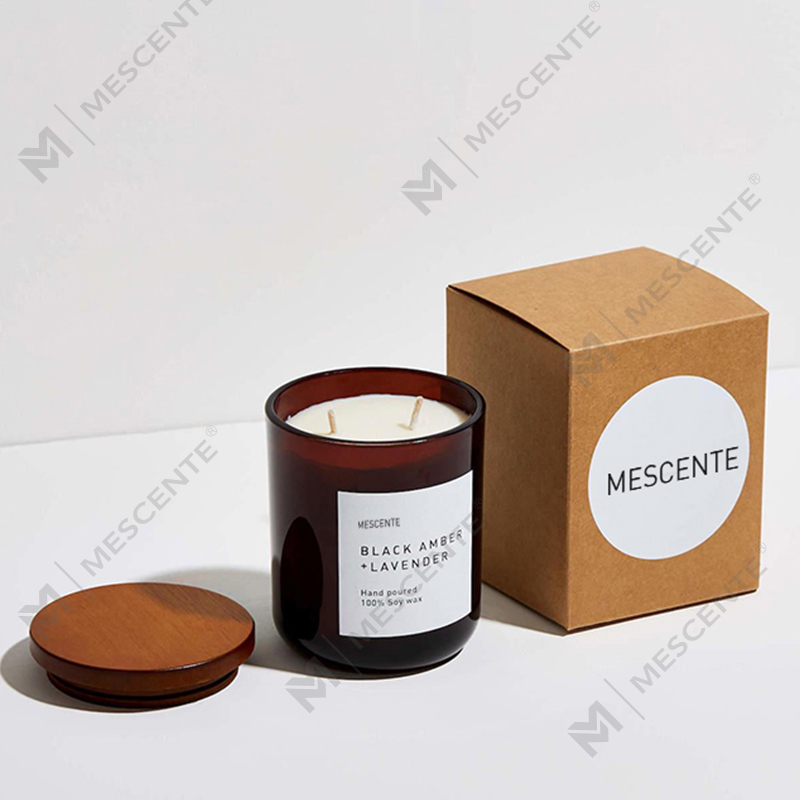
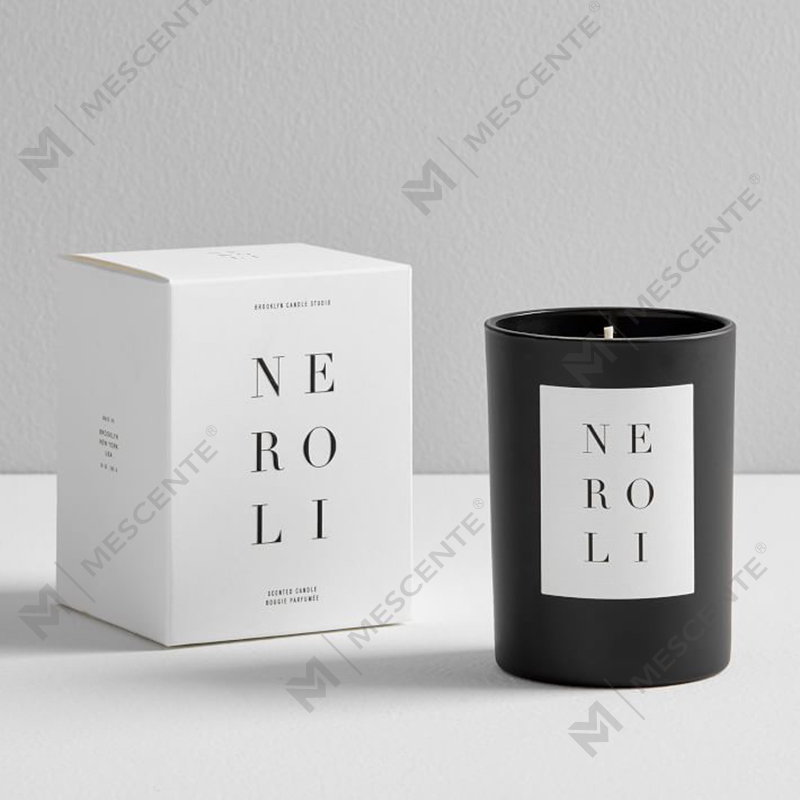
Hand-poured into mouth-blown glass, ceramic, concrete, or cast resin vessels designed as objects in their own right. Vessel weight and thermal conductivity are factored into the burn profile — heavy vessels retain heat differently than thin glass, affecting melt pool temperature and fragrance volatilisation rate.
Standard
Mass-produced thin glass or tin containers chosen for cost and standardised fill volume. Vessel is typically discarded after use.
How Long Do Designer Fragrance Candles Typically Burn
Designer fragrance candles typically burn for 40 to 90 hours depending on vessel size, wax type, wick count, and fragrance load. This compares to 20 to 35 hours for standard mass-market candles at equivalent fill weight — a burn efficiency advantage that derives from wax quality, wick precision, and the absence of synthetic additives that accelerate consumption.
| Candle Size | Fill Weight | Designer Burn Time | Standard Burn Time | Burn Efficiency |
| Travel / Mini | 60 – 90 g | 15 – 25 hr | 8 – 14 hr | ~80% longer |
| Small | 150 – 200 g | 30 – 45 hr | 18 – 24 hr | ~70% longer |
| Medium (Standard) | 200 – 300 g | 45 – 65 hr | 22 – 35 hr | ~75% longer |
| Large | 300 – 500 g | 60 – 90 hr | 30 – 45 hr | ~65% longer |
| XL / Statement | 500 g+ | 80 – 120 hr | 35 – 55 hr | ~60% longer |
Burn Best Practice
Always allow the melt pool to reach the full diameter of the vessel on the first burn — typically 2 to 4 hours depending on vessel width. This first burn establishes the wax memory and prevents tunnelling across all subsequent burns. Trim the wick to 5 mm before every burn to maintain a clean, low flame that maximises burn time and minimises soot.
Are Designer Fragrance Candles Made With Natural Wax and Essential Oils
The majority of designer fragrance candles use natural or predominantly natural wax — typically soy, coconut, beeswax, or a blended combination — but the relationship between "natural" and "essential oil" is more nuanced than most product descriptions convey. Understanding the distinction matters for buyers who prioritise ingredient provenance alongside sensory performance.
Wax Types in Designer Candles
Soy Wax
Derived from hydrogenated soybean oil. Renewable, biodegradable, burns cooler and slower than paraffin. Holds fragrance efficiently at 6–12% load. The dominant wax in premium natural candles.
Coconut Wax
Pressed from coconut meat and hydrogenated. Exceptionally creamy texture, very slow burn rate, and superior scent throw per unit weight. Most expensive natural wax — typically blended with soy to balance cost and performance.
Beeswax
Natural, honey-scented, and air-purifying through negative ion emission. Burns longest of all natural waxes but has a natural scent that competes with added fragrance — most effective in lightly scented or unscented designer candles.
Paraffin Blends
Some designer houses use a soy-paraffin or coconut-paraffin blend specifically for superior hot throw and crystal-clear glass adhesion. Paraffin alone is petroleum-derived but in small percentages serves a technical function no natural wax fully replicates.
Essential Oils vs Fragrance Oils
Pure Essential Oils
Steam-distilled or cold-pressed plant extracts. Botanically authentic aroma. However, many essential oils — citrus, eucalyptus, peppermint — have high volatility and dissipate rapidly in hot wax, producing weak hot throw. Rare and expensive essential oils (rose otto, jasmine absolute) make 100% essential oil candles commercially impractical at volume.
Fragrance Oils (Perfumer's Grade)
Blends of natural isolates, aroma chemicals, and sometimes natural essential oil fractions, composed by IFRA-certified perfumers. These deliver consistent, heat-stable scent across the full burn range that pure essential oils cannot sustain. The majority of premium designer candles use fragrance oils of this grade, not pure essential oils.
Hybrid Formulation
The most sophisticated designer candles use a base of perfumer's-grade fragrance oil anchored with natural essential oil fractions for authenticity. This approach delivers both the scent stability of synthetic molecules and the botanical provenance of natural extracts — the technical best of both approaches.
What Factors Affect Fragrance Throw in Designer Scented Candles
Fragrance throw — the intensity and reach of scent released during burn — is the primary performance metric by which candle buyers judge value. It is also the most technically complex outcome to engineer, because it depends on the interaction of at least six independent variables that must be optimised simultaneously.
01
Fragrance Load and Flash Point
Higher fragrance concentration produces stronger throw only when the fragrance oil's flash point exceeds the wax's pour temperature. Fragrance oils with flash points below 65°C volatilise during manufacture, reducing the effective concentration in the finished candle below the nominal percentage — a quality-control failure common in lower-tier suppliers.
02
Melt Pool Depth and Diameter
Fragrance throw is proportional to the melt pool's surface area. A full-diameter melt pool releases fragrance across the entire vessel cross-section; a tunnelled candle with a narrow pool releases a fraction of the potential throw regardless of fragrance concentration. Correct wick sizing is the sole determinant of melt pool behaviour.
03
Wax Type and Fragrance Binding Capacity
Soy wax binds and releases fragrance more gradually than paraffin, producing a gentler but longer-lasting throw. Paraffin releases fragrance more aggressively at higher melt temperatures, producing intense but shorter-duration throw. Coconut wax sits between the two in release rate — which is why coconut-soy blends are favoured in designer candles targeting sustained room fragrance over 3 to 4 hours.
04
Room Size, Airflow, and Placement
A candle that fills a 20 m² room adequately will be undetectable in a 50 m² open-plan space. Fragrance diffusion follows inverse-square law attenuation in still air and is rapidly disrupted by HVAC airflow, open windows, or ceiling fans. Placement at mid-room height on a hard surface — which reflects heat back into the melt pool — consistently outperforms shelf or mantle placement for throw intensity.
05
Fragrance Molecule Volatility Profile
Top notes — citrus, green, aquatic — are composed of high-volatility molecules that throw intensely for 30 to 60 minutes before dissipating. Base notes — sandalwood, amber, musk — are low-volatility and diffuse slowly but persistently across the full burn session. Designer candles engineered for sustained throw prioritise mid and base note compositions that maintain intensity over 3 to 4 hours rather than delivering an immediate burst.
06
Cure Time After Pouring
Freshly poured candles have not yet reached full fragrance-wax crystalline integration. Designer producers cure candles for 5 to 14 days after pouring before quality release — a step that measurably improves cold throw, hot throw consistency, and burn behaviour compared to candles sold within 48 hours of manufacture.
Can Designer Fragrance Candles Be Used for Home Décor and Luxury Interiors
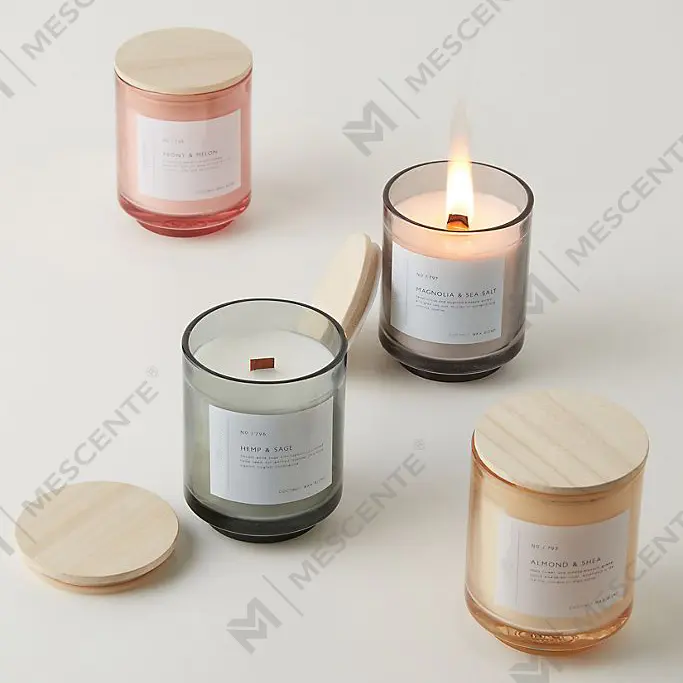
Designer fragrance candles function simultaneously as scent delivery systems and decorative objects — and in luxury interior design, this duality is precisely why they are specified. Unlike diffusers or plug-in fragrance devices, a candle introduces light, shadow, material texture, and sculptural form into a space alongside its aromatic function. No other single object delivers this combination.
Living Rooms & Entertaining Spaces
Statement candles in ceramic or hand-blown glass vessels act as table centrepieces with the added dimension of ambient lighting. Scents selected for living spaces — warm woods, resins, light musks — are formulated to be detectable but not intrusive across social gatherings of 4 to 10 people.
Bedrooms & Wellness Spaces
Lower-throw candles in 150 to 200 g formats are preferred for bedrooms — sufficient for a 15 to 20 m² room without the intensity that disrupts sleep. Lavender, chamomile, cedarwood, and vetiver compositions are the established choices for bedroom fragrance in luxury hospitality design.
Bathrooms & Spa Environments
High-humidity environments reduce fragrance throw by 20 to 30% as water vapour competes with aromatic molecule diffusion. Designer candles intended for bathroom use are typically formulated at the upper end of the fragrance load range — 10 to 12% — to compensate. Eucalyptus, mint, citrus, and marine accords are preferred for their association with cleanliness and spa culture.
Home Offices & Libraries
Cognitive research consistently associates certain fragrance categories with improved focus and reduced mental fatigue. Rosemary, peppermint, lemon, and pine accords are documented to increase alertness markers. Designer candles positioned as "focus" or "study" compositions draw on this research to justify their placement in functional working environments alongside their decorative role.
Entryways & Reception Areas
The first scent a visitor encounters imprints the experiential identity of a space. Luxury hotels and high-end residential designers treat the entry fragrance as signature branding — commissioning bespoke compositions used only in candles placed at arrival points. A single large-format designer candle in a hallway or foyer communicates material investment and sensory intentionality more efficiently than almost any other decorative choice.
Gifting and Presentation
Designer fragrance candles are the dominant luxury gift category in the sub-£100 / sub-$150 bracket globally, outperforming flowers, wine, and chocolates in repeat purchase rate. The combination of high perceived value, sensory experience, and vessel as keepsake object makes them the default choice for premium personal gifting across cultural markets.
What Are the Benefits of Soy Wax in Designer Fragrance Candles
Soy wax became the material of choice in designer fragrance candles not through marketing positioning but through demonstrated performance advantages over paraffin in three areas that matter most to premium buyers: burn behaviour, environmental profile, and fragrance delivery consistency. The benefits are measurable, not aspirational.
Slower, Cooler Burn Rate
Soy wax has a lower melting point (49 to 56°C) than paraffin (46 to 68°C for common grades) and produces a cooler melt pool that volatilises fragrance gradually rather than in a rapid initial burst. This produces a more consistent scent intensity across the burn session — the room fragrance at hour 3 is comparable to hour 1, rather than the sharp decline seen in paraffin candles as the fragrance pool is consumed early.
Cleaner Burn and Reduced Soot
Soy wax combustion produces significantly less soot than paraffin — measured at 0.01 to 0.02 mg of particulate per gram of fuel compared to 0.05 to 0.12 mg for standard paraffin. In practical terms, soy candles do not blacken vessel interiors, walls, or ceilings above their placement point — a material benefit for white-painted or light-coloured interior surfaces in luxury homes.
Renewable and Biodegradable
Soy wax is derived from soybean oil — a annually renewable agricultural crop. It is fully biodegradable and water-soluble, making spill cleanup straightforward and end-of-life disposal environmentally benign. Paraffin is a petroleum refining by-product; its environmental profile is a meaningful consideration for buyers who extend sustainability criteria to fragrance and home objects.
Superior Fragrance Retention
Soy wax's softer, more porous crystalline structure retains fragrance oil more effectively than paraffin during the curing and storage period after manufacture. A soy candle stored for 6 months loses measurably less fragrance load than an equivalent paraffin candle — relevant for designer brands that produce seasonal collections and carry inventory between launches.
Vessel Longevity and Reuse
Soy wax residue dissolves in warm soapy water — allowing the vessel to be cleaned and repurposed after the candle is spent. Designer brands with signature vessels actively market this end-of-life reuse as a value extension. A 300 g soy candle in a ceramic or glass vessel that transitions to a vase, planter, or storage jar delivers a post-burn material life unavailable with paraffin, which requires solvents for residue removal.
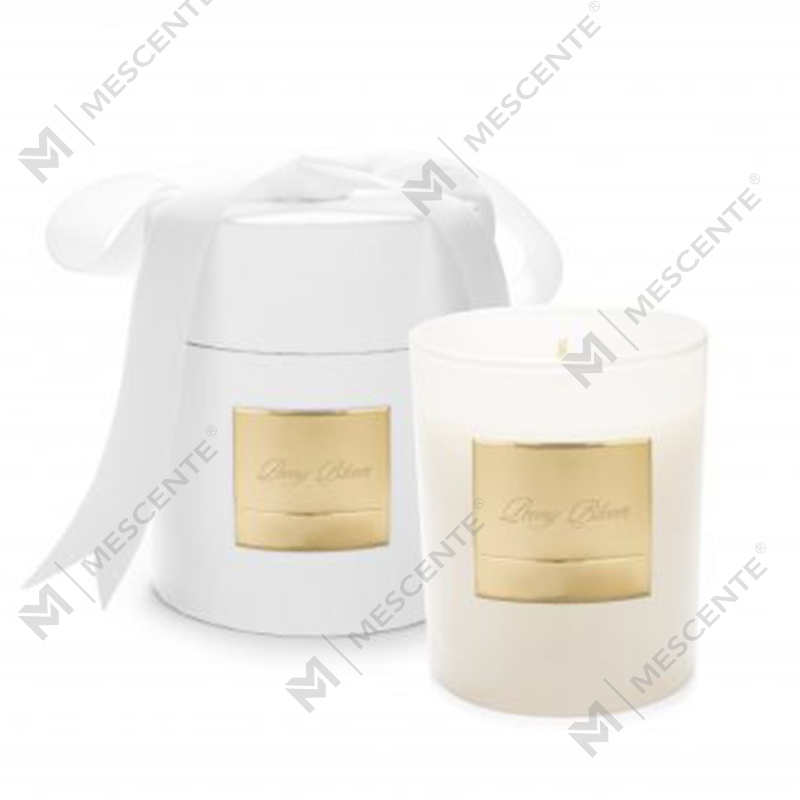
-1.jpg "140g Home Scented Candle Fragrance Reed Diffuser Gift Set A99199")