


Home / Blog / Industry News / Where Are Scent Reed Diffusers Used in Homes, Hotels and Commercial Spaces?
Where Are Scent Reed Diffusers Used in Homes, Hotels and Commercial Spaces?
Content
A single vessel of scented oil and a handful of natural reeds can shape how a room feels within minutes — no flame, no cord, no maintenance beyond an occasional flip of the sticks. That quiet reliability is why scent reed diffusers have moved far beyond the bedside table and into hotel lobbies, boutique fitting rooms, and spa reception desks.
A reed diffuser is a simple passive fragrance system: a glass or ceramic bottle holds a blend of fragrance oil and a carrier base, while porous reed sticks draw the liquid upward through capillary action and release scent continuously into the air. No electricity or heat is involved, which means the fragrance intensity stays gentle and consistent rather than surging and fading the way a candle or spray does.
Because they run quietly in the background, scent reed diffusers now appear across both residential and commercial spaces where a consistent ambient scent matters more than a strong, temporary burst of fragrance.
Living rooms, bedrooms, bathrooms, entryways
Lobbies, guest rooms, lounges, reception areas
Meeting rooms, reception desks, employee lounges
Fashion boutiques, cosmetic shops, showrooms
Massage rooms, wellness and beauty spaces
Dining areas and waiting spaces
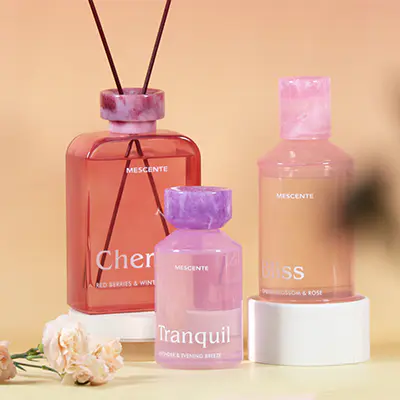
Buyers typically choose between essential oil diffusers for a natural profile, luxury glass diffusers for premium retail display, large-capacity commercial versions built for open lobbies, and fully customized formulas and bottle designs for private-label hotel or retail programs.
| Solution | Safety | Consistency | Maintenance |
| Reed Diffuser | No flame or heat | Steady, continuous | Minimal |
| Scented Candle | Open flame risk | Only while burning | Regular relighting |
| Electric Diffuser | Needs power source | Adjustable, intermittent | Power and refills |
| Spray Fragrance | No flame | Brief, fades fast | Frequent reapplication |
Match bottle size and fragrance concentration to the room or venue size, confirm the ingredient list meets relevant safety standards for commercial use, and consider packaging and bottle design carefully if the diffuser will represent a hotel or retail brand on a shelf or reception counter.
Most standard bottles last 6 to 10 weeks depending on room size, reed count, and how often the sticks are flipped.
Yes, since there is no flame or heat involved, they are widely used in commercial spaces with fire safety restrictions.
Yes, many hospitality brands commission a signature scent formula to maintain consistent branding across properties.
Large-capacity commercial diffusers with more reeds are designed specifically for lobbies and open-plan areas.
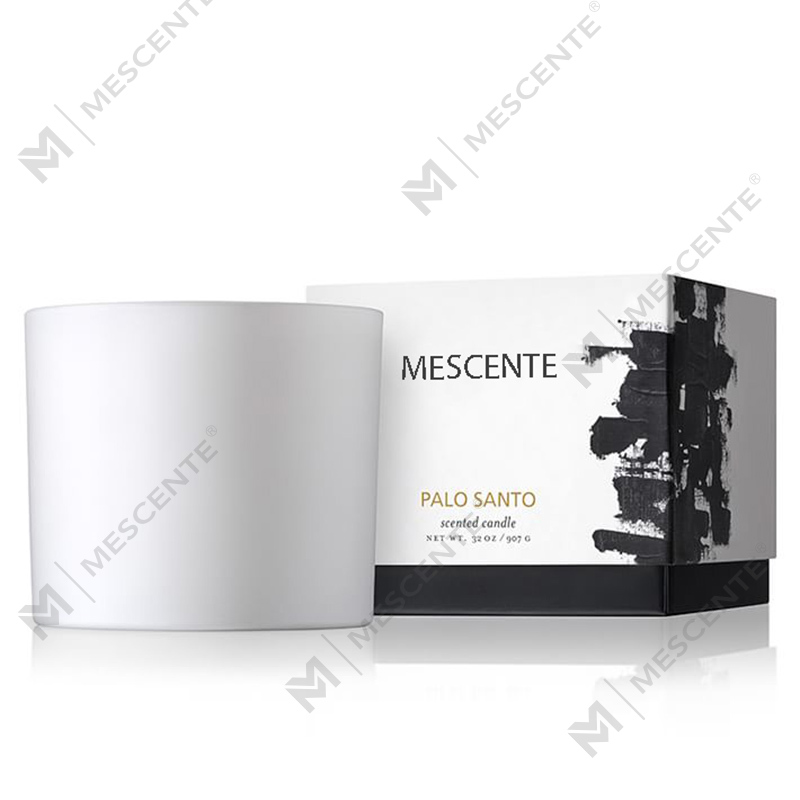
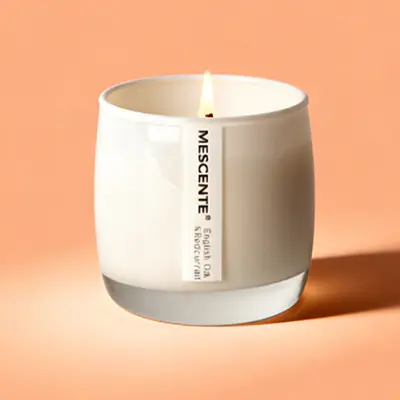
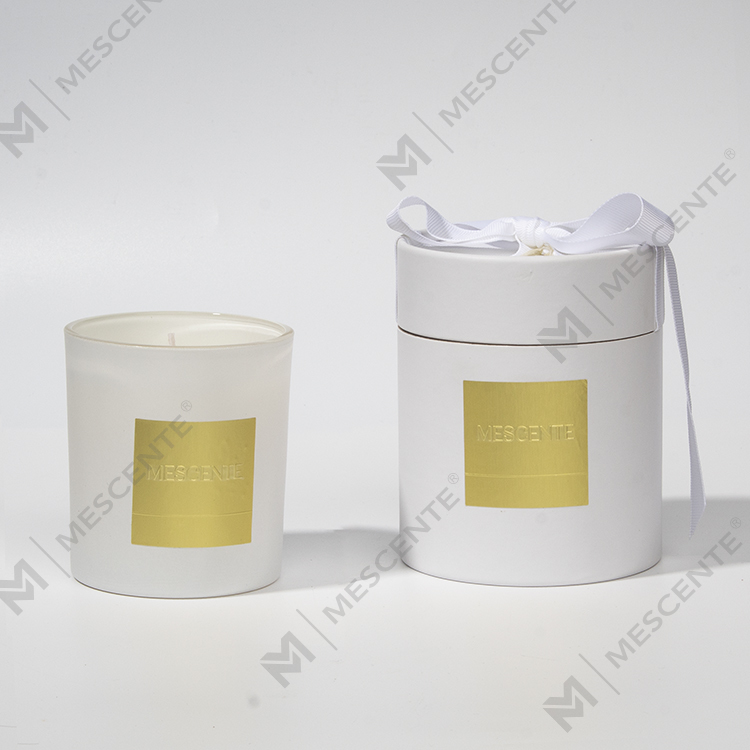
.jpg "M&Scent Luxury Men Electric Dry Flower Scented Candles With Custom Lables, Scented Paraffin Candle")
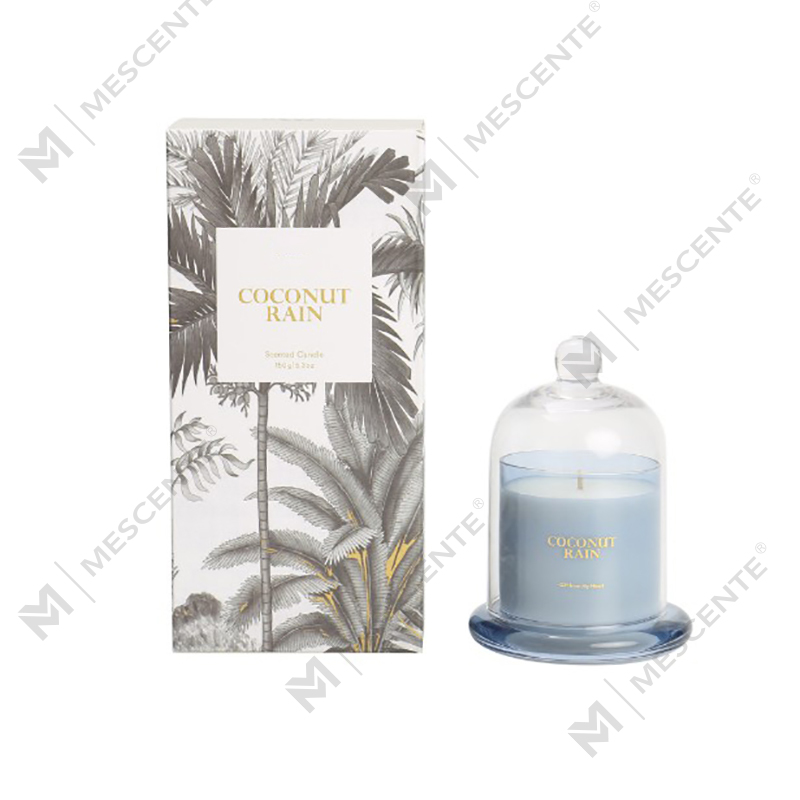
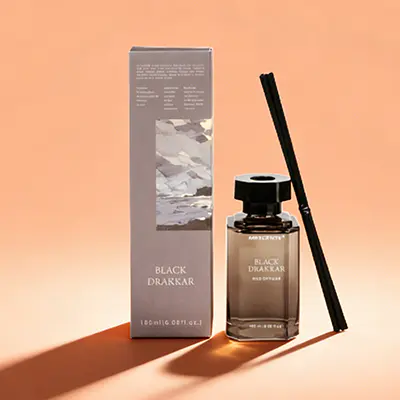
.jpg "150ml Home Fragrance Reed Diffuser Gift Set With Scented Candle A99189")

Address:
Building 10, No. 39, Muxu East Road, Mudu Town, Wuzhong District, Suzhou City, Jiangsu Province, China
Company
Products
Mobile
