



Home / Blog / Industry News / How Fragrance Selection Affects Private Label Home Fragrance Performance
How Fragrance Selection Affects Private Label Home Fragrance Performance
Content
Fragrance selection is the practice of matching a scent concentrate to the format that delivers it: the concentrate's volatility profile, its carrier base, and the concentration limits set by the International Fragrance Association (IFRA) and regional chemical regulations. Get that match right and one perfume oil can carry a candle line, a reed diffuser and a room spray. Get it wrong and the most expensive oil in your catalogue becomes the weakest product in the range.
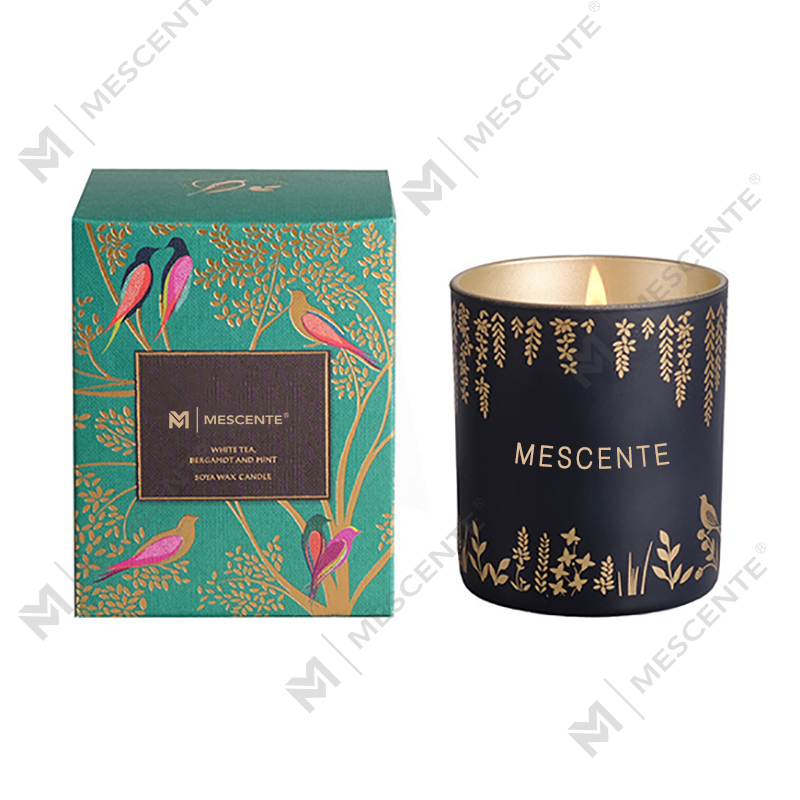
For a buyer sourcing from a manufacturer such as Suzhou M-Scent Arts & Crafts Co., Ltd., which produces private label candles, reed diffusers, room sprays and scent stones under the M-Scent and Mescente marks, the question is rarely which scent smells best in a bottle. It is which scent survives the format it will be poured into.
A blend that fills a room from a candle at 8 percent load will not do the same job at 8 percent in a reed diffuser, because a diffuser has no heat source and depends entirely on ambient evaporation.
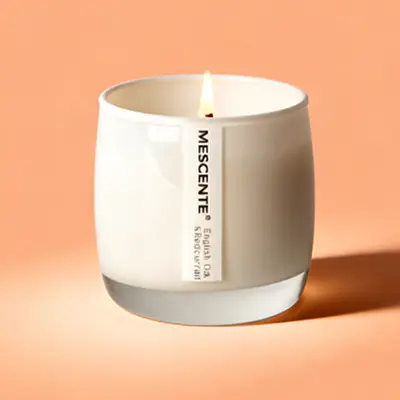
A candle releases scent from a melt pool whose surface sits at roughly 60 to 80 degrees Celsius. That heat lifts heavier base notes into the air and rewards oils with a mid-range flash point. A reed diffuser works at room temperature, so only the lighter, more volatile molecules leave the bottle at a useful rate; the heavier fraction stays in the base until the bottle is finished. A room spray inverts the process again: the ethanol carrier flashes off in seconds and carries the top notes with it, which is why a spray can smell vivid for ten minutes and nearly invisible an hour later.
| Format | Carrier or base | Typical load | Release driver | Most common failure |
| Scented candle | Soy, paraffin or coconut wax blend | 6-10% by weight | Heat from the melt pool | Oil seepage and wick drowning above the wax holding limit |
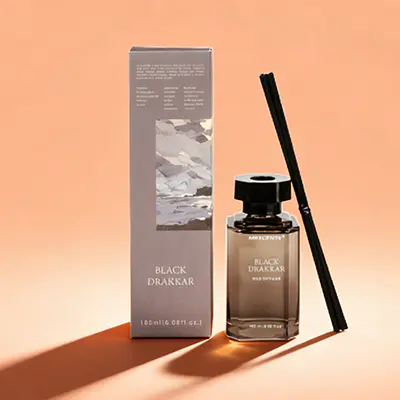
| Reed diffuser | Glycol-ether or alcohol diffuser base | 15-25% by weight | Room-temperature evaporation and capillary action | Top notes fade by week three and reeds clog |
| Room spray | Ethanol at 60-75% plus water | 2-5% by weight | Atomisation and rapid solvent flash-off | Scent collapses in minutes and leaves residue |
| Scented stone | Porous ceramic, plaster or volcanic clay | Neat oil in drops | Adsorption and slow desorption | Oil stains the surface and scent lasts days |
| Car freshener | Clay, felt or coated metal plate | 5-10% by weight | Airflow across a small surface area | Strong first week, flat second week |
Adding more fragrance oil stops improving performance once a format reaches its holding capacity; in soy wax, most private label failures appear between 10 and 12 percent load, where oil migrates to the surface and the flame can no longer hold a full melt pool.
Wax chemistry sets that ceiling. Soy wax holds less fragrance oil than paraffin, which is why an approved private label soy candle usually sits between 6 and 10 percent by weight, while a paraffin or coconut blend can carry 10 to 12 percent. Push past the limit and the symptoms are predictable: oil sweating in a warm warehouse, a wick that clogs and tunnels, a smaller melt pool, soot on the glass, and a scent that smells sharp when cold but thin when lit.
Flash point matters as much as load. Concentrates below 60 degrees Celsius lose their lightest molecules during the melt and pour, and keep changing in transit. Wick sizing also has to be re-tested for every scent, because a resin-rich blend needs a larger wick than a citrus top-note blend at identical load.
The most reliable route for a private label candle programme is one wax, one fixed load and a per-scent wick specification tested at production scale. Three consecutive four-hour burns in a still room held at 21 degrees Celsius expose most load problems, and the same protocol is used to review fragrance load against hot throw and burn longevity before a container ships.
A reed diffuser carries two to three times the fragrance load of a candle, but its perceived strength is decided by how volatile the top-note fraction is at room temperature, not by the total percentage of oil in the bottle.
Most commercial diffuser bases are glycol-ether or alcohol based, with viscosity low enough for capillary action to lift liquid up the reeds and an evaporation rate tuned for 20 to 24 degrees Celsius. Below 18 degrees Celsius output drops noticeably; above 28 degrees Celsius the bottle empties faster and the top notes vanish in weeks rather than months. That is why hotel specifications usually fix both the load and the room environment in the same document.
Reed material changes the result as much as the formula does.
Room sprays, car fresheners and scent stones trade longevity for immediacy, so the selection criteria shift to surface safety, top-note clarity and heat stability rather than diffusion endurance.
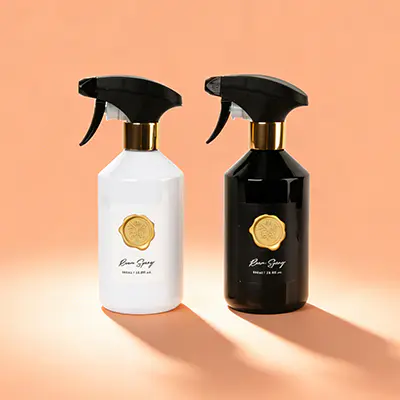
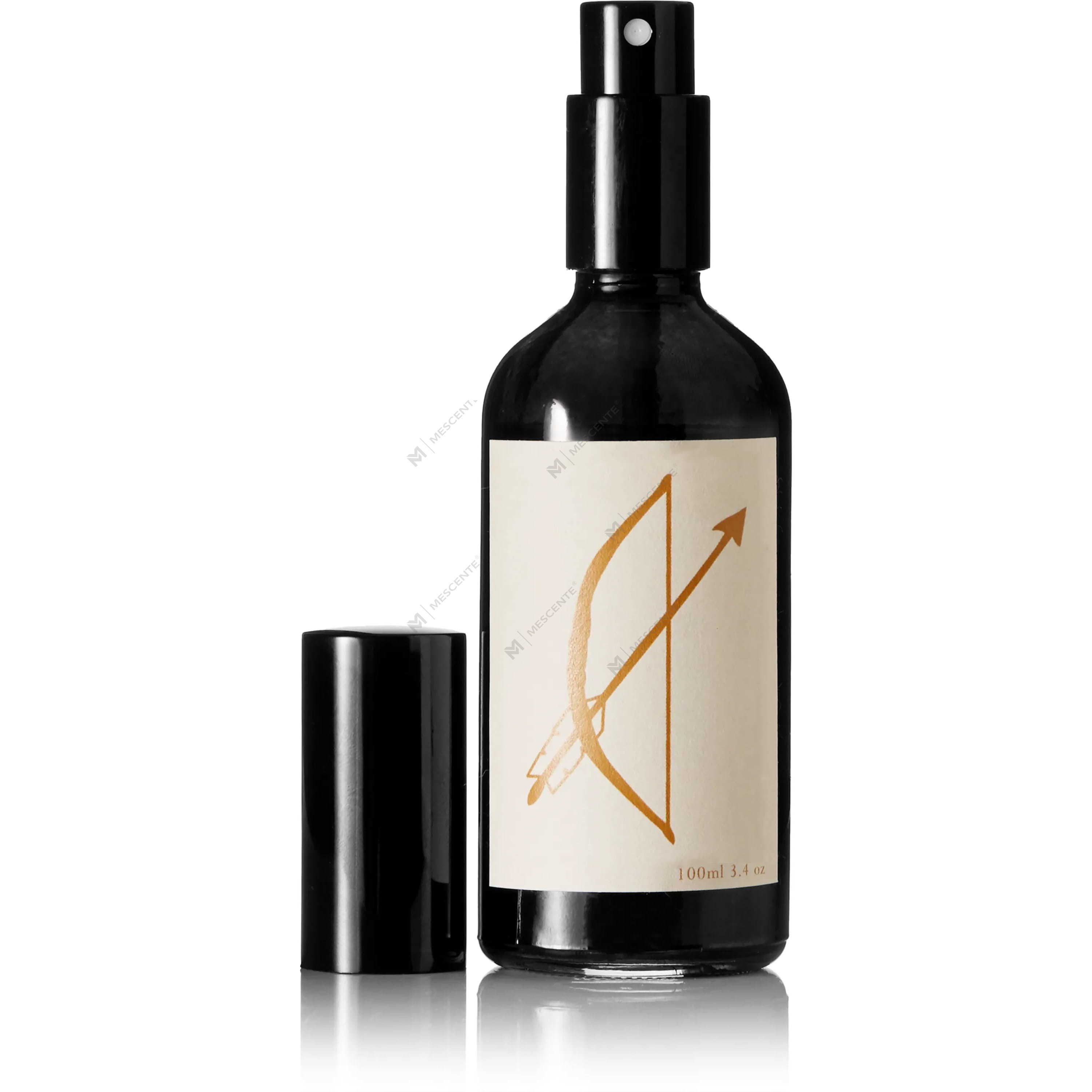
A room spray is a hydro-ethanol system, usually 60 to 75 percent ethanol with 2 to 5 percent fragrance oil. Higher loads leave an oily film on glass, lacquer and fabric, and the scent collapses within minutes because there is no reservoir behind it. Sleep-scent sprays sit at the low end of that range, built around lavender and soft florals at 2 to 3 percent, where the goal is a subtle shift in a bedroom rather than a statement.
IFRA Standards, the CLP Regulation (EC) No 1272/2008 and REACH Regulation (EC) No 1907/2006 decide which fragrance materials can enter which format and what the label must disclose.
IFRA restrictions are set by end-use category, so a material approved at a generous level for a rinse-off product can be capped far lower in air care. Allergen declaration thresholds matter just as much: under the EU framework, 26 fragrance allergens must be listed above 0.01 percent in leave-on products and 0.1 percent in rinse-off products. Candles are not cosmetics, yet most European retailers apply the same rule to them, and a scent that needs six allergens on the label is a harder listing conversation than one that needs two. The choice between essential oils and IFRA-compliant synthetic materials is therefore a documentation decision before it is a marketing one.
Candle safety standards add a second layer. EN 15493 covers the safety specification, EN 15426 sets the sooting index limit, and EN 15494 governs warning labels in Europe, while ASTM F2417 serves the same purpose in the United States. A candle that soots, or that fails a stability check after six months in storage, is rejected regardless of how good the fragrance smells on opening.
The IFRA conformity certificate for the specific end-use category, a safety data sheet prepared to CLP Annex II, a full allergen declaration, and the flash point of the concentrate in degrees Celsius.
Six steps, run in order, remove most of the commercial risk from a private label fragrance decision.
No. Past the holding capacity of the wax, extra oil reduces performance. In soy wax the practical ceiling sits near 10 percent by weight; beyond it, oil seeps to the surface, the wick struggles and the melt pool shrinks, so hot throw falls even though the unlit cold scent becomes stronger.
The same concentrate can usually be used, but never at the same concentration. A candle at 8 percent, a diffuser at 20 percent and a room spray at 3 percent are three separate formulas built from one oil, and each must be checked against IFRA limits for its own end-use category.
For candles, run at least three burns of four hours each in a still room held at 21 degrees Celsius, checking hot throw at hours one, two and four and watching for sooting and tunnelling. For diffusers, evaluate output on day one, day seven and day twenty-one, because the top notes fade first and the final third of a bottle can smell like a different product.
Four items: an IFRA conformity certificate for the specific end-use category, a safety data sheet prepared to CLP Annex II, an allergen declaration covering every allergen above the declaration threshold, and the flash point of the concentrate.


Address:
Building 10, No. 39, Muxu East Road, Mudu Town, Wuzhong District, Suzhou City, Jiangsu Province, China
Company
Products
Mobile
