




Home / Blog / Industry News / How Custom Scented Candles Build Distinctive Home Fragrance Collections
How Custom Scented Candles Build Distinctive Home Fragrance Collections
Content
Two production runs of the same candle can smell like two different products. A brand orders 2,000 lavender candles in March, reorders in September, and the second batch lands with a weaker cold throw, a wick that mushrooms by hour three and a wax pool that never reaches the glass. Nothing on the label changed, yet the collection lost the thing shoppers were paying for. That is the point where candle development stops being a packaging decision and becomes a supply chain decision.
A custom scented candle programme holds a collection together because the brand locks wax blend, wick series, fragrance load and vessel before the first sample is approved, so every later run reproduces the same burn and the same scent strength.
A custom scented candle is manufactured to a brand's own bill of materials - wax blend, fragrance formula and load, wick series, vessel, lid and label - instead of being chosen from a supplier's stock line.
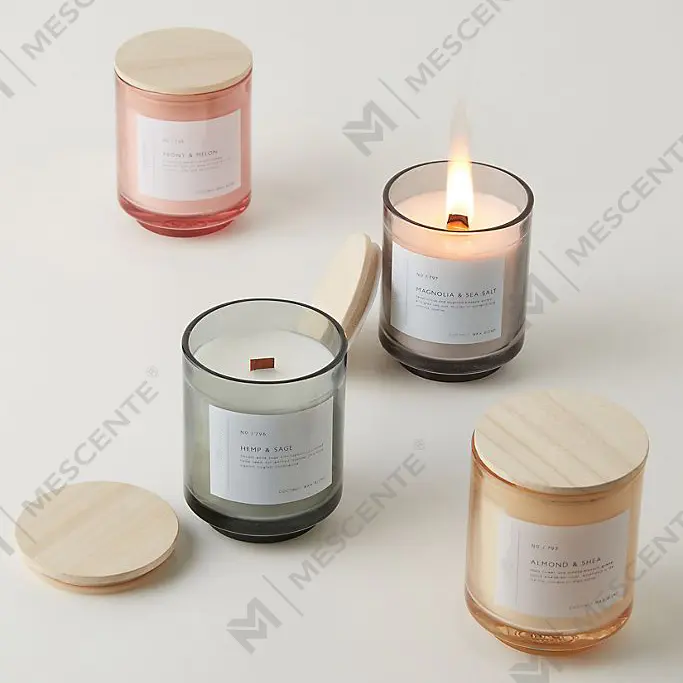
The commercial difference shows up on the shelf. Ten stock candles bought from the same wholesaler read as ten unrelated objects, because each one was designed by a different factory for a different buyer. A specified collection reads as one product family: the same wax tone, the same lid finish, the same scent architecture from a 90 g travel tin to a 400 g three-wick jar.
There is an operational gain too. A private label range of 12 SKUs built on one wax system, two wick families and three fragrance formulas gives a factory three filling recipes to control instead of twelve. Fewer variables means tighter colour, tighter fill weight and a far shorter conversation when a customer reports that the November batch burns hot.
Four variables decide how a finished candle smells, burns and photographs: wax system, wick series, fragrance load and vessel geometry. Move one and the other three must be re-tested.
Wax determines how much fragrance oil a candle can hold before it sweats, how cleanly it burns and how the surface looks in a photograph. The table below shows the windows used in private label production.
| Wax system | Typical load | Burn character | Collection fit |
| Paraffin blend | 6-8% | Bright cold throw, fast and steady pool | Mass retail, bold single-note statements |
| 100% soy | 7-9% | Softer cold throw, slow even burn, matte top | Clean-positioning and wellness ranges |
| Coconut-soy | 8-10% | Creamy surface, long burn, gentle sweetness | Premium gift sets and hotel lines |
| Palm and rapeseed | 6-8% | Firm set, holds colour and embossed detail | Decorative and seasonal collections |
These figures describe common formulation windows. The binding ceiling for any single formula is the maximum use level printed on the fragrance house's IFRA certificate for the candle category, which is assessed on the finished formula rather than on the wax alone.
Wick size is calculated from vessel diameter, wax density and fragrance load together. A 5 mm increase in jar diameter can push a single-wick candle up one or two wick sizes, and a change from 7% to 9% fragrance load can require the same adjustment. Fit the wrong combination and the symptoms are visible in the first burn:
A tapered tumbler, a straight-sided jar and a double-wall vessel of the same volume produce three different heat profiles. Double-wall glass holds heat in the air gap, so the same wax and wick run cooler against the outer wall and hotter at the core. Treat every new mould as a new burn test, not a cosmetic variation.
Scent throw depends on fragrance load and wick size working together; raising the load without resizing the wick produces soot and tunnelling rather than a stronger candle.
Bars show the upper end of each window. The certification limit in the fragrance IFRA certificate overrides these ranges for any specific oil.
Cold throw is what the customer smells in the shop with the lid off. Hot throw is what fills the room after 30 minutes of burning. A formula can be tuned for one and lose the other, which is why a collection built across candles and reed diffusers needs a shared fragrance brief rather than a shared fragrance percentage.
The first burn sets the pattern for the whole candle. Wax has memory: a candle burned for 40 minutes and extinguished holds a 60 mm pool line for the rest of its life, and every later burn tunnels inside it. That instruction belongs on the insert card, printed at 8 pt or larger, in every market.
A collection is a family of vessels that share one fragrance language, and it should be specified as a system before the first mould is approved.
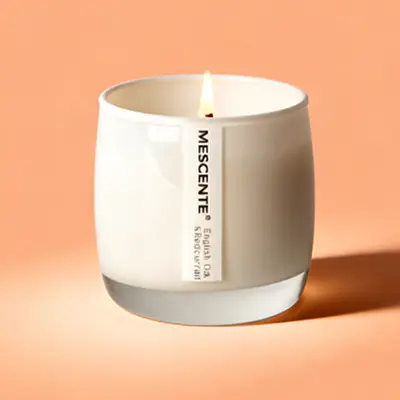
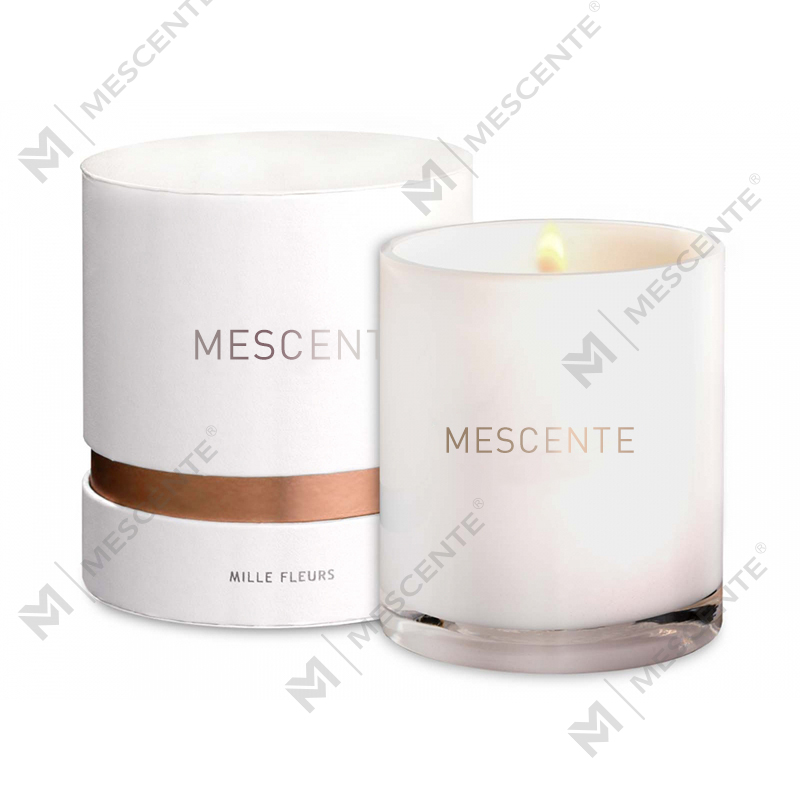
Suzhou M-Scent Arts and Crafts Co., Ltd., the manufacturer behind the M-Scent, Mescente and M&Scent marks, organises its candle catalogue as more than thirty named series - cement, stone, soft cork, luxury leather, world of art, sand of time, Christmas - rather than as isolated SKUs. Each series fixes a vessel material and surface, then reuses the same filling, labelling and packing lines. Buyers can read the full series catalogue to see how one fragrance family can be expressed across concrete, ceramic, glass and metal without losing visual identity.
A series also gives a brand a reason to reorder. When the vessel stays and only the fragrance changes for a seasonal drop, tooling and label templates are already amortised, and the new SKU reaches the shelf in weeks instead of months.
A private label candle programme passes five checkpoints between brief and bulk, and any one of them can send the formula back for revision.
The retention sample is the cheapest quality tool in the programme. When a shipment is questioned, the sealed unit from the approved run settles the argument in minutes. The operating discipline behind quality consistency across bulk candle runs is built on exactly this kind of physical reference.
A collection is not defined by the candle a customer buys first. It is defined by whether the second candle, bought eight months later, smells like the same brand.
Every custom candle shipped into the EU or the US needs four documents on file before the container leaves the factory, and the labels cannot be printed without them.
A candle collection becomes a home fragrance collection when the same fragrance family is carried into formats that do not need a flame.
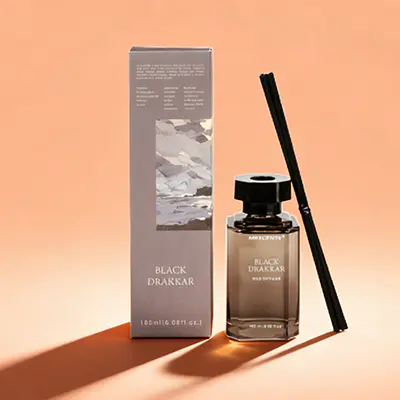
Reed diffusers run fragrance loads of 15-20% in the base, roughly double a container candle, so the oil blend is reformulated rather than copied. Gift sets that pair a candle with a diffuser sell as one unit and ship as one carton, which reduces per-unit packaging cost and simplifies retail listing.
Six to eight candle SKUs built on two vessels and three fragrance families give a brand enough shelf presence without splitting production into lots too small to control quality. Fewer than four SKUs rarely reads as a collection, and more than twelve multiplies test batches before the first order ships.
Start at 7-8% for a soy container candle and test upward in 1% steps. The ceiling is not a brand preference: it is the maximum use level on the IFRA certificate for that fragrance in the candle category, and any load above it fails at customs or at audit.
Plan for 6 to 8 weeks. Wax and wick trials take 10 to 14 days, burn and sooting tests add 5 to 7 days, label proofing runs 5 days, and a pre-production run adds the final week before bulk filling begins.
Yes. The EU requires EN 15494 safety labelling, EN 15426 sooting data, REACH safety data sheets and CLP classification; the US requires a flammability record aligned with ASTM F2417 and a compliant warning label. Both markets need the IFRA certificate.
A brand does not build a home fragrance collection by ordering more candles. It builds one by specifying the wax, the wick, the load and the vessel once, then holding every supplier to those numbers for the life of the range. The factories that make this easy are the ones already running named series, retention samples and documented fragrance limits.

Address:
Building 10, No. 39, Muxu East Road, Mudu Town, Wuzhong District, Suzhou City, Jiangsu Province, China
Company
Products
Mobile
