




Home / Blog / Industry News / Home Fragrance Wholesale: Essential Factors for Bulk Procurement Success
Home Fragrance Wholesale: Essential Factors for Bulk Procurement Success
Content
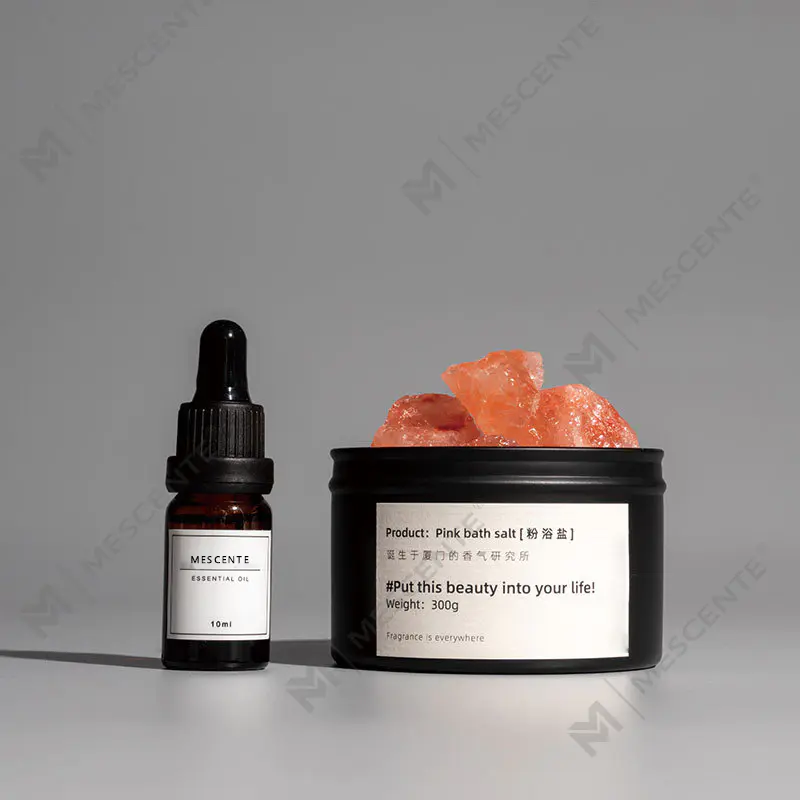
Home fragrance wholesale is the bulk purchase of finished scent products - scented candles, reed diffusers, room sprays, scent stones, and complementary gift sets - directly from a factory or supplier under negotiated MOQs, lead times, and private-label terms. In practice, the key factors for bulk procurement come down to documentation, MOQ structure, customisation depth, assortment coherence, and supply reliability.
Verify documentation before negotiating price; a missing certificate is a supply-chain risk, not a line-item saving. Fragrance oils determine everything in a scented product: scent throw in candles, evaporation behaviour in reed diffusers, skin-safety profiles in room sprays, and the allergen disclosures that appear on retail packaging.
For bulk buyers, the non-negotiable documents are a gas chromatography-mass spectrometry (GC/MS) report for each fragrance compound, a Certificate of Analysis (CoA) for every production batch, and an IFRA compliance statement for each oil. Ask how the factory checks batch consistency: whether every batch is tested for scent strength and colour, whether retention samples are kept, and whether flashpoint and transport declarations are available for sea freight.
| Procurement factor | What to verify | Why it matters |
| Fragrance oil quality | GC/MS report, CoA, IFRA statement | Confirms safety, stability, and market compliance before you commit volume |
| Batch consistency | Retention samples, scent strength check, colour check | Ensures the second batch matches the first from the customer's perspective |
| Transport paperwork | Flashpoint value, SDS, packing declaration | Prevents freight delays and customs classification problems |
| Regulatory coverage | Allergen declaration for EU/UK, CLP labelling | Protects your retail listing and avoids compliance recalls |
Buyers sourcing for hotels run the same filter in an even stricter form: uniform 180 ml bottles, consistent oil loads, and a fragrance that has to behave identically across hundreds of rooms. The hotel-grade segment of the market exists because hospitality procurement rewards stability over novelty.
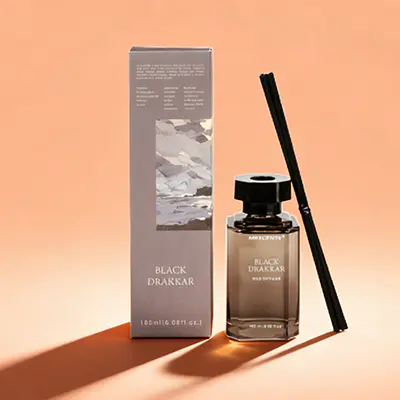
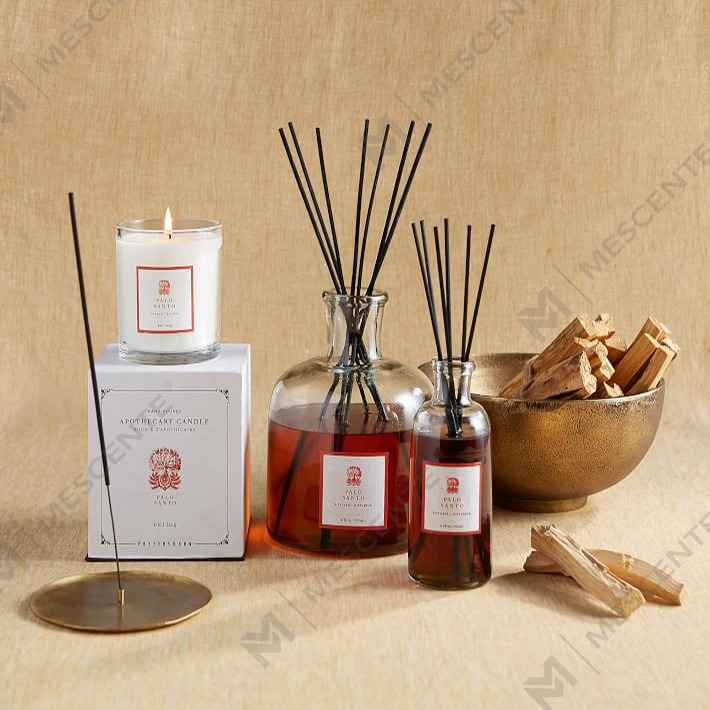 Custom Hotel Reed Diffuser with 180ml Glass BottleThis hotel-grade diffuser offers a consistent 180ml format and stable fragrance performance, making it a practical choice for buyers prioritizing reliability and uniform presentation across large properties.View Product →
MOQs shape your working capital and your ability to test the market, so they come second only to documentation in the evaluation order. A quote that looks cheap per unit can become expensive once you add mould amortisation, label proofs, freight, and the risk of rework.
Full landed cost includes freight, duties, customs clearance, tooling fees, packaging inserts, and rework risk if the batch arrives off-spec. A lower quote that lacks colour management for dyed vessels will cost more in rejected lids and mismatched jars than a higher quote with a reliable production process.
The chart reflects a common order-mix pattern among wholesale buyers who stock multiple categories; actual shares shift with season and distribution channel, but candles and diffusers consistently dominate bulk home fragrance purchasing.
A supplier's real value for a brand is the custom version of a stock product, not the stock product itself. Private label in home fragrance covers four layers: fragrance selection, container choice, decoration, and packaging.
Clarify who owns a custom mould, where it is stored, and what minimum order keeps it active. A custom ceramic candle jar, for example, is typically amortised across the first production batch, which is why the MOQ on a private-label candle line often starts higher than the MOQ on a comparable stock candle.
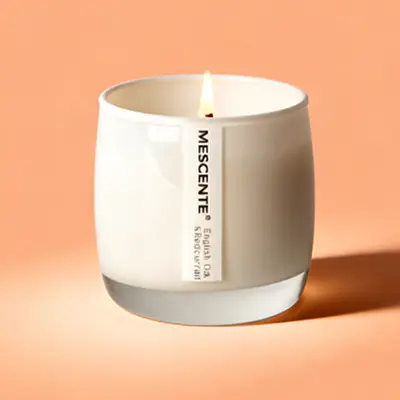
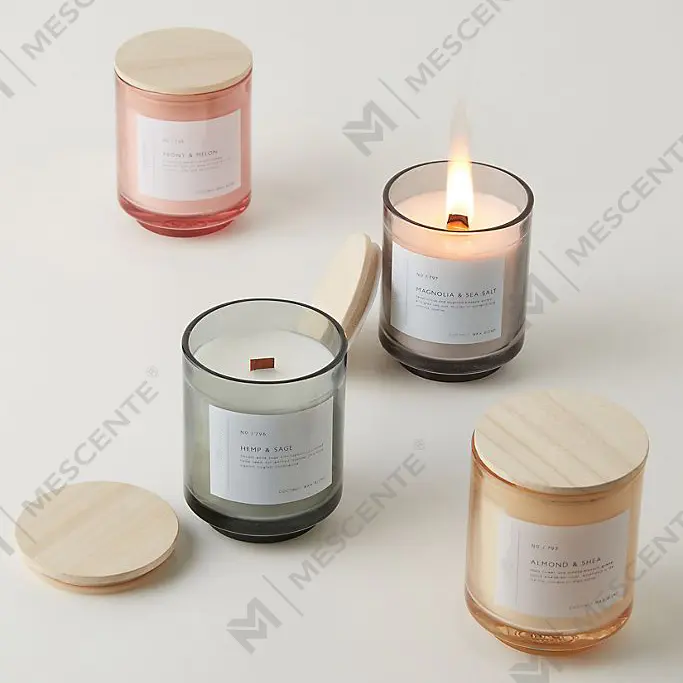
 Private Label Soy Candle in Customizable JarA soy candle option that pairs a stock vessel with private-label branding, helping first-season buyers manage tooling costs while still achieving a distinct shelf presence.View Product →
In practice, manufacturers with deep series catalogues let you shortcut the process: combine a stock vessel with a custom logo and a chosen scent family instead of developing a new container. For a first season, this keeps costs predictable while still giving you a branded shelf presence.
A catalogue that covers candles, diffusers, sprays, and scent stones in one visual language lets a buyer consolidate orders and cut supplier count. This is not just a convenience; it affects how consistent your brand looks across a store, a hotel, or a gift set.
M-Scent Co., Ltd., a home fragrance manufacturer based in Suzhou, China, organises its catalogue into more than thirty named series that span ceramics, glass, wood, leather, cement, metal, and soft-plush materials. A buyer can choose a 180 ml frosted diffuser bottle with a wooden lid and pair it with a 3-wick soy candle in the same finish, then wrap both in a shared gift box. That level of coordination matters when the product sits on a shelf or in a hotel room as a set.
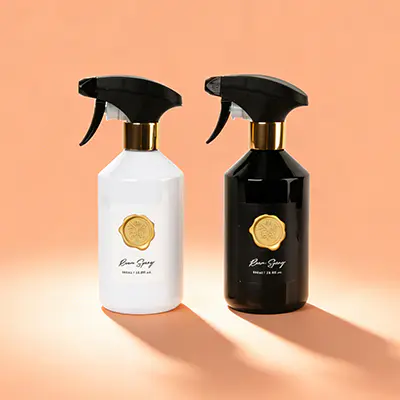
For hospitality buyers, assortment depth also means fewer vendors to manage for the seasonal demand cycles of bulk candle buying. One supplier covering guest-room diffusers, lobby candles, and amenity sprays simplifies freight consolidation and keeps fragrance families coherent across the property.
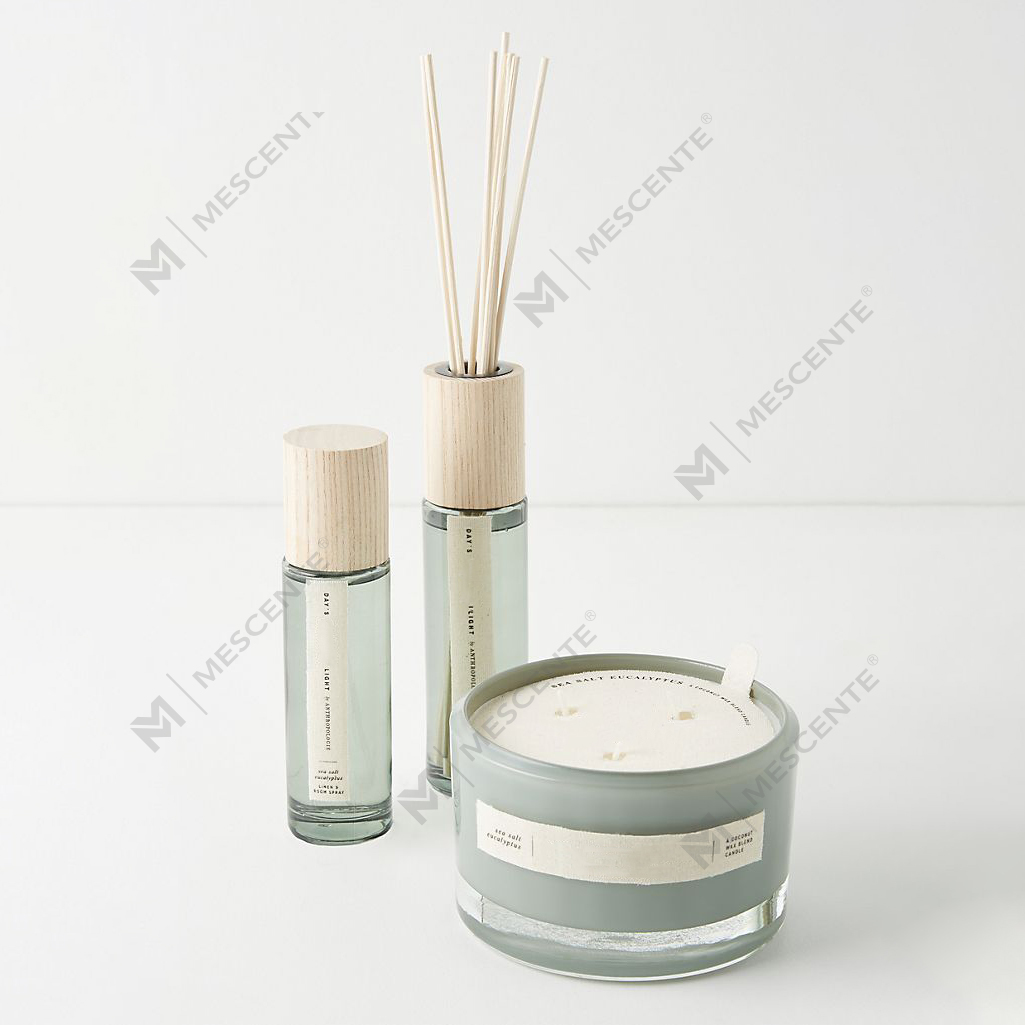
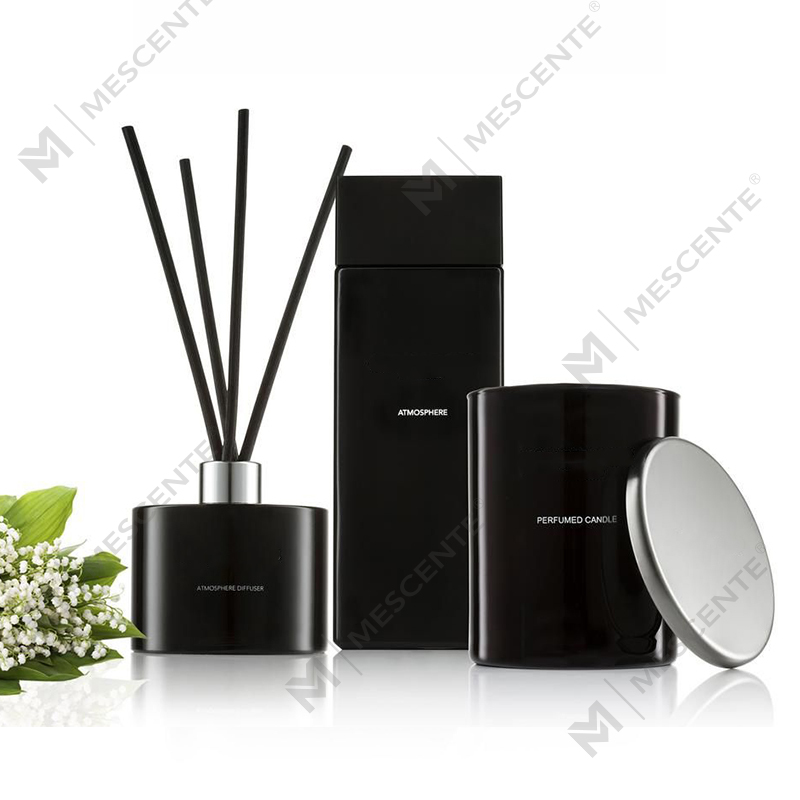 White Frosted Reed Diffuser Oil with Gift BoxAn aromatherapy reed diffuser presented in a frosted bottle with packaging, suitable for buyers looking to adopt an existing series and streamline their assortment without extra tooling expenses.View Product →
When evaluating a range, compare the existing series catalogue against the assortment you plan to launch. Every stock series you can adopt reduces tooling cost and shortens your path to market.
A perfect sample is only proof of a prototype; the bulk batch is the real product. Most factories quote 25-45 days for stock items and 45-60 days for custom packaging, so the calendar, not the unit price, often decides whether a launch window is met.
Confirm peak-season behaviour too. Home fragrance factories commonly work around international trade fairs, and year-end holiday orders can stretch lead times; a supplier that tells you when it is overloaded is worth more than one that accepts every order and ships late.
Condense the evaluation into six decisions you can confirm in a single conversation with a factory sales or quality team.
Buyers who treat home fragrance wholesale as a supplier capability audit rather than a unit-price comparison consistently build stronger product lines. The documentation, MOQ structure, customisation depth, and reliability of a factory decide whether your brand scales smoothly - or reorders the same scented candle three times before finding true consistency.
For scented candles and reed diffusers, most factories set MOQs between 500 and 2,000 pieces per SKU. Mixed-container or mixed-SKU orders often allow smaller quantities per design, while private-label runs with custom packaging may raise the minimum to cover tooling and label changes.
Ask for a GC/MS report and a Certificate of Analysis for each oil, plus an IFRA compliance statement. Request a finished sample and burn or evaporate it under the same conditions you expect in retail use. Compare the second batch against the first for scent strength, colour, and container finish.
At minimum: product specification sheets, safety data sheets, a CoA per batch, IFRA declarations, and transport documentation with flashpoint information for sea freight. For EU or UK distribution, allergen declarations and cosmetic product notification requirements also apply.
Yes, and this is the normal operating mode for a home fragrance manufacturer. Most factories separate stock moulds, new moulds, a fragrance library, and exclusive formulation. You can usually start with a stock container and custom label to control cost, then move to new moulds and exclusive scents once order volume justifies the tooling investment.

Address:
Building 10, No. 39, Muxu East Road, Mudu Town, Wuzhong District, Suzhou City, Jiangsu Province, China
Company
Products
Mobile
