



Home / Blog / Industry News / Choosing Scented Candles for Bathroom: Key Factors for Fragrance Selection
Choosing Scented Candles for Bathroom: Key Factors for Fragrance Selection
Content
A candle that fills a living room can turn faint and soapy in a bathroom. Steam pushes relative humidity past 80%, the room volume is small, and the fragrance has to compete with moisture, ceramics and cleaning products. Scented candles for bathroom use therefore need a formulation that tolerates humid air — not just a pleasant smell on paper.
The bathroom needs a higher fragrance concentration and a steadier burn than any other room in a home.
Warm moisture accelerates the evaporation of the most volatile scent compounds, so fresh top notes can burn off within minutes. A small room also raises the risk of overloading: too strong a scent in a wet room feels closing, while too weak a scent disappears completely. The result is that a candle formula must be chosen for a narrow performance window between "barely present" and "oppressive".
Citrus, aquatic, lavender, green tea and light floral families are the most reliable candidates because they refresh the air without clashing with soaps and cosmetics.
Fragrance selection starts with the scent family because each behaves differently in humid conditions. Citrus delivers an immediate bright note but can turn sharp in warmth, aquatic notes read as clean and mineral, lavender holds its shape and is instantly calming, green tea with white musk gives a neutral hotel-style profile, and light florals soften the space but risk a powdery finish if overdosed.
| Scent family | Typical notes | Best use | Hot-throw character in steam |
| Citrus | Lemon, bergamot, grapefruit | Morning refresh | Bright and immediate; can turn sharp |
| Aquatic | Sea salt, ozone, melon | Spa-style atmosphere | Clean and diffusive; fades steadily |
| Lavender / herbal | Lavender, eucalyptus, sage | Evening bathing | Strong and steady in steam |
| Green tea / white musk | Green tea, jasmine, musk | Neutral everyday use | Moderate, long-lasting, hotel-like |
| Light floral | Peony, freesia, lily of the valley | Soft decorative scent | Moderate; watch for powdery finish |
A lavender soy wax candle is the workhorse of this category, and it is the format most often reordered by retailers and hotel buyers.
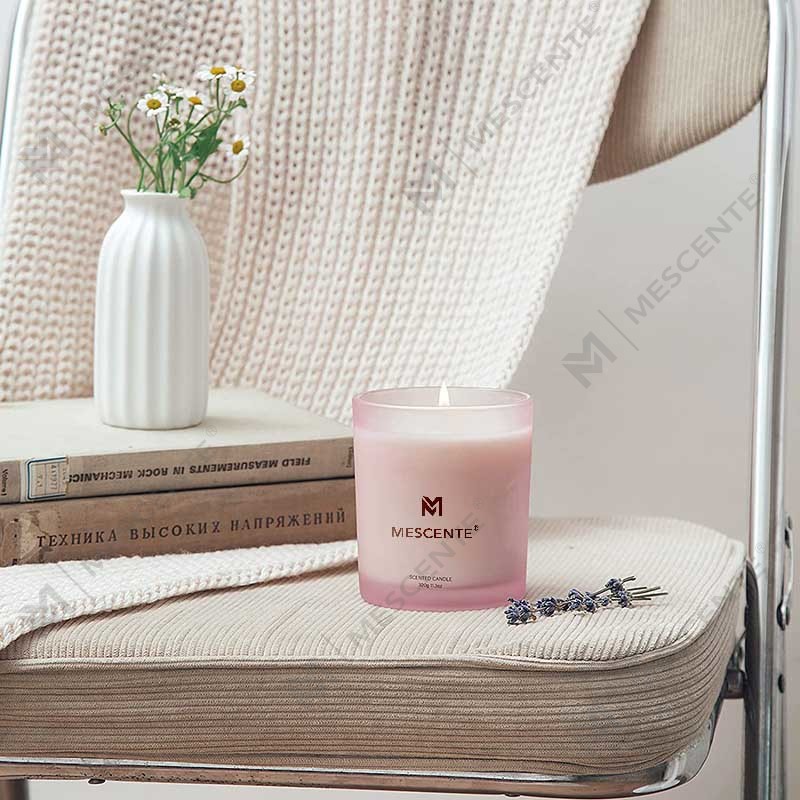 Lavender Soy Wax Candle in Bulk for Private LabelThis lavender soy candle is the frequently reordered format for retail and hotel buyers. Its fragrance load is key to even scent release, making it a practical choice for bulk sourcing.View Product →
Fragrance load is the most important specification in a bathroom candle, because the wax determines how much scent can be held and how evenly it is released.
Most candle waxes tolerate a load between 6% and 12% of total weight, and pure soy wax commonly performs well at 8–10%. In a humid room, the candle should sit near the upper end of the wax's safe range, with a wick sized for that exact load. The first burn sets the melt pool memory: let the candle burn until the wax reaches the container edge, normally 2–3 hours.
Paraffin blends give a strong cold throw and lower cost; coconut-soy blends produce a smooth melt pool and accept the highest fragrance loads; beeswax blends hold less fragrance and are rarely chosen for bathroom lines. Soy wax remains the default for branded bathroom candles because it balances clean burning, load capacity and a natural positioning.
For a deeper look at how candles release scent over time, read our guide on how to evaluate perfume candle throw.
The container matters in a bathroom because condensation forms on cool surfaces, heat builds quickly, and every flame sits near hard glossy finishes.
An open jar releases fragrance fast and is easy to clean, but it exposes the melt pool to dust and moisture. A lidded jar keeps the scent contained between burns, a practical advantage in rooms with limited ventilation. Ceramic and thick glass retain heat well, which produces a more even melt pool and a stronger hot throw than thin single-wall glass.
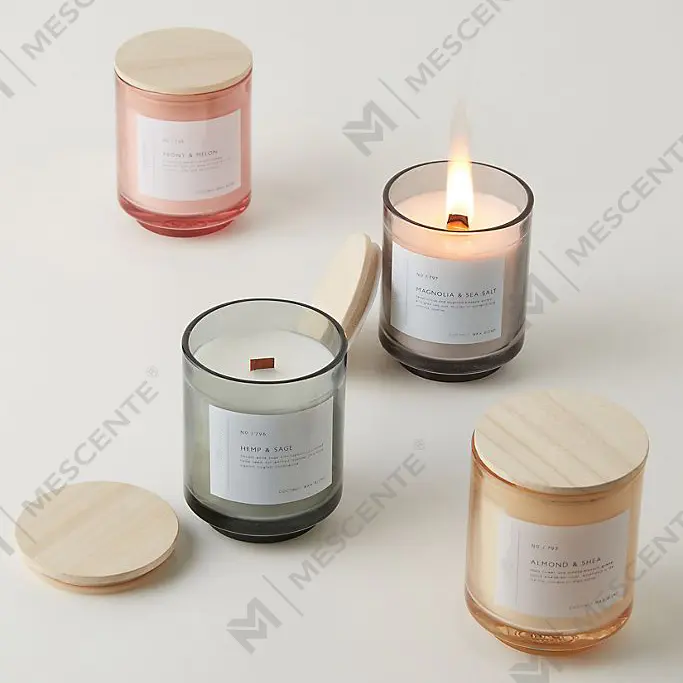
For bathrooms with limited shelf space, a covered 3-wick candle provides the same scent coverage as a larger single-wick format in a more compact footprint.
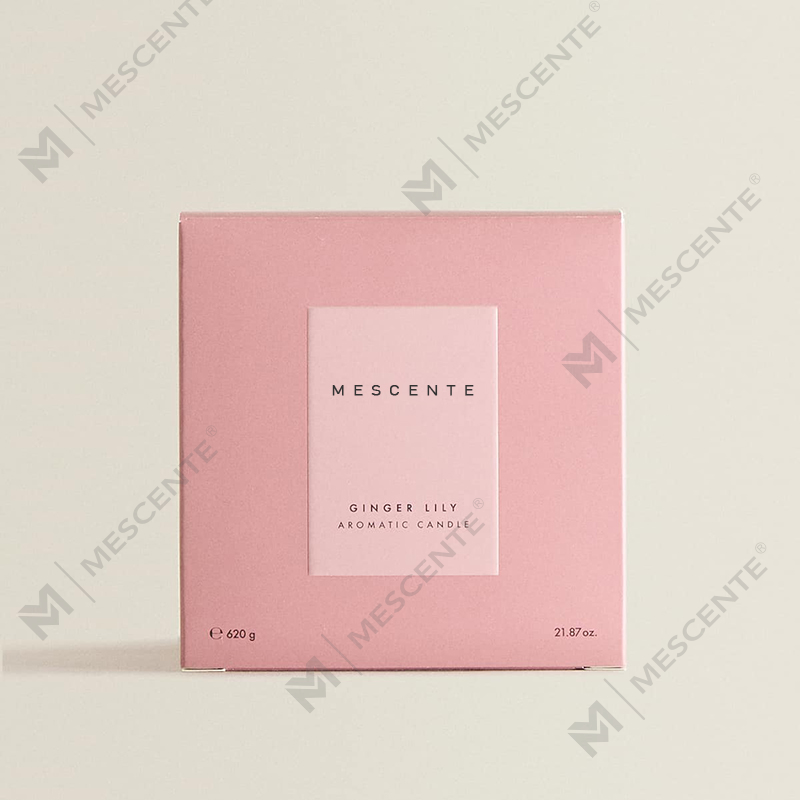 Three-Wick Soy Candle with Wooden Lid for Compact SpacesA covered three-wick candle delivers comparable scent coverage to a larger single-wick unit in a smaller footprint, suited for bathrooms where shelf space is limited and bulk orders need verification.View Product →
Buyers should verify three specifications before a bulk order: fragrance load consistency, wick behavior in humid conditions, and compliance documentation.
Retailers and hotel operators cannot replace a bad batch quickly, so verification happens before signing, not after delivery. Ask the factory for the exact fragrance load target, the wax blend, the wick series and the expected burn time. Request burn test records from a humidity-controlled chamber. Collect the compliance file at the start: an International Fragrance Association (IFRA) certificate, a material safety data sheet (MSDS) for the fragrance oil, and a heavy-metal statement for container finishes. The full scented candle catalog lists these options across dozens of jar and wax combinations.
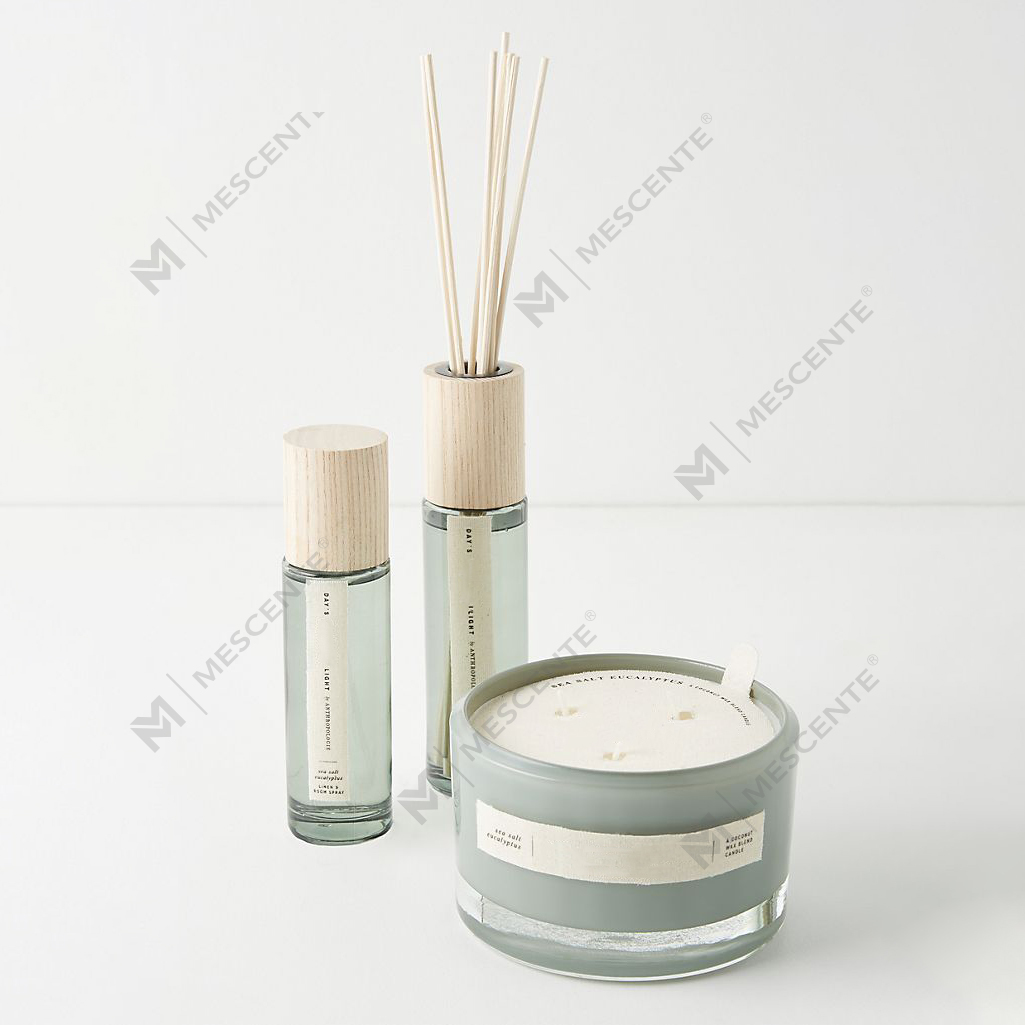 Private Label Scented Soy Candle Jar for Bulk SupplyThis jar candle is part of a catalog spanning multiple jar and wax combinations. Before ordering, buyers can request fragrance load, wick, burn time data and compliance documents like IFRA and MSDS.View Product →
Steam accelerates the evaporation of the lightest fragrance molecules, so top notes disappear fast. If the wax does not carry enough fragrance load, the scent reads as thin within 15 minutes. Choose a candle near the upper end of the wax's safe load range with a wick sized for it.
Any candle can be lit there, but performance will be inconsistent. Heavy gourmand and dark floral profiles can turn cloying in steam, and wicks not sized for humid air tend to tunnel or smoke. Bathroom use needs to be planned at the formulation stage.
Plan a first burn of 2–3 hours to set the melt pool memory. After that, a 45–60 minute burn refreshes a typical small bathroom. Frequent short burns produce a narrow tunnel and steadily reduce hot throw.
Yes, with strict placement rules: keep the flame 60 cm from water and flammable surfaces, trim the wick to 5 mm, and extinguish before turning on ventilation. A burning candle should never be left unattended.
.jpg "M&Scent Luxury Men Electric Dry Flower Scented Candles With Custom Lables, Scented Paraffin Candle")

Address:
Building 10, No. 39, Muxu East Road, Mudu Town, Wuzhong District, Suzhou City, Jiangsu Province, China
Company
Products
Mobile
