

Content
- 1 1. The Science of Fragrance Oil Concentration and Saturation
- 2 2. Analyzing Hot Throw vs. Cold Throw Dynamics
- 3 3. Maximizing Scent Throw Radius in Large Rooms
- 4 4. The Impact of Wax Type on Fragrance Diffusion
- 5 5. Why Quality Standards Matter for Retailers
- 6 Conclusion: The Equilibrium of Taste and Tech
- 7 Frequently Asked Questions (FAQ)
- 7.1 1. Does a higher oil percentage always mean a better perfume scented candles experience?
- 7.2 2. How much fragrance oil to add to candles for a 50-square-meter room?
- 7.3 3. Can preventing candle tunneling for better scent really improve the radius?
- 7.4 4. What is the best wax for scent throw in large rooms if I want to stay eco-friendly?
- 7.5 5. Why do long lasting perfume scented candles sometimes seem less strong?
- 8 Industry References
For connoisseurs of home ambiance, the performance of perfume scented candles is measured by more than just their aesthetic appeal; it is a matter of molecular diffusion. The ability of a candle to fill a large room with a sophisticated aroma—a phenomenon known in the industry as "hot throw"—is a complex interplay of chemistry, thermal dynamics, and material science. M&SCENT, a professional manufacturer based in Suzhou, specializes in high-quality home fragrance products including reed diffusers and room sprays. Our core philosophy centers on integrity and health, ensuring that every perfume scented candles batch we produce via OEM or ODM services maintains the "apple to apple" superiority our reputable retail partners expect. This guide examines the technical correlation between fragrance oil load and scent radius to help you achieve the ultimate olfactory environment.
1. The Science of Fragrance Oil Concentration and Saturation
In the engineering of perfume scented candles, "fragrance load" refers to the percentage of fragrance oil relative to the weight of the wax. While a higher concentration might theoretically imply a stronger scent, there is a critical "saturation point" for every wax type. When considering how much fragrance oil to add to candles, exceeding the saturation limit (typically 10-12% for high-grade soy or paraffin blends) leads to "oil bleed," where the excess oil seeps to the surface. This creates a safety hazard and degrades the burn quality. In contrast, an optimized load ensures the oil is trapped within the crystalline structure of the wax, releasing only when heat is applied.
Comparison: Standard vs. High-Load Concentration
Standard candles focus on cost-efficiency, whereas professional-grade candles prioritize the molecular stability of the fragrance-wax bond.
| Feature | Standard Fragrance Load (5-7%) | Professional Fragrance Load (10-12%) |
| Initial Scent Intensity | Mild / Subtle | Strong / Robust |
| Structural Integrity | High Stability | Requires specialized additives for stability |
| Evaporation Rate | Slow | Controlled High-Rate |
2. Analyzing Hot Throw vs. Cold Throw Dynamics
A frequent point of confusion for consumers is the difference between the scent of a candle in the box versus its performance when lit. In a professional hot throw vs cold throw guide, we distinguish between the "cold throw" (the scent emitted at room temperature) and the "hot throw" (the scent released during combustion). High fragrance oil concentration primarily boosts the cold throw, but for a successful hot throw in a large room, the oil must have a compatible flash point with the wax pool temperature. M&SCENT focuses on the green and environmental protection aspect, utilizing high-quality oils that do not break down into acrid notes when heated, ensuring the "positive beauty of nature" is preserved.
Comparison: Factors Affecting Throw Radii
While cold throw depends on the volatility of top notes, hot throw is driven by the thermal energy of the melt pool and the convective air currents it creates.
| Performance Metric | Cold Throw (Ambient) | Hot Throw (Combustion) |
| Primary Driver | Fragrance Volatility | Melt Pool Temperature & Convection |
| Effective Radius | 1 - 3 Meters | 5 - 10+ Meters (Large Room) |
| Influence of Oil % | Directly Proportional | Proportional up to Saturation Point |
3. Maximizing Scent Throw Radius in Large Rooms
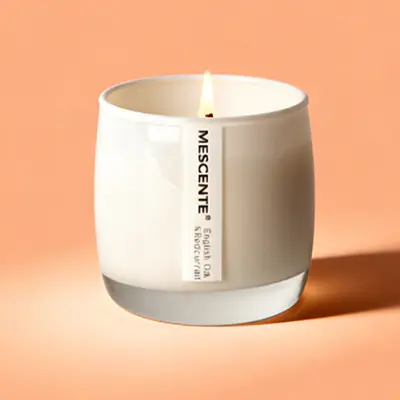
To fill a large space, the perfume scented candles must generate a deep, consistent melt pool that reaches the edges of the container. This is where preventing candle tunneling for better scent becomes vital. If a candle "tunnels" (burns only down the center), the surface area of the liquid wax is reduced, drastically shrinking the scent throw radius. A larger melt pool allows for a greater volume of fragrance oil to evaporate simultaneously. At M&SCENT, we design our containers and wick combinations to ensure a "full melt pool," which acts as a larger "fragrance radiator" for the room.
Technical Strategies for Radius Expansion:
- Multi-Wicking: Utilizing two or three wicks to increase the surface area of the melt pool.
- Vessel Geometry: Wide-mouthed jars allow for more rapid scent dispersion.
- Wick Trimming: Maintaining a 1/4 inch wick prevents soot and ensures an even, hot burn.
4. The Impact of Wax Type on Fragrance Diffusion
Not all waxes are created equal when it comes to the best wax for scent throw in large rooms. Paraffin wax generally offers a more immediate and powerful hot throw because of its lower molecular density, while soy wax provides a cleaner, longer-lasting burn but requires higher oil concentrations to achieve similar intensity. M&SCENT prioritizes health and the environment, often opting for proprietary vegetable wax blends that offer the safety of natural materials without sacrificing the robust throw of perfume scented candles. The chemical affinity between the oil and the wax determines how easily the fragrance "escapes" the liquid pool into the air.
Comparison: Wax Performance Characteristics
Choosing the right wax involves balancing the desire for an eco-friendly product with the technical requirement for scent dispersion.
| Wax Category | Diffusion Speed | Environmental Profile |
| Paraffin Wax | Fast / Aggressive | Petroleum-based |
| Soy / Vegetable Wax | Moderate / Steady | Sustainable / Green (M&SCENT Standard) |
| Beeswax | Slow / Subtle | Natural / Health-focused |
5. Why Quality Standards Matter for Retailers
For reputable retailers, the "apple to apple" comparison often reveals that low-cost candles cut corners by using inferior oils or low fragrance loads. M&SCENT believes that high quality does not always mean the highest price, but it does require a commitment to "quality first" in every supply chain link. By offering long lasting perfume scented candles with optimized oil-to-wax ratios, we help our partners build brand loyalty. A candle that fails to scent a room after 30 minutes of burning is a product that will not see a repeat purchase. Our Suzhou-based manufacturing team ensures that the design and top-notch quality are never compromised.
Conclusion: The Equilibrium of Taste and Tech
Achieving a wide scent throw radius in perfume scented candles is a delicate equilibrium between fragrance oil concentration and the physical properties of the wax and wick. While 10-12% concentration is the "sweet spot" for professional-grade products, the success of the hot throw ultimately depends on the health of the melt pool and the quality of the ingredients. By choosing products designed with integrity and a focus on nature, like those from M&SCENT, you can ensure a cleaner burn and a more immersive aromatic experience.
Frequently Asked Questions (FAQ)
1. Does a higher oil percentage always mean a better perfume scented candles experience?
Not necessarily. If the oil load exceeds the wax's ability to hold it, the candle will smoke, soot, or even catch fire. Balance is more important than sheer volume.
2. How much fragrance oil to add to candles for a 50-square-meter room?
For a room of that size, we recommend a fragrance load of 10-12% in a multi-wick candle. This ensures the melt pool is large enough to drive convection across the space.
3. Can preventing candle tunneling for better scent really improve the radius?
Absolutely. A tunneled candle only has a small fraction of the scent-releasing surface area compared to a properly burned candle. Keeping the melt pool wide is the #1 way to boost throw.
4. What is the best wax for scent throw in large rooms if I want to stay eco-friendly?
A soy-coconut blend is often the best choice. It has the environmental benefits of soy but a slightly lower molecular density, which helps the fragrance release more effectively than 100% soy.
5. Why do long lasting perfume scented candles sometimes seem less strong?
Usually, this is because they use a denser wax that burns at a lower temperature. While the candle lasts longer, the release of scent is slower. It is a trade-off between "intensity" and "longevity."
Industry References
- ASTM F2417: Standard Specification for Candle Fire Safety.
- IFRA (International Fragrance Association) Standards for Home Fragrance.
- NCA (National Candle Association) Guide to Wax and Oil Compatibility.
- M&SCENT Internal R&D: "Thermal Diffusion Metrics of Vegetable Wax Blends" (2025).
-2.jpg "M&Scent Wholesales Custom Private Label Container Aromatherapy Scented Fragrance Aroma Soy Candles With Crystals")
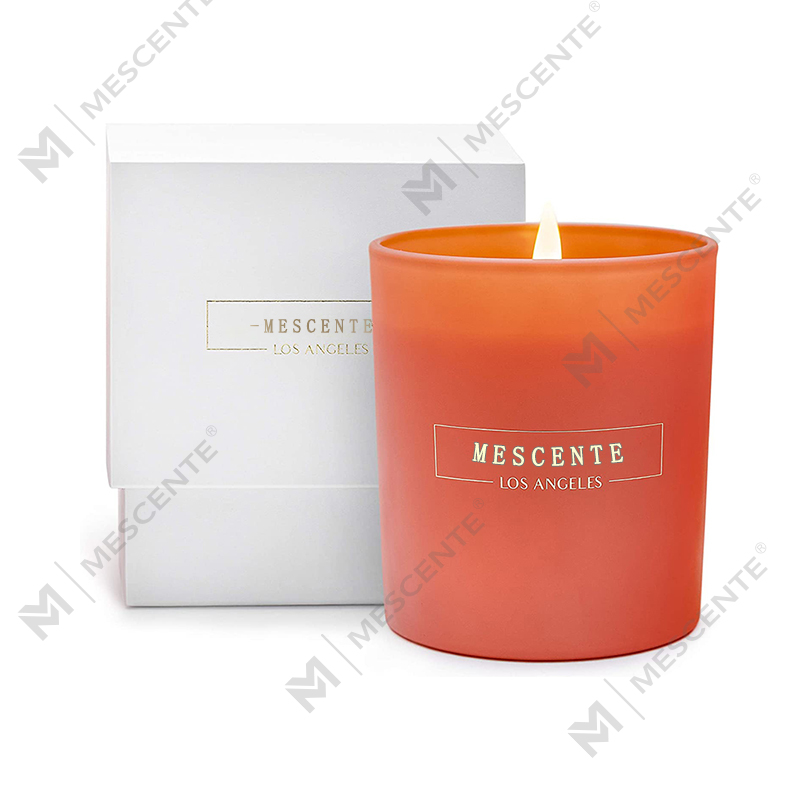
.jpg "Hot Sale Customised Luxury Private Label Spiritual Soy Wax Scented Candles With Gift Box")
.jpg "Long Lasting 3 Wick Jar Scented Aromatherapy Citronella Oil Candles Sets for Home Garden Patio Balcony")